This start-up is making satellites that will return to Earth
What's the story
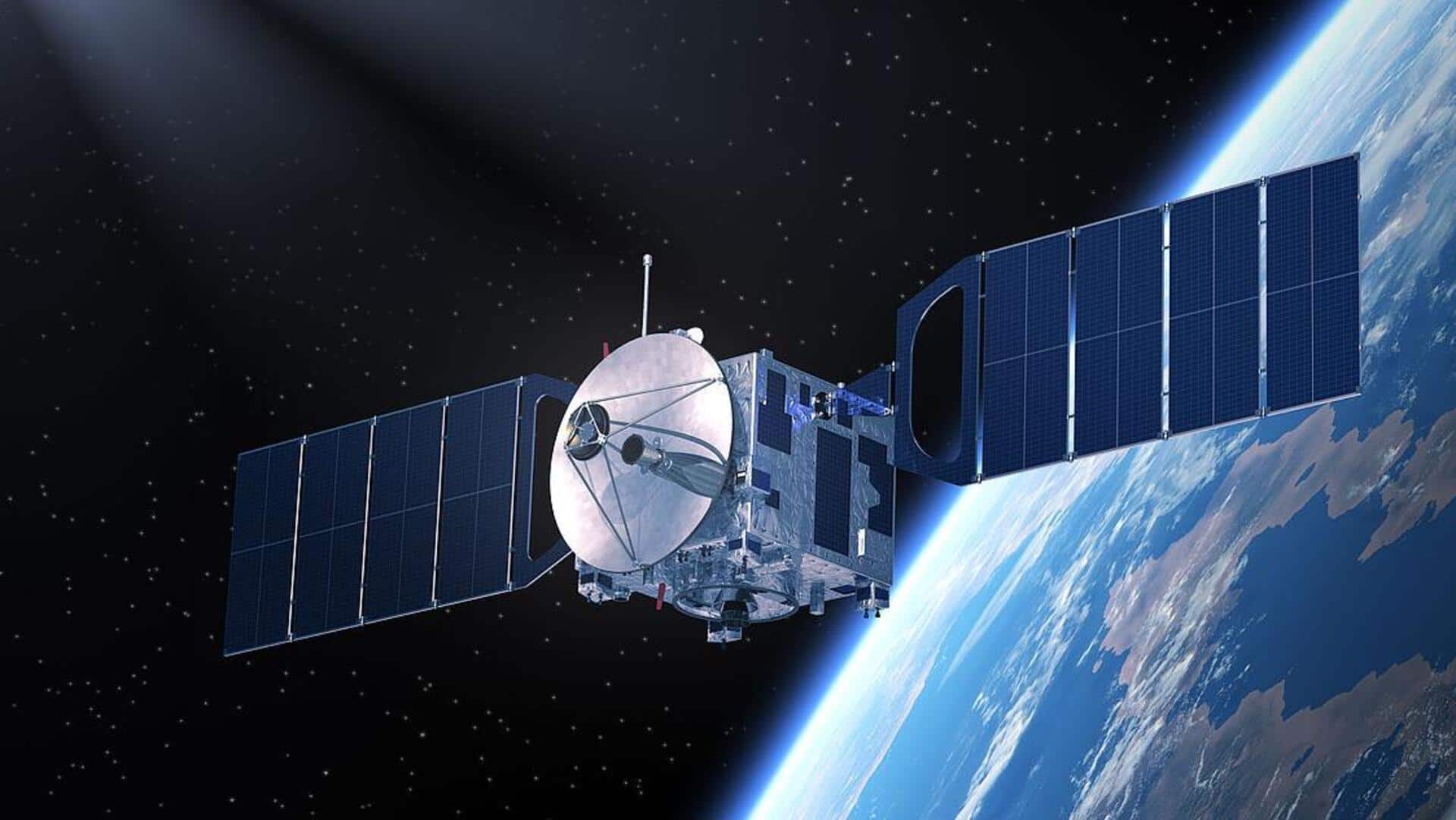
Brian Taylor, a SpaceX veteran who helped build satellites for networks like Starlink and Amazon's Leo, has launched a new start-up called Lux Aeterna. The company aims to revolutionize the space industry by developing satellite structures with integrated heat shields. These innovative designs would allow satellites to return to Earth safely while keeping their payloads intact.
Funding
Funding for Delphi spacecraft to come from seed round
Lux Aeterna has recently raised $10 million in a seed round led by Konvoy.
Other investors included Decisive Point, Cubit Capital, Wave Function, Space Capital, Dynamo Ventures, and Channel 39.
The funds will be used to design and build Lux Aeterna's Delphi spacecraft.
This spacecraft is set to launch on a SpaceX rocket in Q1 2027 as part of a mission to validate the company's technology with hosted payloads and materials.
Technical hurdles
Reentry challenges and solutions
Reentering Earth from space is no easy feat. It involves high-speed atmospheric reentry that generates extreme heat, requiring spacecraft to be shielded with materials that can withstand this thermal stress.
This adds weight and cost, making most spacecraft unsuitable for return journeys.
Historically, reentry has typically been limited to crewed vehicles like Space Shuttle and SpaceX's Dragon spacecraft, though some start-ups are building reentry capsules to return samples and cargo.
Emerging solutions
Start-ups working on reentry capsules
Start-ups like Varda Space and Inversion are working on reentry capsules for returning samples from space experiments. These could also be used to deliver cargo to Earth at high speed.
Varda has conducted five missions, successfully returning capsules on four occasions, while Inversion plans to launch its Arc vehicle later this year.
Satellite reusability
Satellites currently not reusable
Lux Aeterna's Taylor envisions a future where communications and Earth observation satellites are reusable.
Currently, these satellites have a lifespan of five to 10 years due to component failures, propellant depletion, or obsolescence.
After their operational life, they are either incinerated in the atmosphere or moved to graveyard orbits away from regular space traffic.
Upgrade potential
Dynamic upgrade capability for satellites
Taylor sees a "dynamic upgrade capability" for satellites.
He said, "[I]f you have a payload component, whether it's compute or a hyperspectral camera, and you want to update that technology every year, instead of having to build new satellites and keep those old ones up in space, you can bring them down and go back."
However, the economic feasibility of this plan remains to be seen.