China making mini hypersonic missiles: What makes them so lethal?
What's the story
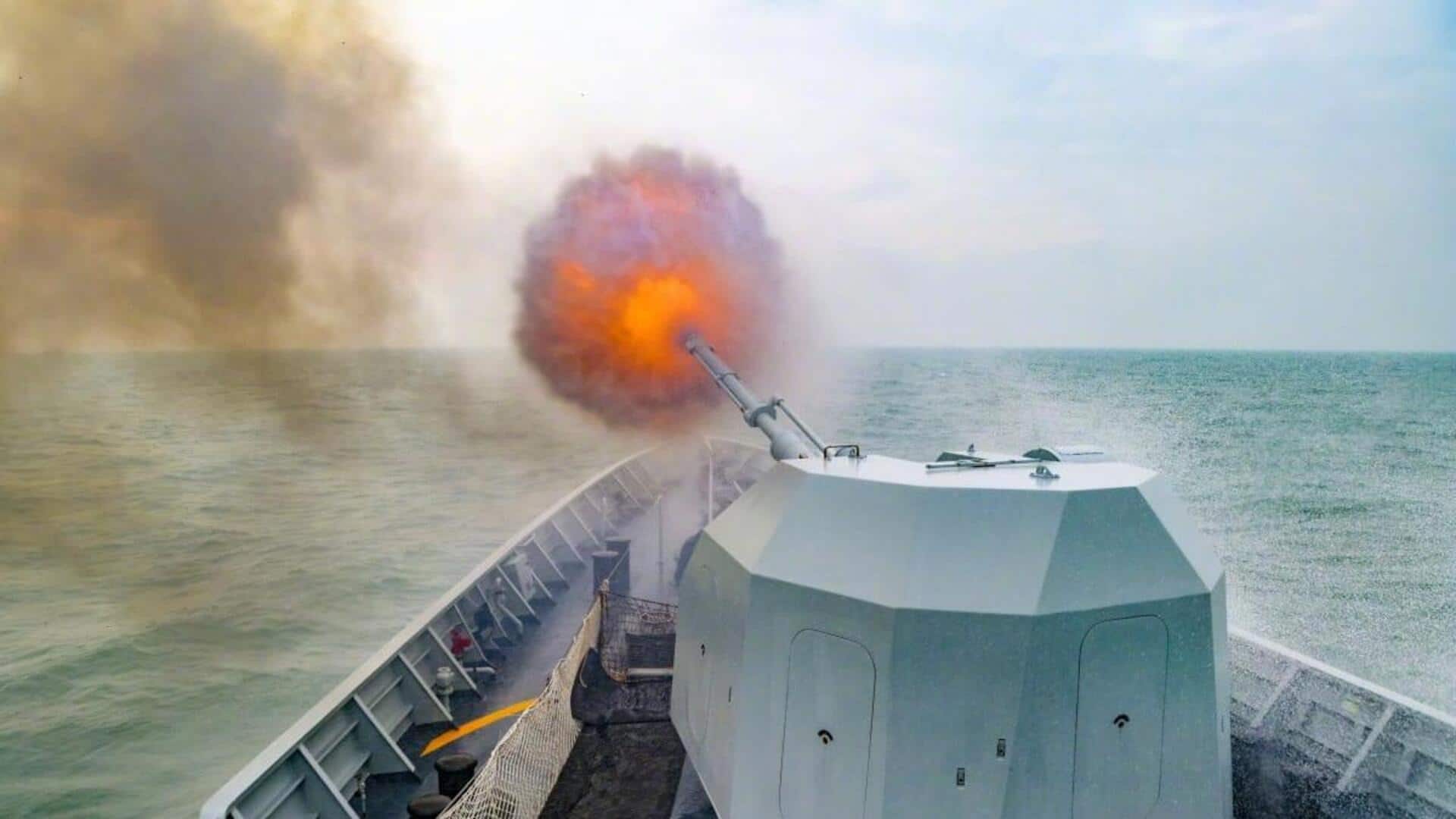
Chinese scientists and engineers are working on a new class of ultra-small hypersonic glide missiles. The weapon can be launched from an 80mm anti-aircraft gun, which is much smaller than conventional missile launchers. Once fired, the missile can hit speeds of up to Mach 6, nearly six times the speed of sound. This makes it much faster than traditional anti-aircraft shells and gives it a range of over 20km against fighter jets or drones at altitudes of around 32,800 feet.
Tactical advantage
Missiles can outpace enemy's response time
The hypersonic missile's speed and compact size give it a major edge in aerial combat.
An enemy aircraft would only be able to detect the missile when it's about 3km away, giving them just a few seconds to respond.
By that time, the missile would still be traveling at Mach 3.6, making it nearly impossible for countermeasures to be effective in such a short timeframe.
Precision targeting
Hypersonic missiles have 99% kill probability
Computer simulations have shown that even if a target makes a near-90-degree turn, the hypersonic missile can adjust its trajectory.
This capability gives it an impressive 99% kill probability, making it a highly effective weapon in modern warfare scenarios.
The combination of speed and precision makes these mini hypersonic glide missiles a potential game-changer in aerial combat.
Future implications
Mini missiles could change rules of warfare
The development of these hypersonic missiles is a major leap in military technology.
A typical anti-aircraft gun can fire about once per second, and if these systems are widely deployed to replace medium- and short-range air defense missiles, they could completely change the rules of warfare.
The low cost and near-unlimited supply of this technology make it even more appealing for future military applications.