Why humanoid robots are gaining traction in China
What's the story
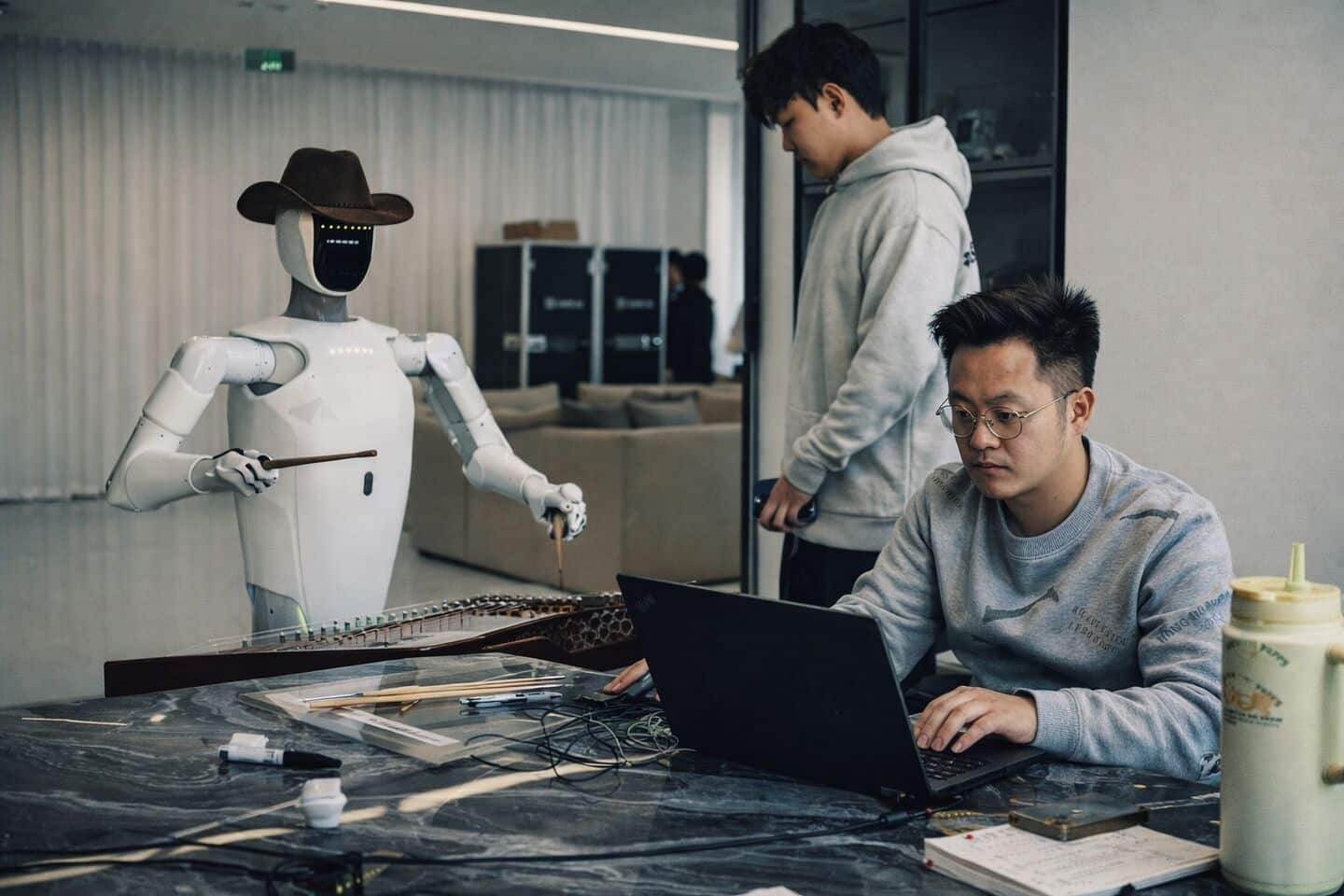
China is rapidly emerging as a major player in the humanoid robotics industry, with over 140 companies working on these advanced machines. The country is leveraging its extensive network of parts suppliers and engineering talent to mass-produce humanoid robots. These robots are already being deployed in real-world settings such as factories, hotels, and offices.
Government support
Government support and funding boost
The Chinese government is at the forefront of this industry shift, having identified "embodied AI" as a key technology to dominate in the next five years.
Local governments are offering incentives such as land and subsidized office rent, while banks are providing favorable loans.
Since late 2024, cities like Beijing and Shenzhen have set up investment funds worth over $26 billion to pump money into this sector.
Market stimulation
Robocops and traffic management: The role of humanoids in governance
Chinese government agencies and state-owned enterprises are early adopters of humanoid robots, deploying them in museums, events, and even as traffic control 'robocops.'
These deployments are helping companies build a market for their products while collecting data to improve robot performance.
Some local governments are even subsidizing buyers by paying around 10% of the price of humanoid robots to encourage customer trials.
Supply chain reliance
Concerns in the US about China's advancements
The rapid development of China's humanoid robot industry has raised concerns among US policymakers and tech leaders.
Many American robotics companies rely on Chinese supply chains for components like roller screws for robot joints and motors for hands.
However, the US still leads in foundational AI models that power these machines, with companies like Tesla, Boston Dynamics, and Agility Robotics making strides using advanced technology from NVIDIA and Google.
Competitive edge
Advantages of local sourcing and cost-effective design changes
Chinese humanoid robot makers have a diverse supply chain of manufacturers for sensors, batteries, and other components.
This local sourcing capability allows them to make design changes quickly and cost-effectively, driving innovation.
In the second half of 2025 alone, these companies received orders worth over $300 million.
Morgan Stanley predicts that as many as 100,000 humanoids could be shipped in 2026, faster adoption in China than in the US.