China will send a wheeled humanoid robot to the Moon
What's the story
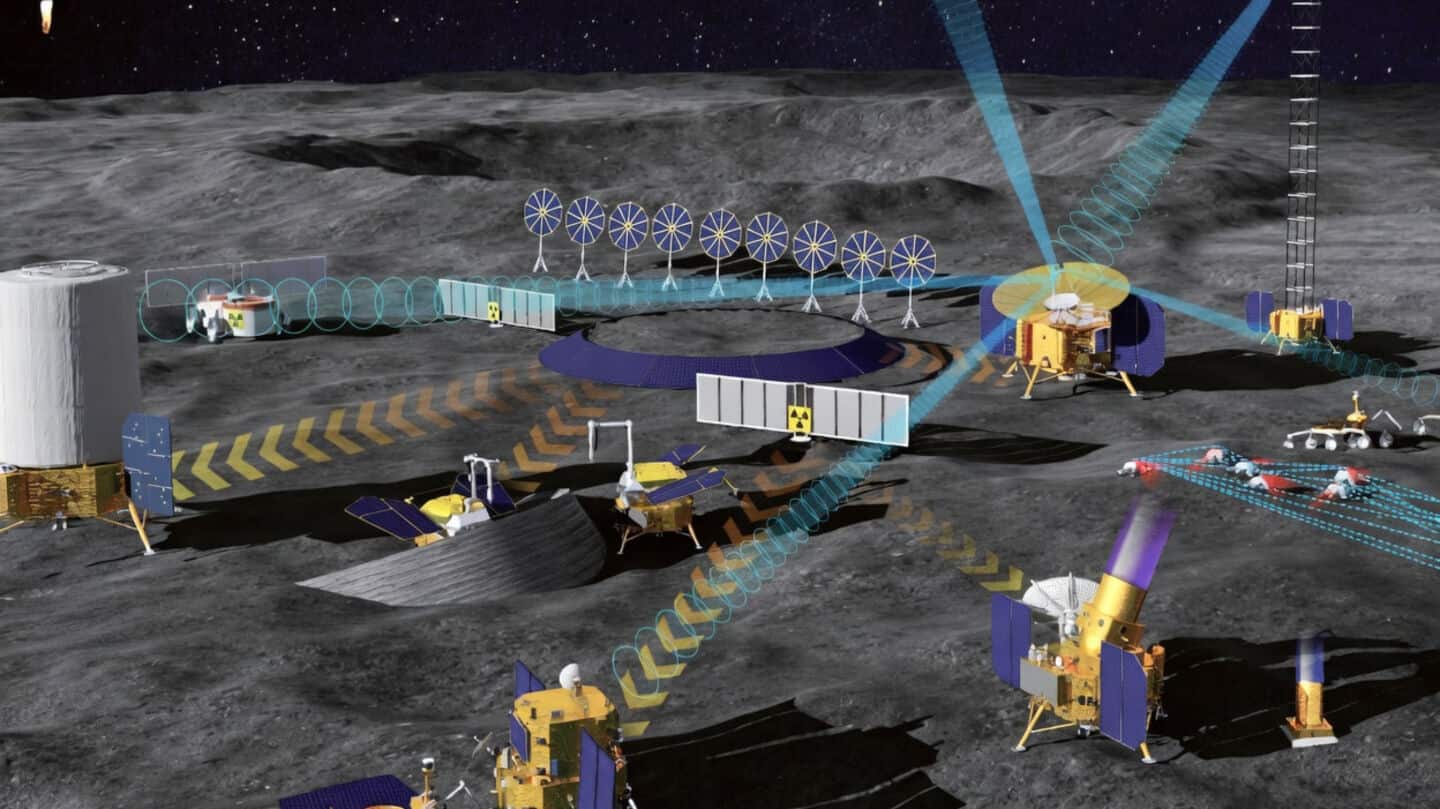
Chinese scientists have proposed a semi-humanoid robot on a wheeled platform as part of the infrastructure for China's lunar research station. The station is expected to be built by 2035. The robot, proposed by researchers from the Beijing Institute of Spacecraft System Engineering, will be able to move across the Moon's surface and perform delicate operations such as construction, maintenance, scientific experiments, and analysis.
Tech features
Robot can rotate its waist 180 degrees in both directions
The semi-humanoid robot can rotate its waist 180 degrees in both directions and bend forward up to 90 degrees. Its hand has four degrees of freedom, enabling precise manipulation.
The researchers wrote in the Journal of Deep Space Exploration that compared with bipedal walking, a wheeled active suspension can move faster and is more stable, providing a steady platform for work by the upper body.
Durability
Wheels will feature a metal mesh structure
The robot's wheels will feature a metal mesh structure with steel-wire treads.
This design makes them lightweight as well as durable while offering flexibility, shock absorption, and reliable performance in extreme cold.
The researchers said these facilities would enable smooth long-distance travel across the rugged lunar surface.
Space exploration
NASA's Robonaut was 1st humanoid robot deployed in space
Humanoid/semi-humanoid robots have been studied for space operations for a long time.
NASA and General Motors jointly developed Robonaut, the first humanoid robot deployed in space.
It was sent to the International Space Station in 2011 to assist the astronauts with routine or hazardous work, operating tools, and performing specific maintenance tasks in microgravity.