This handheld device can detect cancer from a blood drop
What's the story
A team of researchers from Westlake University, Hangzhou, has developed a handheld device that could soon be used to screen for early-stage cancer from a single drop of blood. The innovative technology, which was mentioned in the journal Nature Photonics, is said to be 10,000 times more accurate than conventional methods. The research was led by Wen Liaoyong, an associate professor and independent principal investigator at Westlake University's School of Engineering.
Technological advancement
Device miniaturizes traditional detection systems
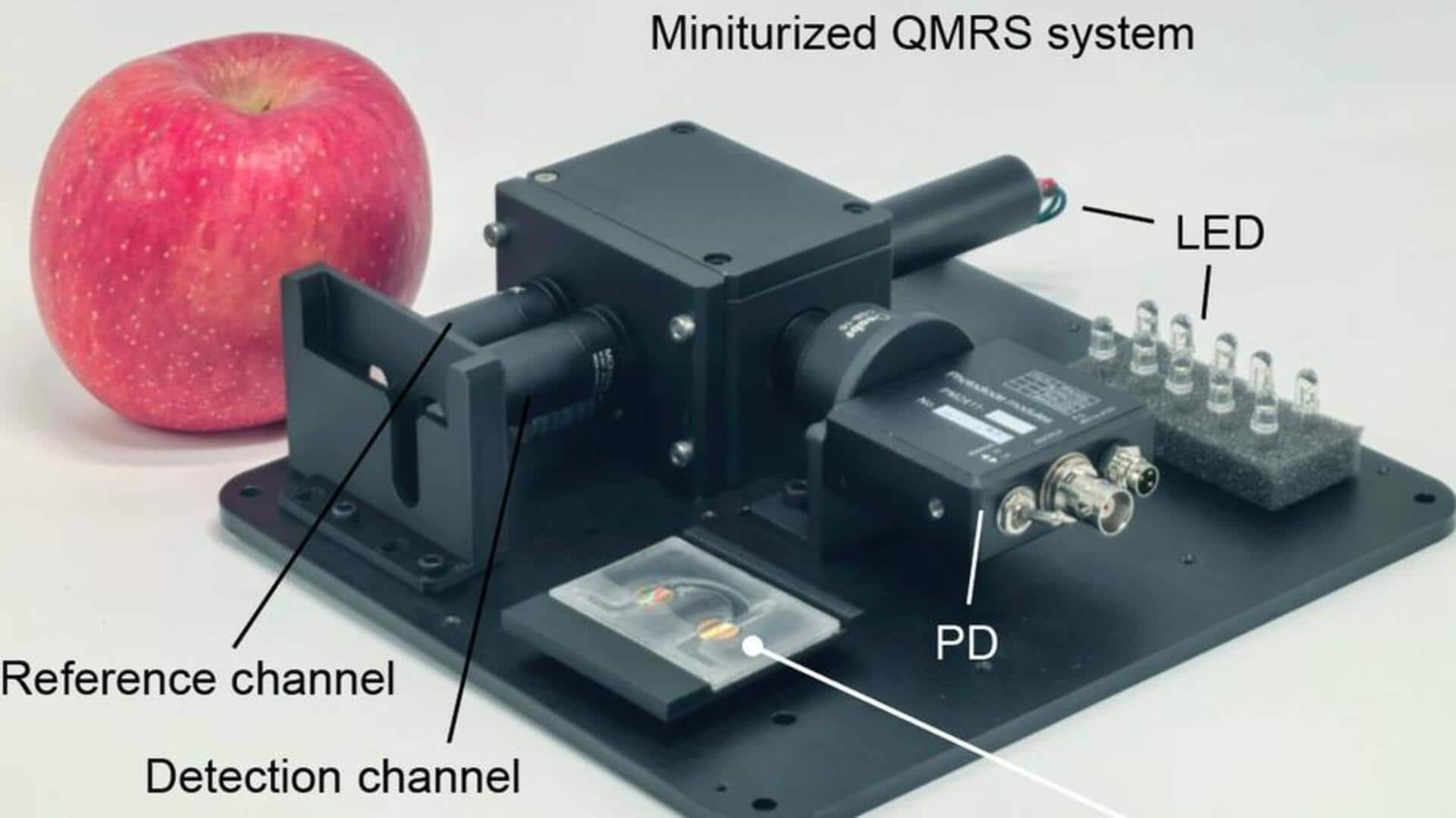
The team has managed to shrink a refrigerator-sized detection system into a compact, handheld device.
This is a major leap in technology, considering the size of conventional cancer detection systems.
Wen highlighted this achievement in his paper's introduction, saying it establishes "a scalable and robust nanophotonic biosensing paradigm for miniaturized, high-performance diagnostics in clinical, remote and at-home settings."
Academic journey
Wen's research focus
Before joining Westlake University in 2019, Wen was a researcher at the University of Connecticut. He became an associate professor last July.
His research mainly revolves around novel, multi-component nanostructured materials and their multifunctional applications.
The portable cancer detection device is a major breakthrough in his ongoing work on these materials and their potential uses in medical diagnostics.