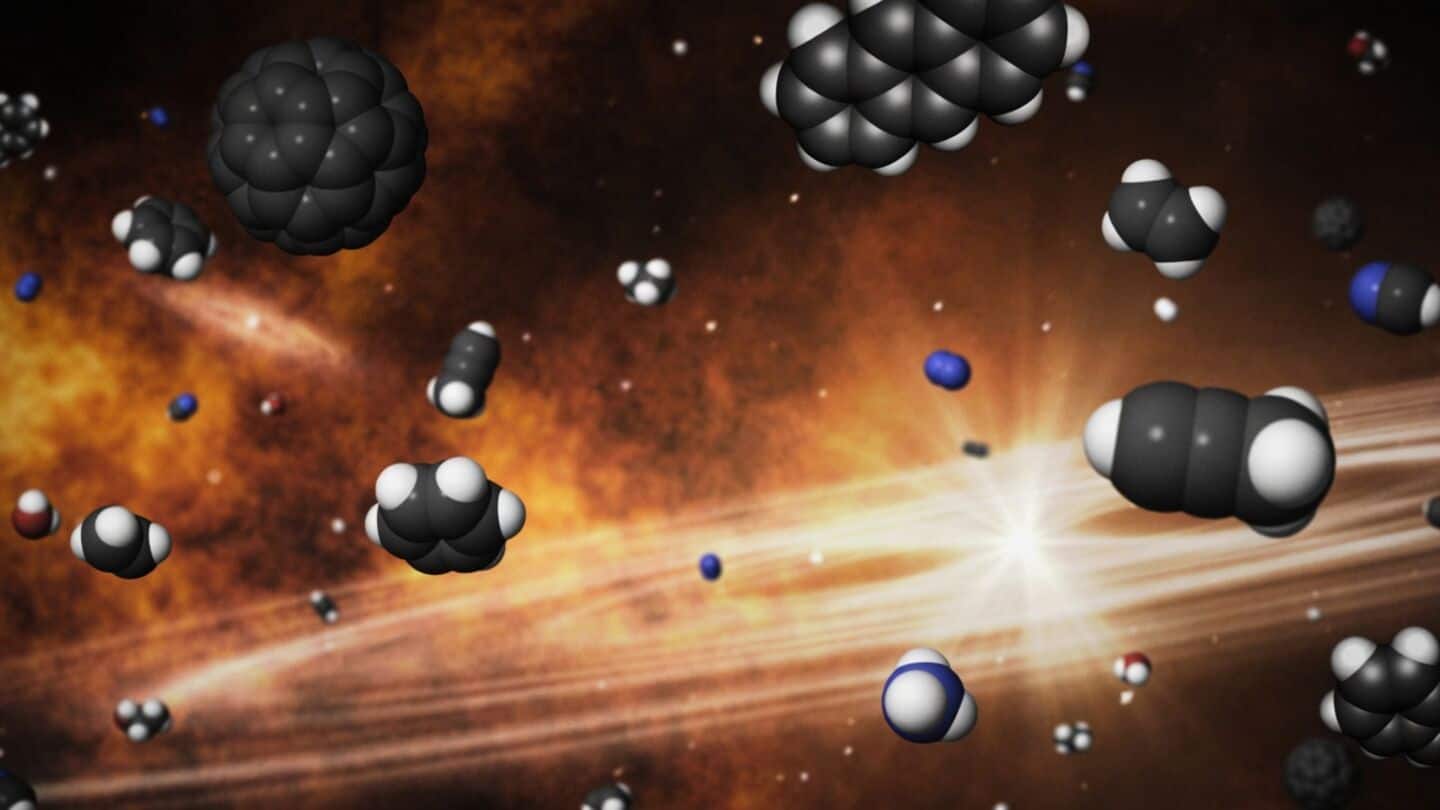
COMPASS team detects deuterated methanol around protostar 1,000 light-years away
Astronomers have found methanol, an important molecule in star- and planet-forming regions, around a young star about 1,000 light-years away, thanks to the COMPASS project and the ALMA (the Atacama Large millimeter/submillimeter Array) in the Atacama Desert in Chile.
Led by Maria Drozdovskaya from the University of Bern, the team detected a special form called deuterated methanol in one of 11 protostars studied.
Methanol masers broaden planet formation sites
Methanol is a sign that planets could be forming and was spotted in methanol masers around both low-mass and high-mass young stars, challenging old ideas about where planets can take shape.
Maria Drozdovskaya said, "Our work provides insight into the complex chemistry of young star systems and is ultimately an important piece of the puzzle in understanding the origin of life."
The research offers fresh clues about how planets, maybe even life, get started.