This Chinese-Dutch team just turned corn into sustainable plastic
What's the story
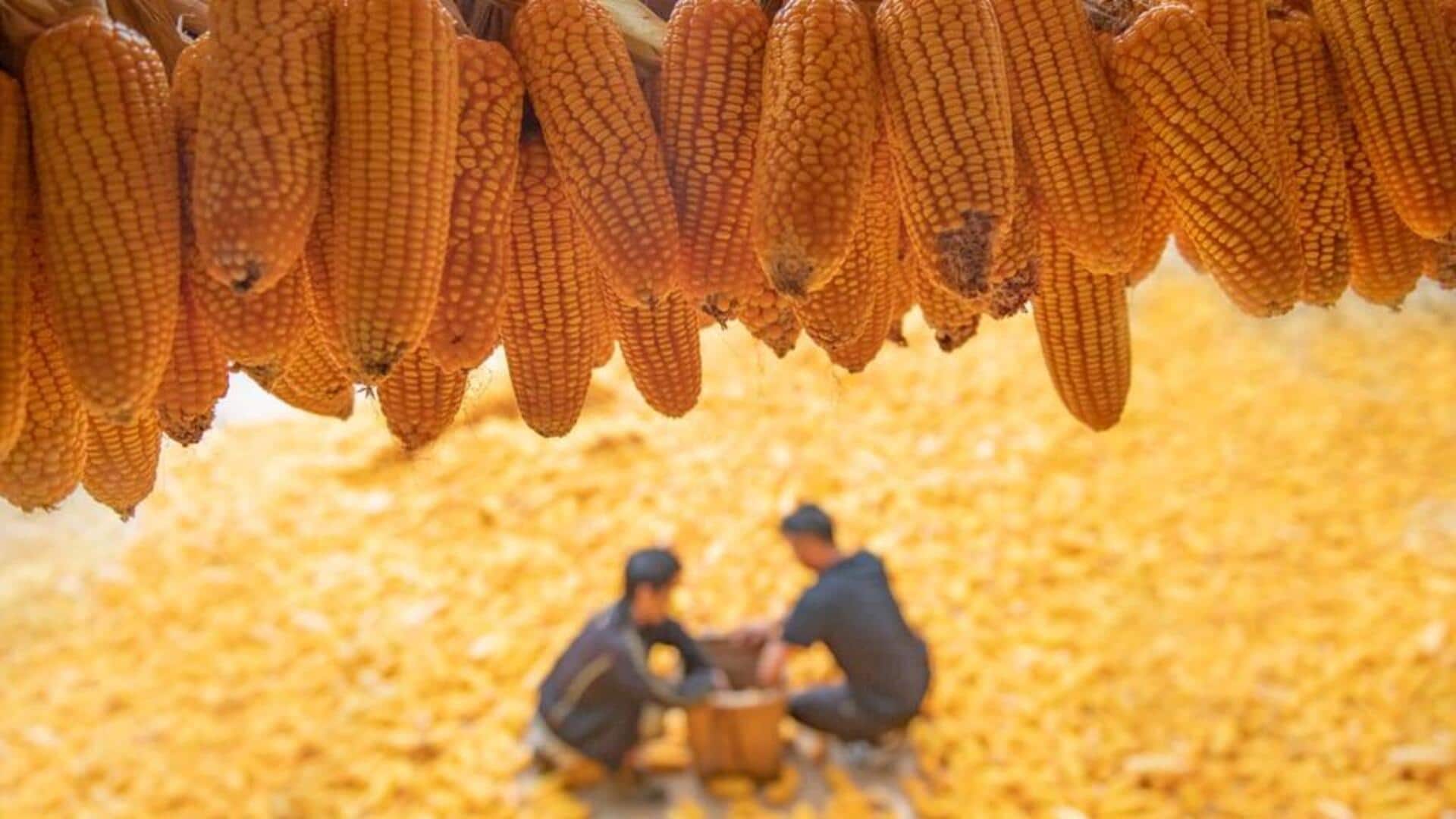
A team of scientists from China and the Netherlands has developed a corn protein-based biopolymer that could offer a sustainable alternative to fossil-fuel plastics. The innovative process, inspired by how spiders produce their high-strength silk, transforms the corn protein "zein" into a biopolymer. The resulting material, dubbed "plantymer," exhibits properties similar to silk in terms of rigidity and offers excellent moisture and oxygen barrier capabilities.
Material performance
Potential of plant-derived biopolymers
The research team includes members from Nanjing Agricultural University, Jiangnan University, and the University of Hong Kong in China as well as the University of Amsterdam and Wageningen University in Netherlands.
It believes that plant-derived biopolymers could be sustainable alternatives to fossil-based polymers.
However, their poor material performance has so far limited their adoption.
The new processing mechanism for transforming corn protein into a biopolymer could change this narrative.
Production challenges
Impact of Iran conflict on plastic production
The ongoing US-Iran conflict and restrictions in the Strait of Hormuz have impacted fossil fuel-based plastic production around the world.
This has raised questions about the viability of plant-based biopolymers as a sustainable alternative, especially with disruptions in agricultural supply chains and fertilizer shortages.
The development of "plantymer" from corn protein offers a promising solution to reduce dependence on fossil fuels for plastic production.