Earth's magnetic field might help treat Parkinson's and Alzheimer's
What's the story
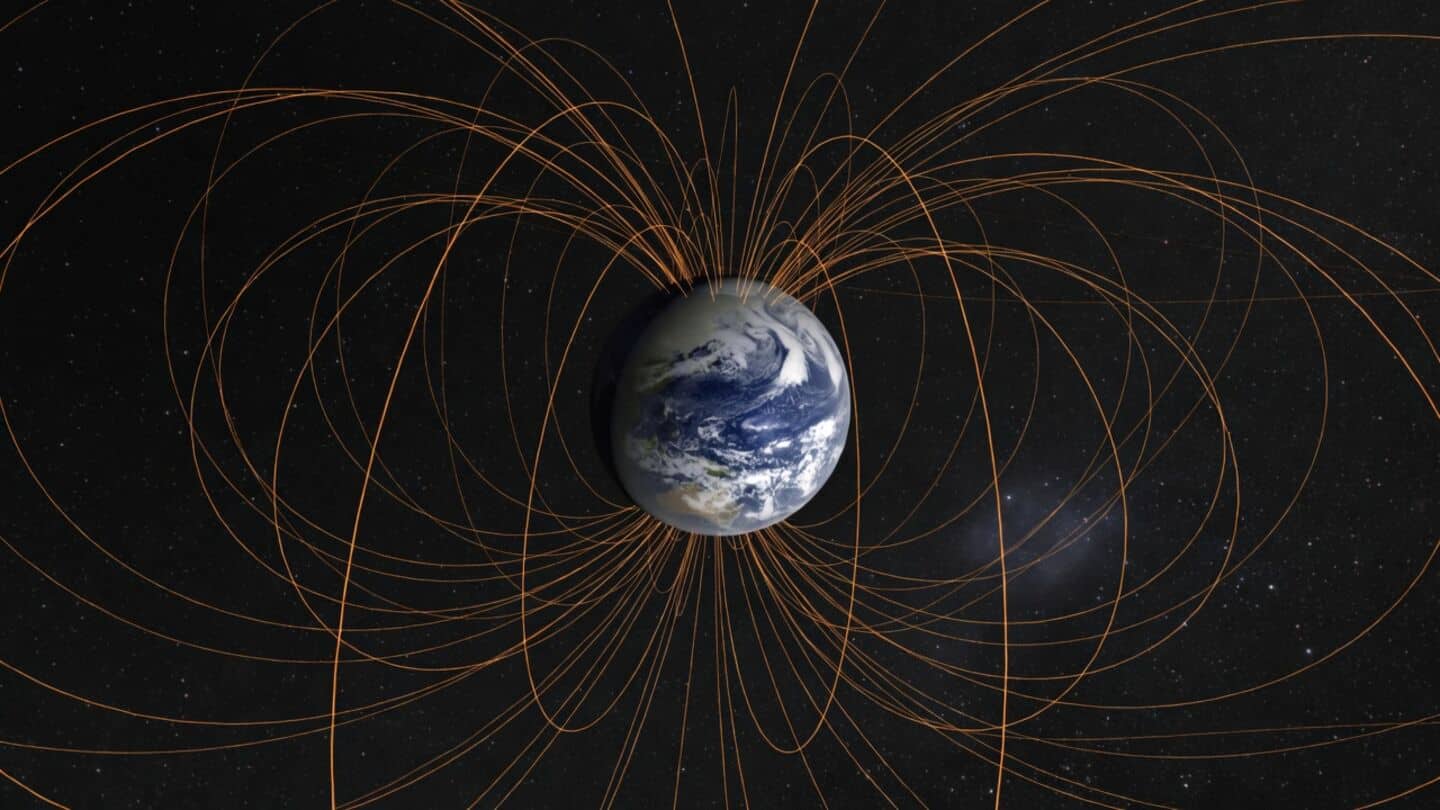
New research suggests that Earth's magnetic field, a constant presence in our lives, could be intricately linked to the fundamental biology of living organisms. The study highlights its potential role in aging and future treatments for diseases like Parkinson's and Alzheimer's. The invisible shield, generated deep within Earth's core for at least 3.7 billion years, is believed to have preserved our planet's habitability by protecting it from solar winds and retaining water essential for life.
Study
Impact on lifespan and physical performance
The research team, co-led by Professor Lisa Chakrabarti from the University of Nottingham, sought to understand how this invisible force affects cellular functions.
They conducted experiments with fruit flies, comparing healthy ones and those with a defect in the Pink1 gene linked to early-onset Parkinson's disease.
The study found that shielding the Pink1 flies from Earth's magnetic field increased their lifespan by around 20%, but also reduced their physical performance.
Cellular impact
Mitochondrial changes linked to energy production
The researchers linked these effects to mitochondria, the energy-producing structures within cells.
Shielded healthy flies showed increased activity in Complex II, a part of mitochondria's energy-producing machinery.
This was accompanied by higher levels of superoxide, a reactive molecule that can damage cells over time.
In Pink1 mutant flies, this same increase in Complex II activity seemed to offset their genetic deficit and produce a "beneficial, life-extending response."
Future implications
Therapeutic implications for diseases
The findings of this study open the door for potential therapeutic applications in treating diseases like Parkinson's and Alzheimer's.
"Understanding how cells sense and respond to magnetic fields could ultimately reveal new ways of manipulating mitochondrial function in aging and disease," Chakrabarti said.
The research also builds on previous studies linking reduced magnetic field exposure to slight declines in problem-solving performance and changes in pupil size.
Cellular responses
Considerations for space travel
The study emphasizes that magnetic fields can influence fundamental cellular processes, with responses varying by cell type.
The research also has implications for space travel, as astronauts on long missions to the Moon and Mars will be away from Earth's magnetic field for extended periods.
Chakrabarti stressed the importance of understanding these parameters to avoid potential harm to astronauts in the short or long term.