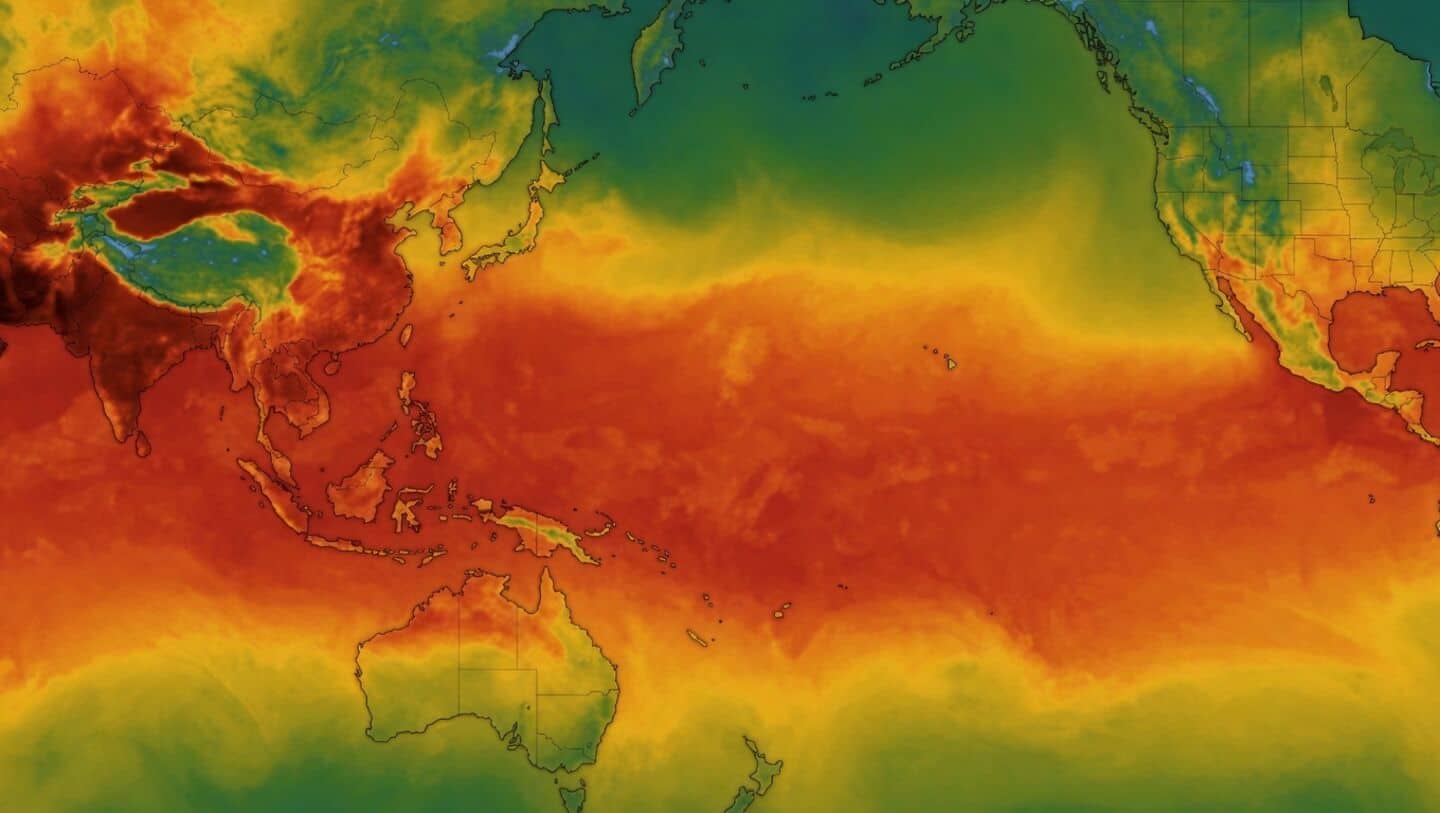
El Nino is here
What's the story
The European Centre for Medium-Range Weather Forecasts (ECMWF) has confirmed the development of El Nino conditions in the Pacific Ocean. The phenomenon, characterized by a rise in ocean temperatures, is expected to have a global impact on rainfall patterns and may result in a weaker monsoon season for India this year. The United Nations' World Meteorological Organization (WMO) has said that the current El Nino could peak in September, with experts cautioning it may become the strongest on record.
Climate disruption
ESA's satellite data shows warming trends
The El Nino climate pattern, which disrupts normal trade winds and redistributes heat across the Pacific, is now on the radar of meteorologists and disaster management agencies.
The European Space Agency has been instrumental in monitoring sea surface temperatures and atmospheric anomalies with its advanced satellite network.
Its high-resolution data confirms these warming trends, further highlighting the potential global impact of this climate shift.
Monsoon impact
El Nino may lead to weaker monsoon
The onset of El Nino is usually not a good sign for India's monsoon season.
Historically, this climate pattern has been linked to a weaker-than-normal monsoon, resulting in reduced rainfall and major challenges for agriculture.
The India Meteorological Department (IMD) has already predicted below-normal rainfall this year at 90% of the long-period average due to these conditions.
Climate vigilance
Scientists will monitor potential heat and rainfall variations
As the monsoon season progresses, scientists will keep a close eye on how this Pacific warming interacts with other atmospheric drivers.
The goal is to provide timely information to help India prepare for the potential heat and rainfall variations that often accompany El Nino.
This vigilance is key in providing timely information on potential heat and rainfall variations during these climate shifts.