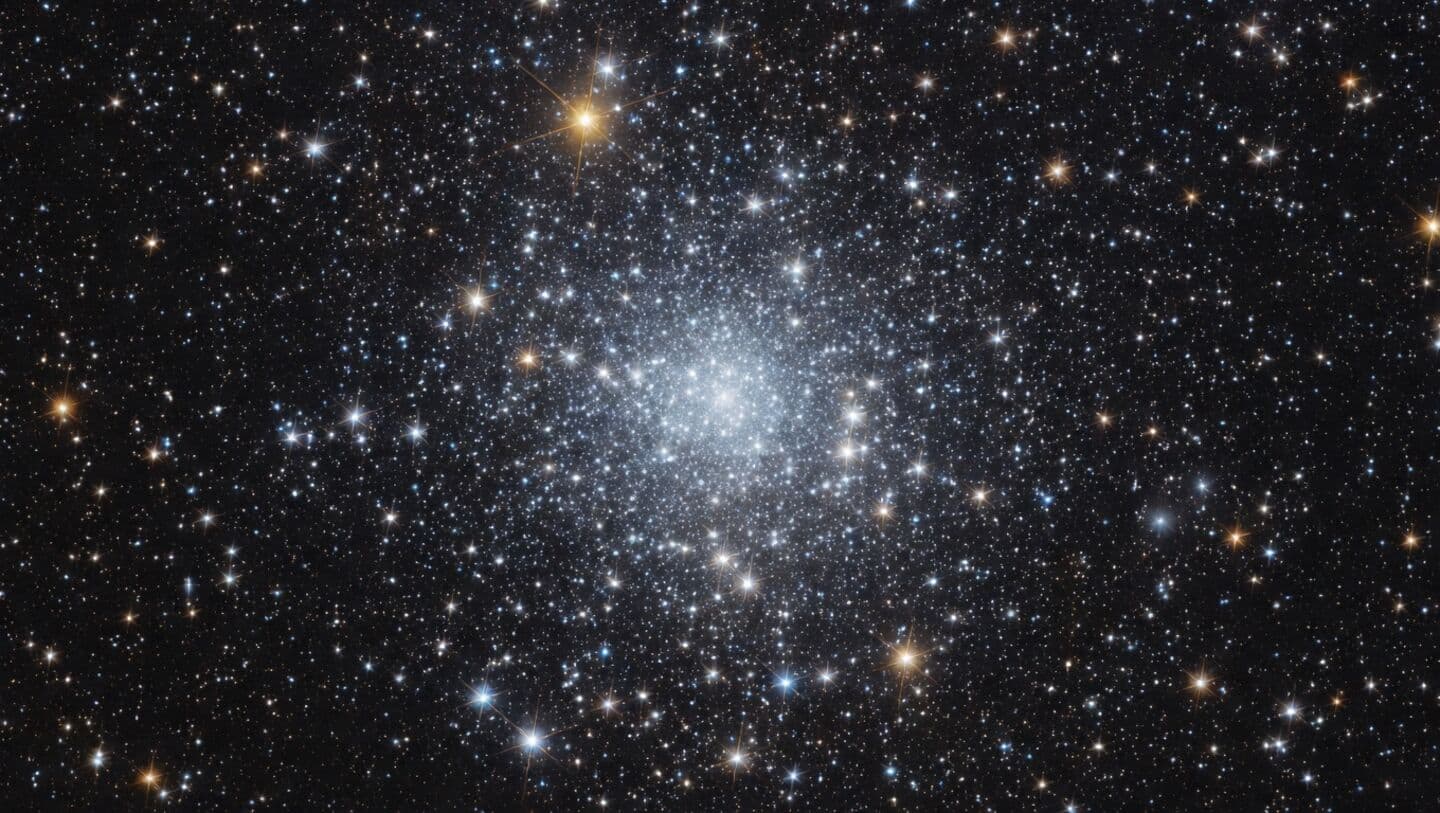
Euclid, Hubble detect red dwarf brightness gap in NGC 6397
ESA's Euclid telescope just found something strange in the globular cluster NGC 6397, about 8,000 light-years away.
When scientists mapped its red dwarf stars, they noticed a surprising gap in their brightness, a first for clusters this old.
The discovery came from teaming up data from both Euclid and the Hubble Space Telescope.
Convective transition may refine cluster distances
That gap shows a quick phase in red dwarf star evolution, where they switch from partly convective to fully convective interiors, basically changing how they shine.
This was seen before by ESA's Gaia mission in 2018, but never inside a globular cluster.
The finding could help us better understand how stars age and even improve distance estimates for ancient systems like NGC 6397, which is around 13.4 billion years old.