Alien life might exist on planets hotter than Earth
What's the story
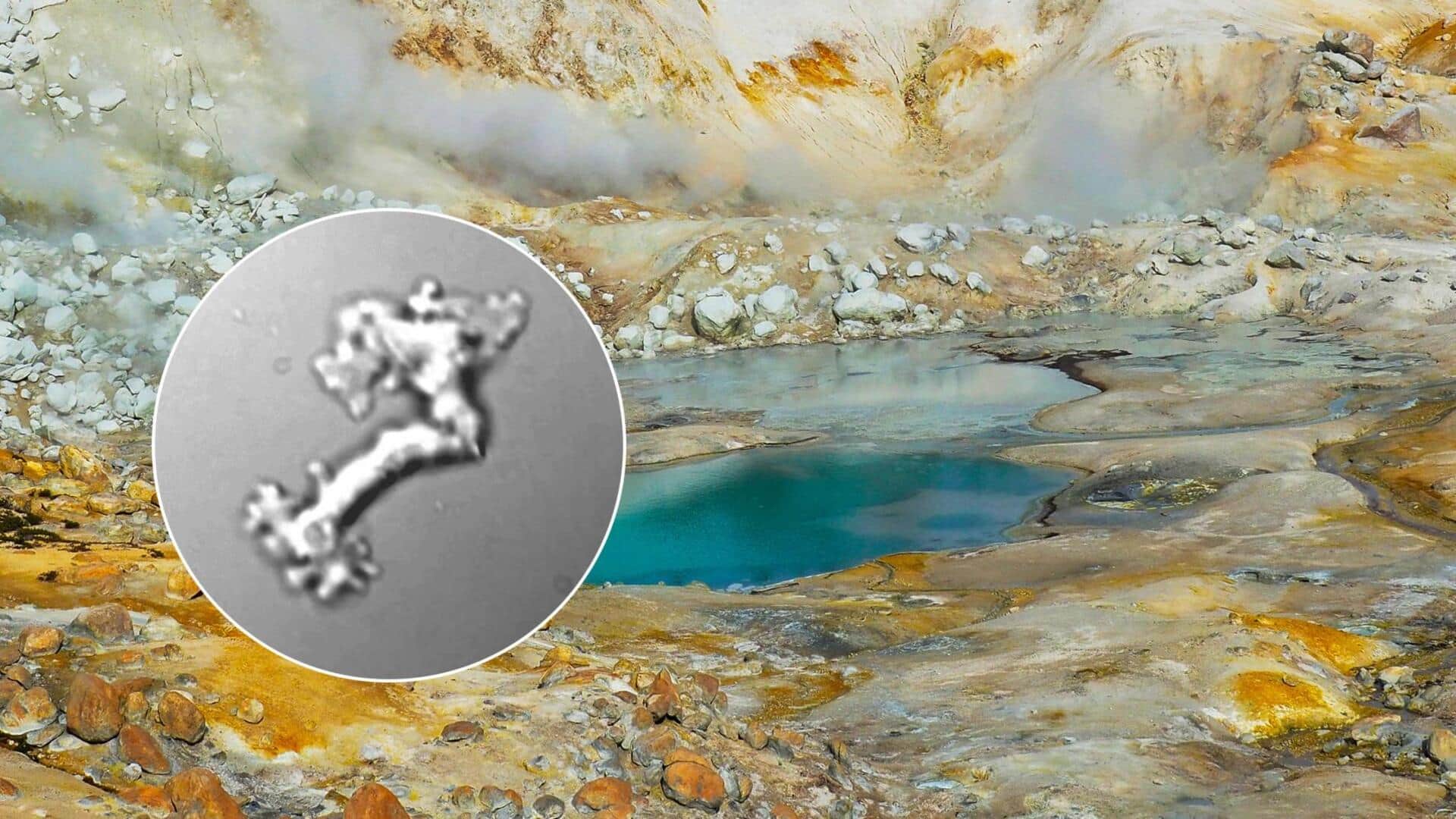
A groundbreaking discovery of a multi-celled extremophile, dubbed the "fire amoeba," has been made in the hot springs of Lassen Volcanic National Park, California. The organism, scientifically known as Incendiamoeba cascadensis, can survive and thrive at temperatures well above those previously thought possible for complex life forms. This discovery could widen the search for extraterrestrial life to include planets with hotter conditions than Earth.
Resilience
Organism can self-replicate at scorching temperatures
The fire amoeba was found to self-replicate through cell division at 63 degree Celsius (°C). It remained fully active at even higher temperatures, though reproduction ceased beyond that point.
The organism showed partial activity at 66°C and could recover from shutdown at 70°C, but it couldn't survive the extreme heat of 80°C.
This resilience is a major leap for complex life forms, which are usually more sensitive to high temperatures than single-celled organisms like Methanopyrus kandleri that can withstand 122°C.
Genetic
Genetic sequence reveals heat survival strategies
The genetic sequence of the fire amoeba holds clues to its survival in extreme heat.
The research team found genes that protect and stabilize DNA at high temperatures, as well as those that help the organism sense its surroundings.
Some gene activity even increased at high temperatures, aiding I. cascadensis in folding proteins for various biological functions.
This discovery could provide insights into how other thermophiles survive extreme conditions across different life forms.
Global presence
Potential implications for extraterrestrial life
Notably, the DNA of the fire amoeba has sequences similar to those found in geothermal samples from New Zealand and Yellowstone National Park in the US.
This suggests that I. cascadensis or its relatives could be globally distributed, awaiting discovery.
The finding also expands the potential range of eukaryotic life on other planets, such as Mars or Jupiter's moon Europa, which may have extreme environments suitable for these organisms.
Exploration
Discovery opens new frontiers in research
The discovery of I. cascadensis encourages scientists to continue searching for high-temperature eukaryotes.
Beryl Rappaport, a graduate student at Syracuse University and the lead scientist behind the research, said, "In part, studies on eukaryotes may have been limited because of assumptions about membrane stability."
She added, "We are hoping that the discovery of I. cascadensis encourages others to keep searching for high-temperature eukaryotes."