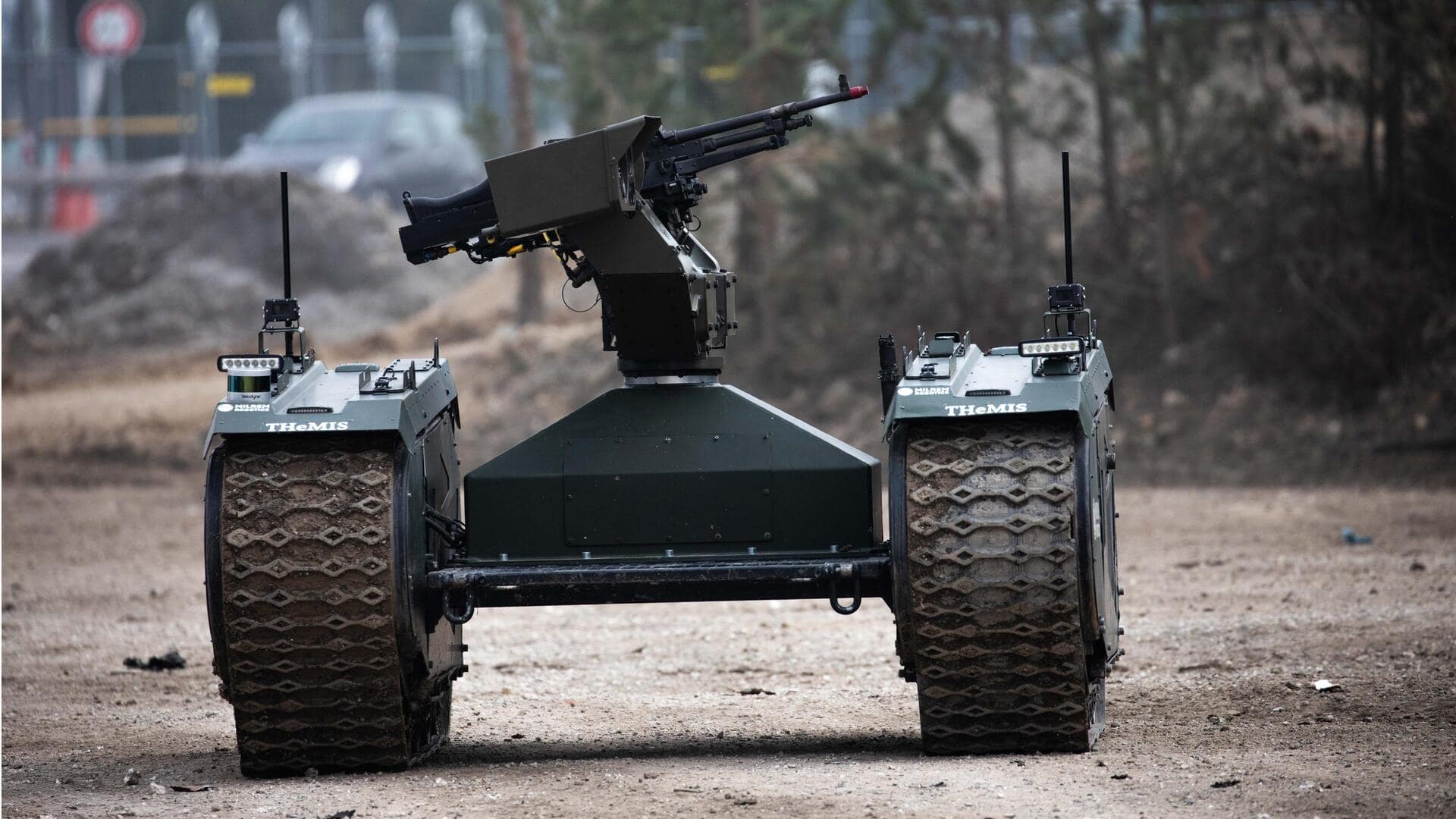
Future AI-powered weapons should have moral framework: Ex-UK spy chief
What's the story
David Omand, the former head of GCHQ, the UK's listening agency, has called for a moral framework for future artificial intelligence (AI)-powered weapon systems. The call comes as autonomous warfare continues to evolve with the rise of drones and hypersonic missiles. Omand's change of heart on unmanned weapons systems is based on his belief that AI can create ethical guidelines for these machines.
Ethical considerations
Omand's statement on AI in weapon systems
Omand emphasized the need to incorporate a moral element into future AI-powered weapons.
He said, "My call is to really get some work done on this, so that we're not left in a situation where there isn't a moral component built into future AI-powered weapon systems."
His statement comes as UK Armed Forces Minister Al Carns hinted at scenarios where machines may independently make targeting decisions.
Technological influence
Adapting human ethics into machine language
Omand believes that AI technology can now replicate the considerations of a human drone operator.
These include assessing whether a target is legitimate, the potential civilian casualties, and correct identification of the target.
He stressed that this isn't about creating new ethics but adapting existing military protocols into machine-readable formats.
Operational advancements
AI in US military operations
AI has already been integrated into recent US military operations.
The technology, developed by Palantir and Anthropic, is being used to shorten the "kill chain" in the Iran conflict.
Omand, who directed GCHQ from 1996-97, chaired a 2014 commission that questioned whether autonomous weapons systems could safely distinguish between civilians and combatants or exercise necessary proportionality for compliance with international humanitarian law.
Evolving roles
'AI systems need to be supervised by humans'
Omand believes that as warfare becomes more technologically advanced, humans will need to be "on the loop" with AI systems.
He said this means a human would supervise the system but not authorize every combat action.
The term "on the loop" refers to a human overseeing but not directly involved in decision-making processes, especially in high-pressure situations where time is critical for combat decisions.
Compliance concerns
Can machines make moral decisions?
Omand raised concerns about how humans would ensure that autonomous weapons systems comply with international law.
He said a drone's actions could be broken down into six variables, each given weight by a human operator "on the loop."
This could lead to a moral decision-making system that is ethically superior to human decision-making, he argued.