Google's AI can predict cyclones better than conventional systems: Study
What's the story
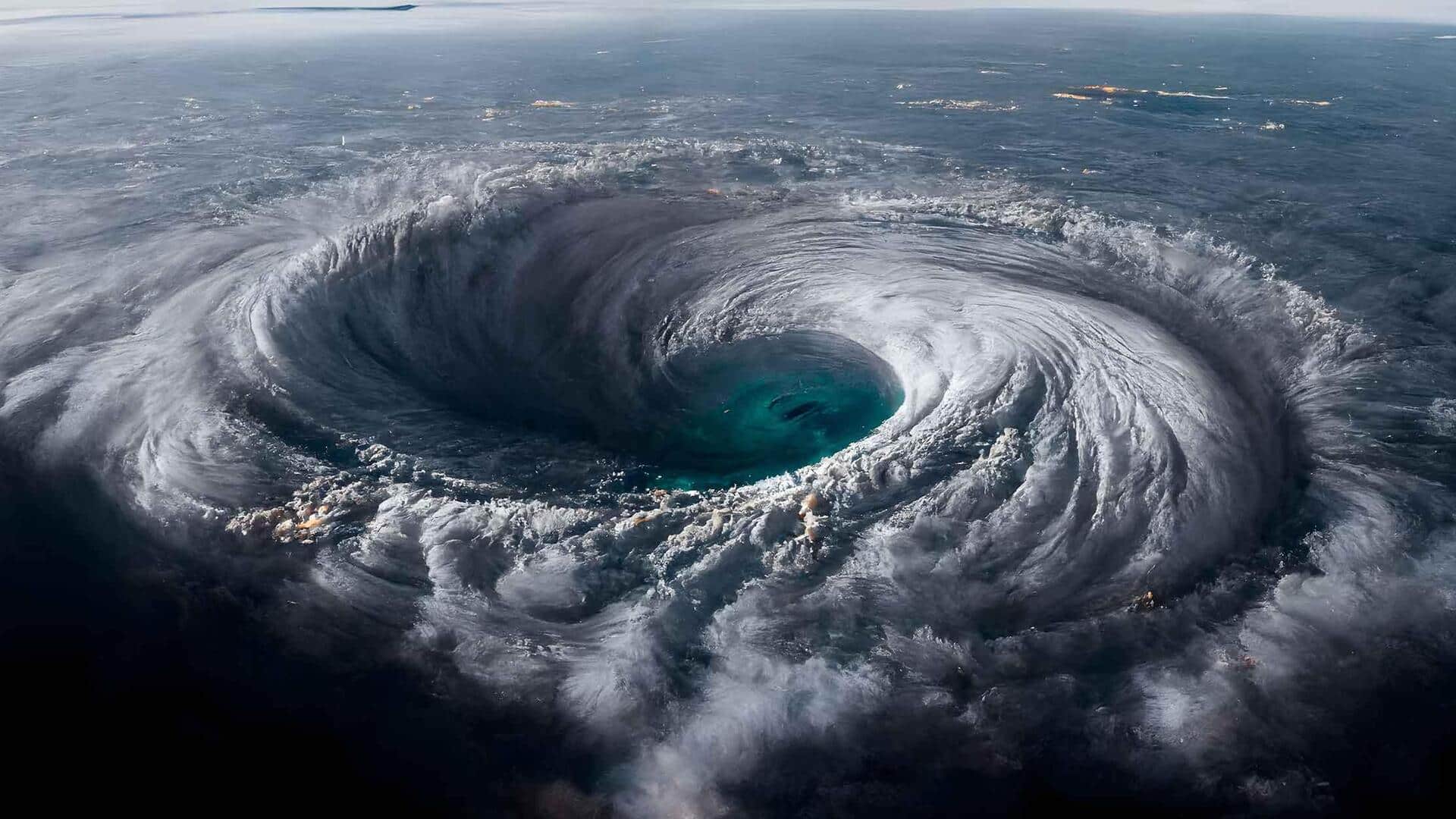
Google's WeatherNext artificial intelligence (AI) model has outperformed conventional systems in predicting cyclones, a study published in Nature has revealed. The AI-based technology offers an extra day of warning, giving a three-day forecast for hurricanes or typhoons as accurately as previous two-day predictions. This is just one example of how AI is revolutionizing weather forecasting, a trend that has been gaining traction over the last year.
Historical perspective
How AI is changing the game
Numerical forecasting, as a concept, dates back to Lewis Fry Richardson's book "Weather Prediction By Numerical Process."
The pioneering Met Office mathematician had to carry out calculations by hand, taking over six weeks to produce a daily forecast.
This method was rendered impractical until the advent of computers.
Even today, processing power can be a bottleneck for supercomputers. However, AI circumvents this problem by making predictions based on patterns learned from training data instead of detailed calculations like physics models.
Technological advancement
AI's growing role in weather forecasting
AI-based systems now match conventional models for forecasting on different scales, especially long-term predictions.
While they may not be better, they can generate comparable forecasts faster and at a lower cost.
Despite some resistance to AI in various sectors, it is being welcomed as a valuable new tool in weather forecasting.