Google wants your old smartphones to power data center workloads
What's the story
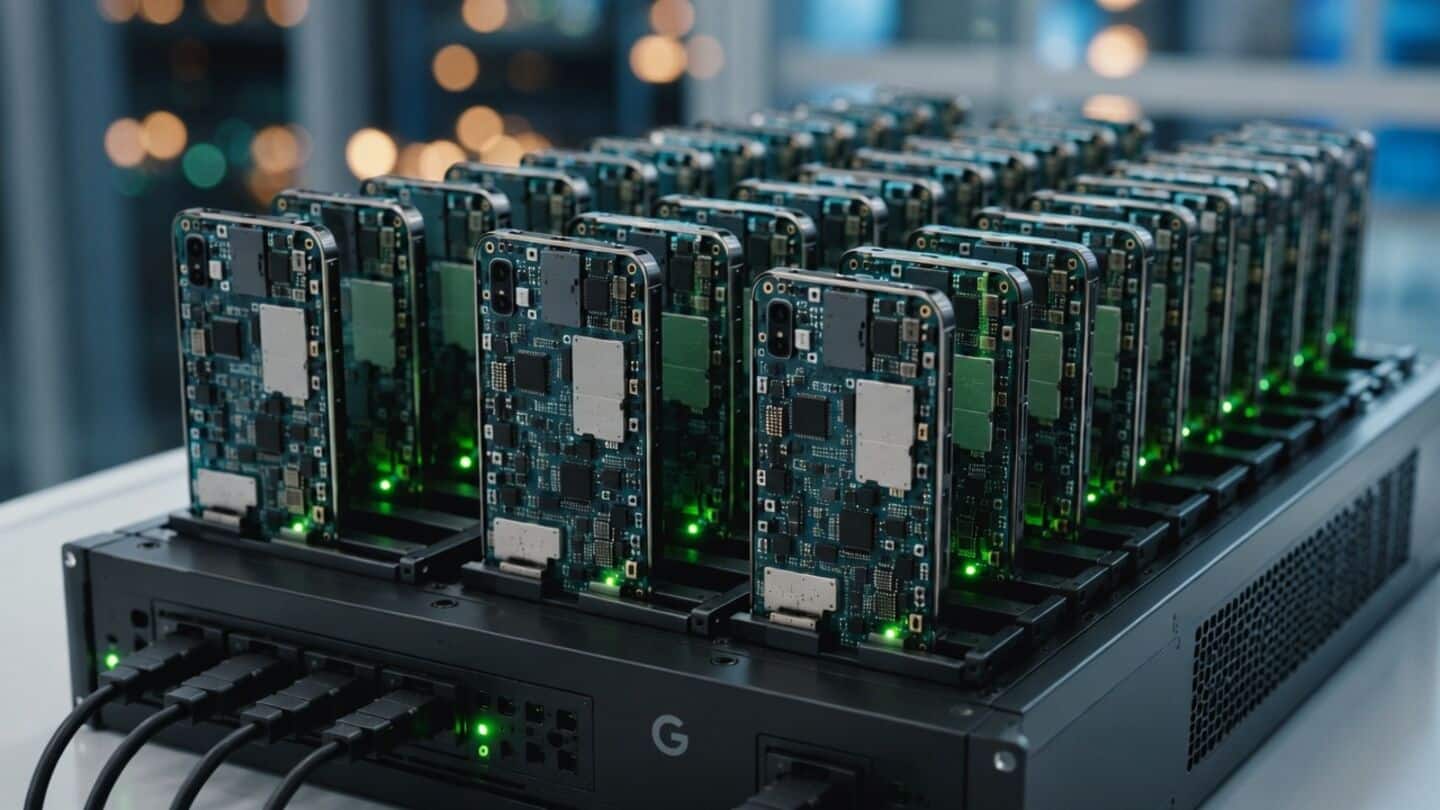
Google is working on a project to repurpose old smartphones into low-carbon computing clusters. The initiative, in collaboration with researchers from the University of California San Diego, aims to reduce the environmental impact of computing. Instead of letting these devices collect dust or be recycled, Google plans to reuse their hardware for cloud applications and research workloads.
Innovative concept
Phone cluster computing
The idea, dubbed "phone cluster computing," involves stripping down old smartphones to their motherboards, which contain the processor, memory, and storage.
Google explains in a blog post that unnecessary components like displays, batteries, and cameras are removed during this process.
The remaining motherboards are connected together and loaded with a Linux-based operating system for efficient functioning in clusters managed by Kubernetes.
Performance potential
Eco-friendly solution to data processing power demand
Google claims that a cluster of 25-50 smartphones can deliver computing performance on par with a modern server for certain workloads.
By linking hundreds or even thousands of these devices, researchers hope to build a practical computing platform capable of handling cloud-based services.
This could be an eco-friendly solution to the growing demand for data processing power while reducing electronic waste and manufacturing emissions.
Project scope
Not for AI models
It's important to note that this project isn't about replacing powerful GPU clusters used for advanced AI models like Gemini.
Rather, it's focused on smaller cloud workloads such as educational and research tasks, web services, grading systems, cloud-hosted development environments, and Jupyter notebook platforms used by universities.
Researchers at UC San Diego are planning a 2,000-phone computing cluster for computer science courses.