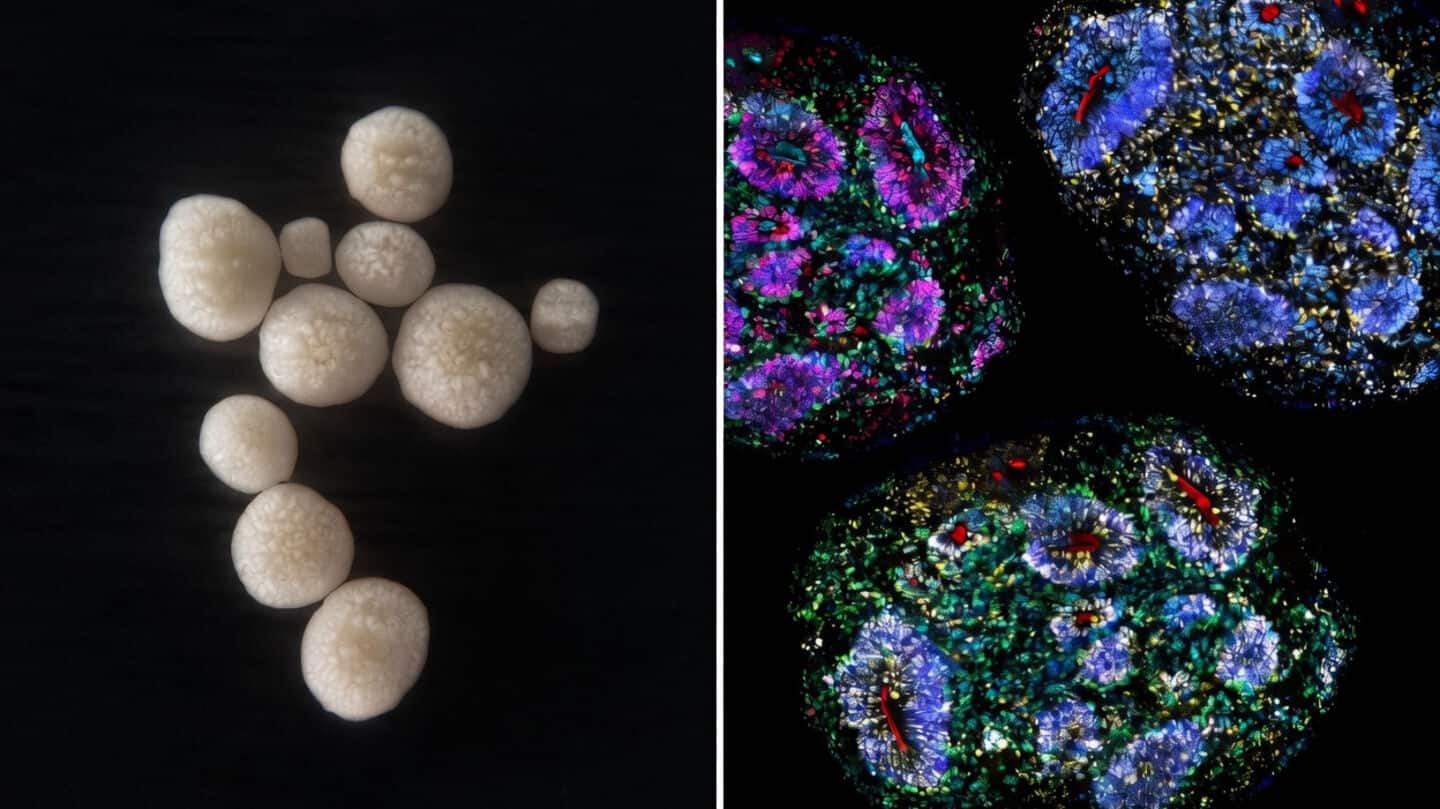
This lab-grown human brain can live for nearly 7 years
What's the story
In a major breakthrough, researchers at Harvard University have successfully grown mini human brain organoids for an unprecedented period of nearly seven years. These tiny, three-dimensional clusters mimic simplified brain functions and are instrumental in studying brain development, disease progression, and testing new treatments. The achievement far exceeds the previous record of 694 days for lab-grown human brains.
Innovative technique
'Warped time' in the dish
The research team mixed cells from an artificial brain that was one year old with much younger ones.
This resulted in the older cells accelerating their growth, effectively "warped time" in the dish.
The organoids also displayed a remarkable ability to remember their own age, opening up new possibilities for long-term research in neuroscience.
Future prospects
Potential for studying complex brain diseases
Lead scientist Paola Arlotta has hinted that these mini-brains could have survived even longer if they hadn't been destroyed.
This discovery opens up a new avenue for research on complex conditions like Alzheimer's and schizophrenia, giving scientists more time to observe their progression.
The study was published in the journal Nature.
Research applications
What are organoids?
Organoids, the 3D cell clusters that mimic human organ structure and function, are used by scientists to test new drugs, model diseases, and study human development.
However, these cell clusters usually die within two years due to lack of oxygen and blood vessel systems.
The Harvard team's work with mixed-age organoids shows a way to extend their lifespan for long-term research.