Satellite-guided jet landing takes place in India for 1st time
What's the story
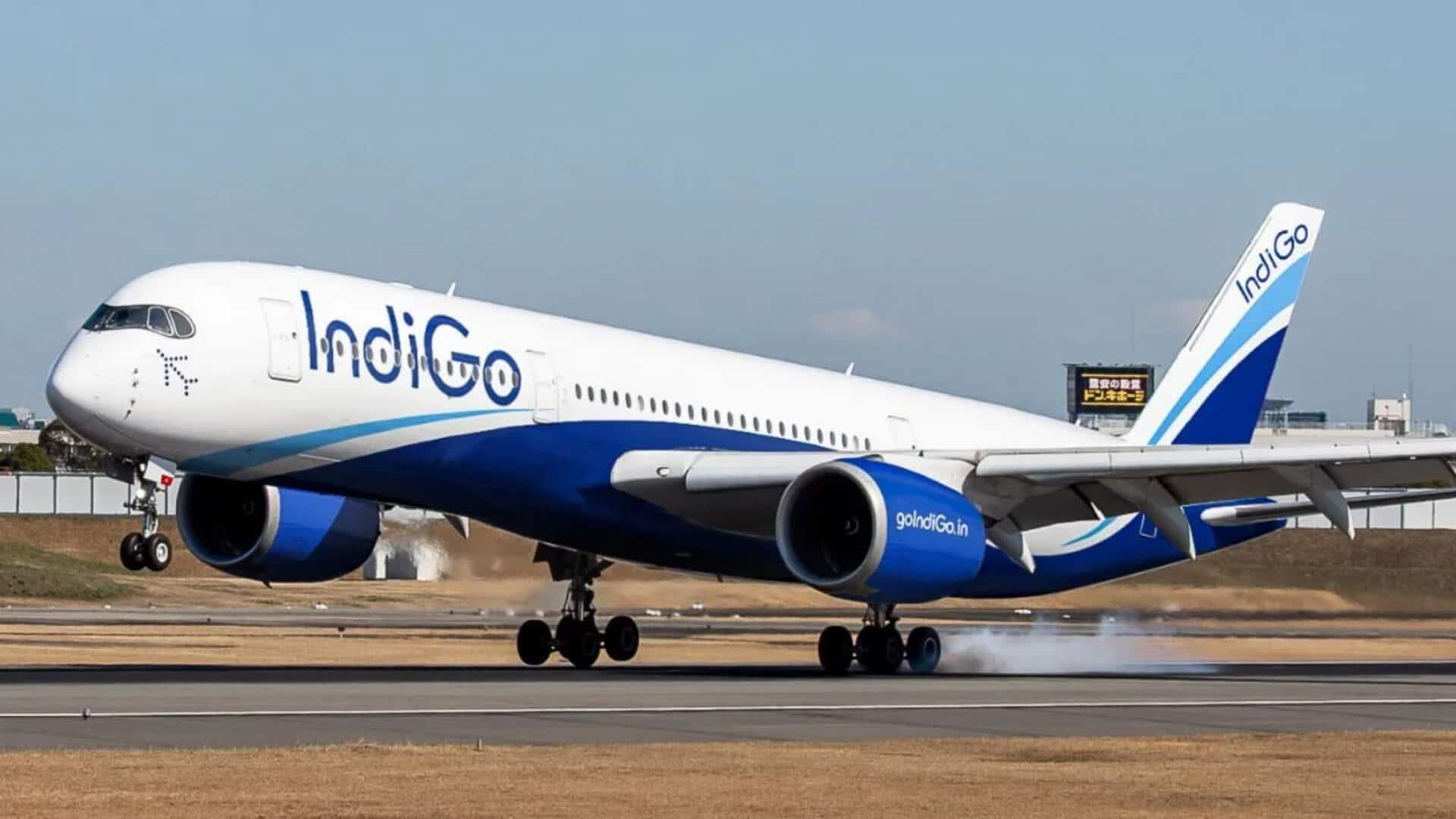
The Directorate General of Civil Aviation (DGCA) has successfully conducted a satellite-based landing system (SLS) approach on a jet engine aircraft for the first time in India. The milestone was achieved with an IndiGo Airbus A320 at Udaipur airport, using the GPS-aided geo augmented navigation (GAGAN) system. GAGAN is a joint initiative of the Indian Space Research Organisation (ISRO) and Airports Authority of India (AAI).
System advantages
What is Localiser Performance with Vertical Guidance (LPV) approach?
The successful landing was achieved using a Localiser Performance with Vertical Guidance (LPV) approach. This technology has previously been limited to turboprop aircraft in India.
The SLS technology allows for satellite-based corrections for precision landings, reducing dependence on ground-based Instrument Landing Systems (ILS).
This is particularly beneficial at secondary airports without expensive precision landing infrastructure.
Fleet upgrade
What is SBAS?
IndiGo had first introduced LPV operations on its ATR fleet in 2022.
The airline has since expanded satellite-based augmentation system (SBAS)-enabled navigation across its entire fleet.
A senior pilot explained that "SBAS enhances accuracy, integrity, and availability of standard GNSS signals by broadcasting correction data from geostationary satellites."
This means pilots can get precise horizontal and vertical guidance while approaching runways, without relying solely on ground-installed equipment at airports.
Global standing
GAGAN system to enhance safety, efficiency at secondary airports
The successful implementation of SLS on a jet engine aircraft puts India in a select group of countries with its own SBAS capability.
The GAGAN system is expected to play an increasingly important role in enhancing safety and efficiency at secondary airports across the country in the coming years.
This development is seen as a game-changer for Indian aviation, making air travel safer, more efficient, and accessible.