India inaugurates first-of-its-kind hydrogen plant powered by nuclear reactor heat
What's the story
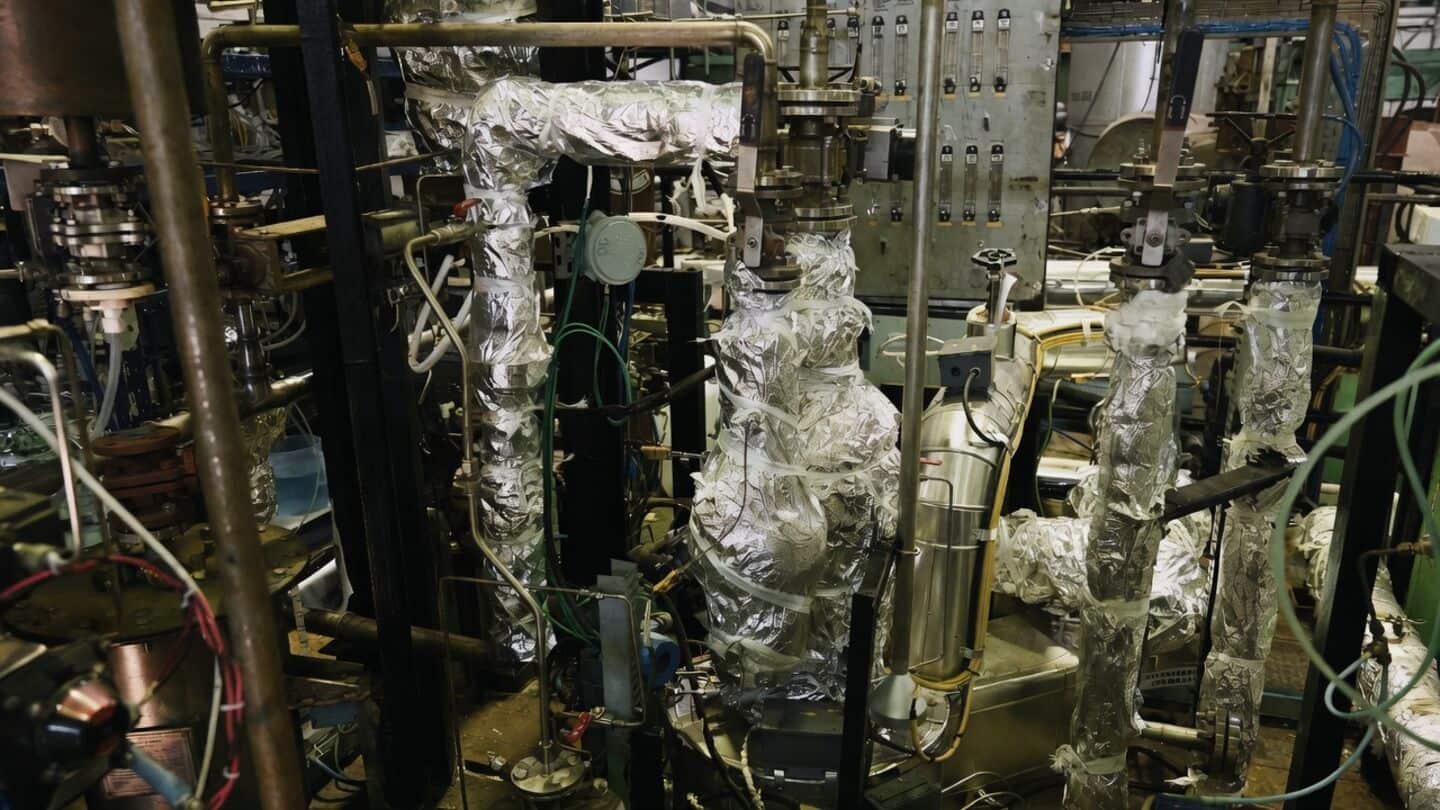
India has inaugurated the world's first hydrogen production plant that uses nuclear reactor heat instead of electricity. The facility, located at the Indira Gandhi Centre for Atomic Research (IGCAR) in Kalpakkam, was inaugurated by Dr. Ajit Kumar Mohanty, Secretary of the Department of Atomic Energy (DAE) and Chairman of the Atomic Energy Commission. It employs a Copper-Chlorine (Cu-Cl) thermochemical cycle to produce hydrogen from nuclear process heat from the Fast Breeder Test Reactor (FBTR).
Technological advancement
Major step in India's clean energy transition
The hydrogen production facility is a major step in India's clean energy transition and energy security goals.
It shows how nuclear energy can be used not just for power generation but also to produce hydrogen without fossil fuels.
The Cu-Cl thermochemical process used in the facility was indigenously developed by the Bhabha Atomic Research Centre (BARC) in Mumbai.
Efficiency
Cu-Cl process indigenously developed by BARC and IGCAR
The Copper-Chlorine thermochemical cycle is a promising method for hydrogen production as it operates at relatively lower temperatures and offers higher thermodynamic efficiency than some alternative technologies.
By using nuclear process heat from fast reactors, this process avoids greenhouse gas emissions associated with conventional hydrogen production methods.
The facility's commissioning follows years of research, engineering design, equipment fabrication, installation, and testing jointly done by BARC and IGCAR.
Future prospects
Facility to provide operational experience, improve Cu-Cl process
The new facility will provide researchers with operational experience, improve the Cu-Cl process, and support future work on scaling up nuclear-assisted hydrogen production for larger applications.
Dr. Mohanty emphasized the strategic importance of integrating nuclear energy with emerging clean energy technologies, such as hydrogen production, in his address at the inauguration ceremony.
Institutional contribution
IGCAR's role in India's fast breeder reactor program
Since 1971, IGCAR has been a key institution in India's fast breeder reactor program.
The center designed, built, and operated the FBTR, which has supported the development of fuels, materials, and technologies required for advanced reactor systems for over four decades.
The experience gained through FBTR has also contributed to the development of the 500 MWe Prototype Fast Breeder Reactor (PFBR), which is part of India's three-stage nuclear power program's second stage.
Milestone achievement
Expanding the role of nuclear energy
The hydrogen production facility expands the role of nuclear energy beyond electricity generation and supports research into clean hydrogen technologies.
The DAE said the project reflects India's efforts to strengthen indigenous technology development while exploring new applications of nuclear energy for a low-carbon future.
The inauguration also marks a new milestone in India's three-stage nuclear program, with researchers seeking to combine advanced reactor technologies and clean hydrogen production to support long-term energy needs.