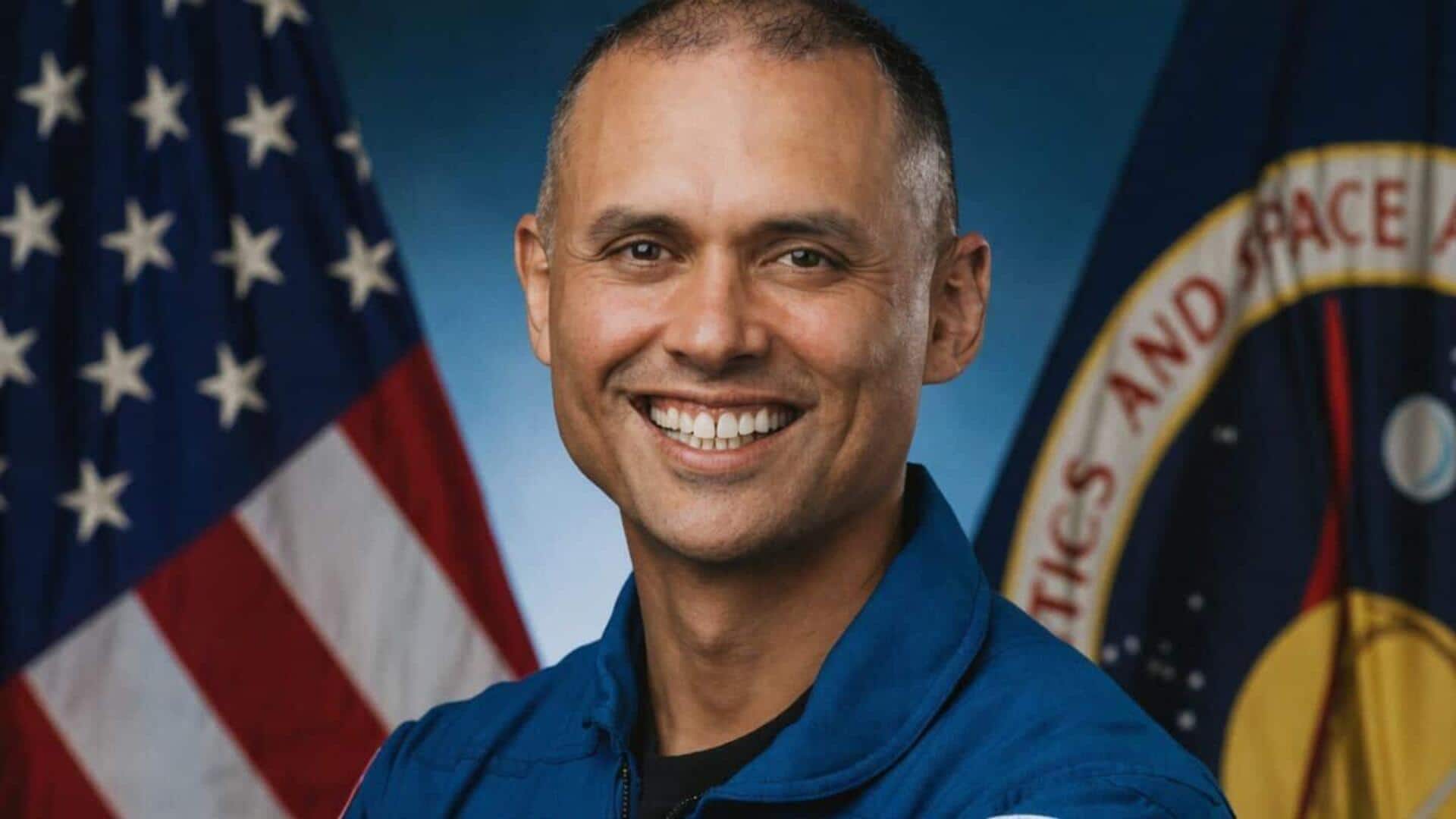
Indian-origin astronaut Anil Menon heads to ISS on July 14
What's the story
NASA astronaut of Indian descent, Anil Menon, is all set to embark on an eight-month-long mission to the International Space Station (ISS). The journey will begin on July 14 from Kazakhstan's Baikonur Cosmodrome. He will be traveling with Russian cosmonauts Pyotr Dubrov and Anna Kikina. During his stay at the ISS, Menon will conduct experiments to study the impact of long-duration spaceflight on human physiology and develop technologies for future deep-space missions.
Career journey
Who is Anil Menon?
Born in Minneapolis to Ukrainian and Indian immigrants, Menon is an emergency medicine physician and a US Space Force colonel.
He served in the US Air Force during Operation Enduring Freedom, where he was deployed on the frontlines in Afghanistan.
He has also worked with the Himalayan Rescue Association, providing medical assistance to climbers on Mount Everest.
Philanthropic efforts
His career at NASA and SpaceX
Menon has also spent a year in India as a Rotary Ambassadorial Scholar, where he studied and supported polio vaccination initiatives.
He began his career at NASA as a flight surgeon in 2014, working with astronauts on the ISS.
In 2018, he joined SpaceX and started the company's medical program while preparing for its first human space flights.
Astronaut selection
His wife is also an astronaut
Menon was selected as a NASA astronaut in December 2021 and began a two-year training program the following month.
His wife, Anna Wilhelm, is also an astronaut who went to space in September 2024 on Polaris Dawn, a private crewed spaceflight operated by SpaceX.
Research objectives
Research on blood composition, vein structure during spaceflight
On the ISS, Menon will conduct experiments to study the physiological toll of long-duration spaceflight and how microgravity affects blood flow, vein structure, and blood composition in astronauts.
He will also help test technologies for producing intravenous fluids using the station's potable water system. This capability could become critical during deep-space missions where medical supplies are limited.
Advanced research
Other areas of research on the ISS
Menon will continue his research to refine in-space production of semiconductor crystals for large-scale manufacturing of components needed for high-performance computers, artificial intelligence, and improved medical devices.
He will also conduct ultrasound investigations using augmented reality and artificial intelligence methods that could eliminate the need for medical support from Earth on future space missions.