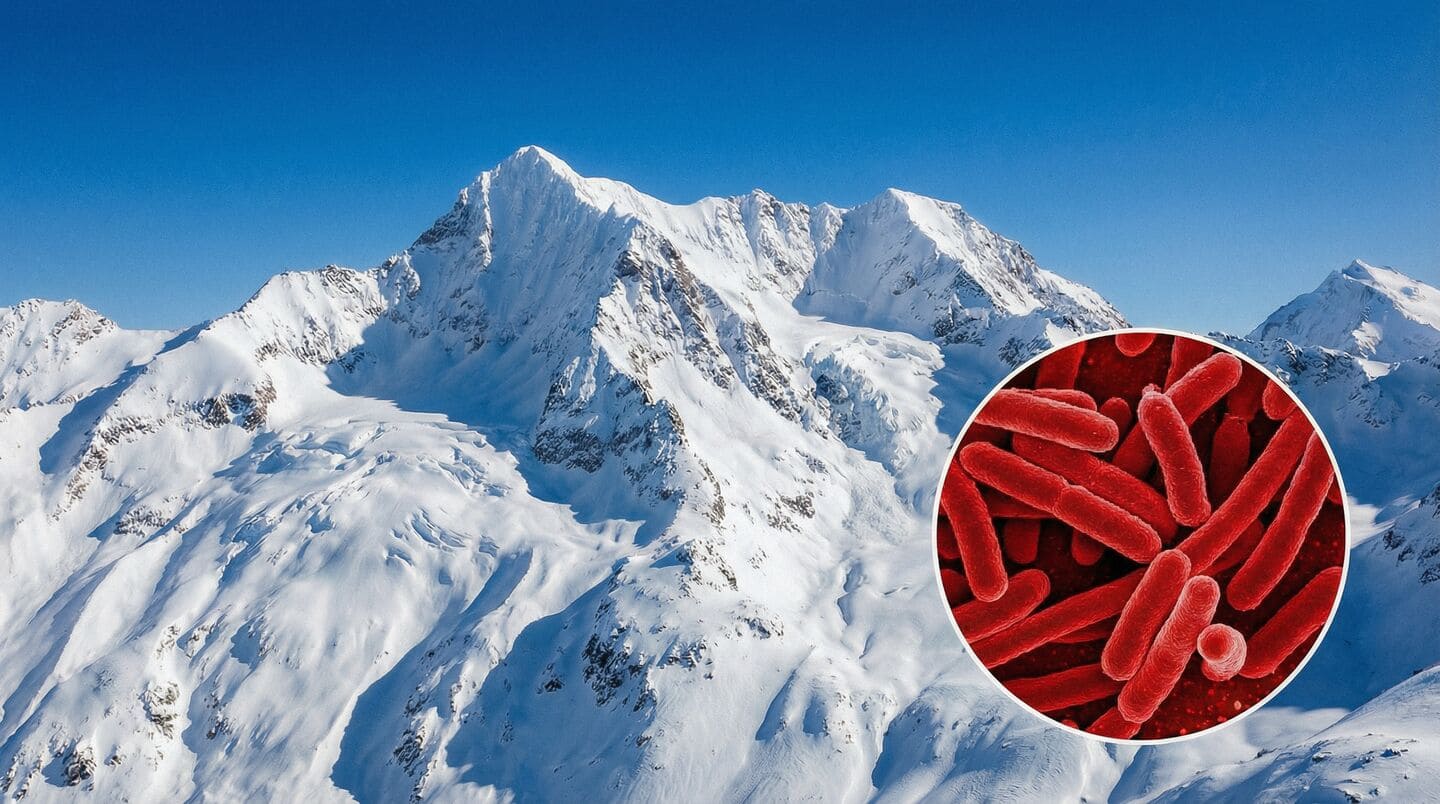
Indian scientists discover new red bacteria in Antarctica
Indian scientists have discovered a new type of red bacteria, Deinococcus pantiae sp. nov., in an Antarctic lake.
This microbe can survive up to 85 minutes of direct UV exposure.
Named after India's 1st female Antarctic scientist
The team named the strain after Dr. Aditi Pant, the first female Indian scientist to visit Antarctica, to honor her pioneering spirit.
Fun fact: this bacterium is also resistant to vancomycin, a strong antibiotic.
How does it survive?
Its red pigments shield its DNA from harsh polar UV rays, and special enzymes help it keep going even when everything else would freeze solid.
Basically, it's built for survival in some of Earth's wildest conditions.
Potential applications on Earth and in space exploration
These findings could help us understand how life survives on other planets (think Europa's oceans) and might even inspire new ways to protect against radiation here on Earth, pretty cool for both science and tech!