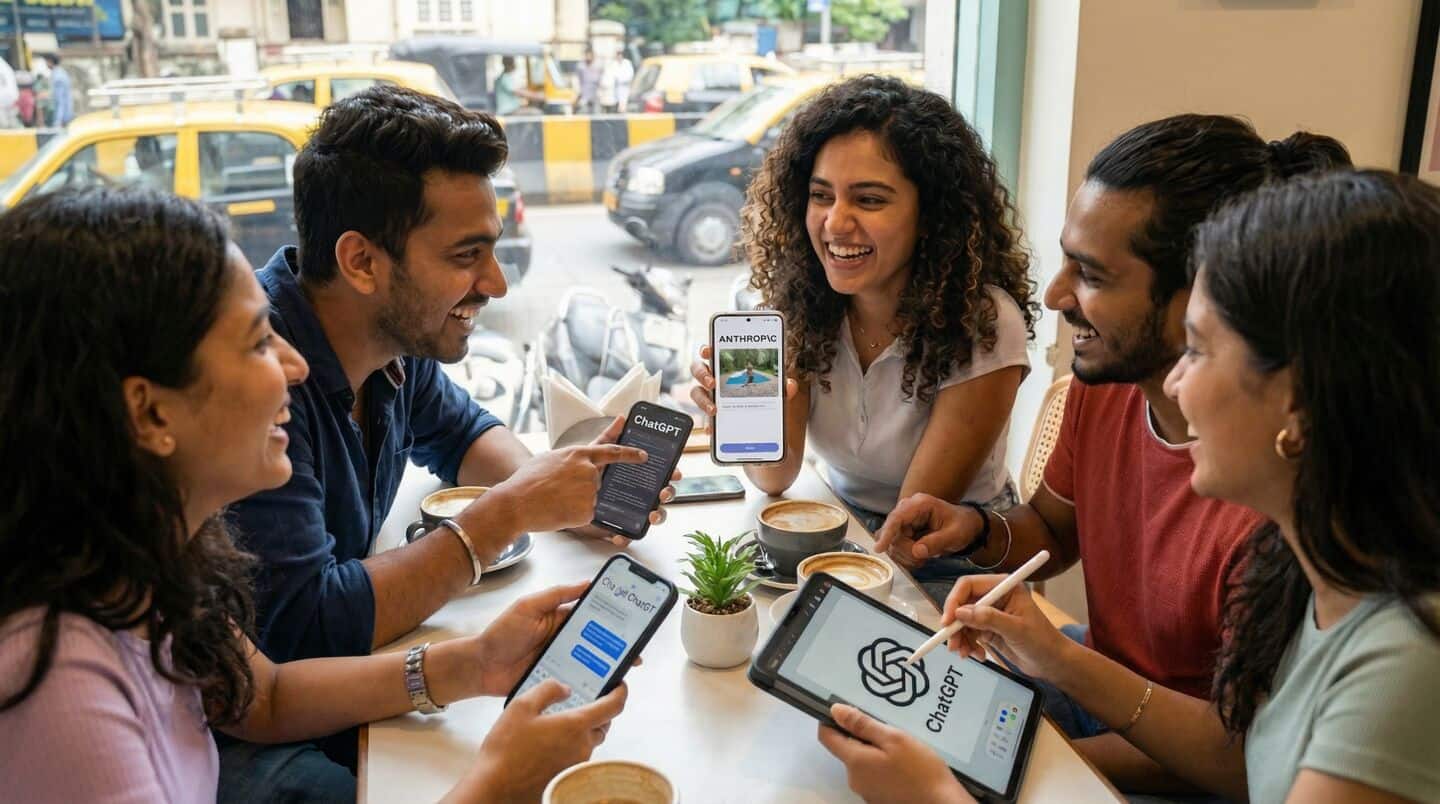
India becomes world's largest market for generative AI app downloads
What's the story
India has emerged as the world's largest market for generative artificial intelligence (AI) app downloads, according to a report by Sensor Tower. The country witnessed an astonishing 207% year-on-year increase in such downloads in 2025. This growth has outpaced even the United States, making India a leader in the global AI space.
User statistics
Disparity between downloads and revenue
The report highlights that India contributed to nearly 20% of global generative AI app downloads.
This massive user base, however, hasn't translated into revenue generation.
In-app purchases by Indian users accounted for only about 1% in 2025.
This discrepancy shows the difficulty companies face in turning rapid adoption into sustainable revenue streams from their services or products.
Revenue challenges
Revenue growth remains sluggish
Despite the spike in downloads, revenue growth has been sluggish. In-app purchases fell by 22% in November and 18% in December.
This decline came even as download rates peaked at 320% and 260% year-over-year during September and October, respectively.
The report notes that promotional pushes and new AI platforms like DeepSeek, Grok, and Meta AI have contributed to this download surge.
Offer effects
ChatGPT Go's free access impacts revenue
The effect of free access offers on revenue is evident.
After the launch of free ChatGPT Go access in November, ChatGPT's revenue in India fell by 33% and 32% in November and December, respectively.
Despite this decline, OpenAI's platform remained dominant, accounting for over 60% of generative AI in-app revenue in India during this period.
Infrastructure advantage
India's digital infrastructure fuels AI adoption
India's digital infrastructure, with over a billion internet users and 700 million smartphone owners, is a key driver of this AI boom.
The report says India accounted for about 19% of the global user base for top AI assistant apps in 2025. This is significantly higher than the US's share of 10%.
However, engagement levels still lag behind more markets like US where users spent more time per week on these apps, and logged more sessions compared to Indian counterparts.