Why Japan wants to explore the moons of Mars
What's the story
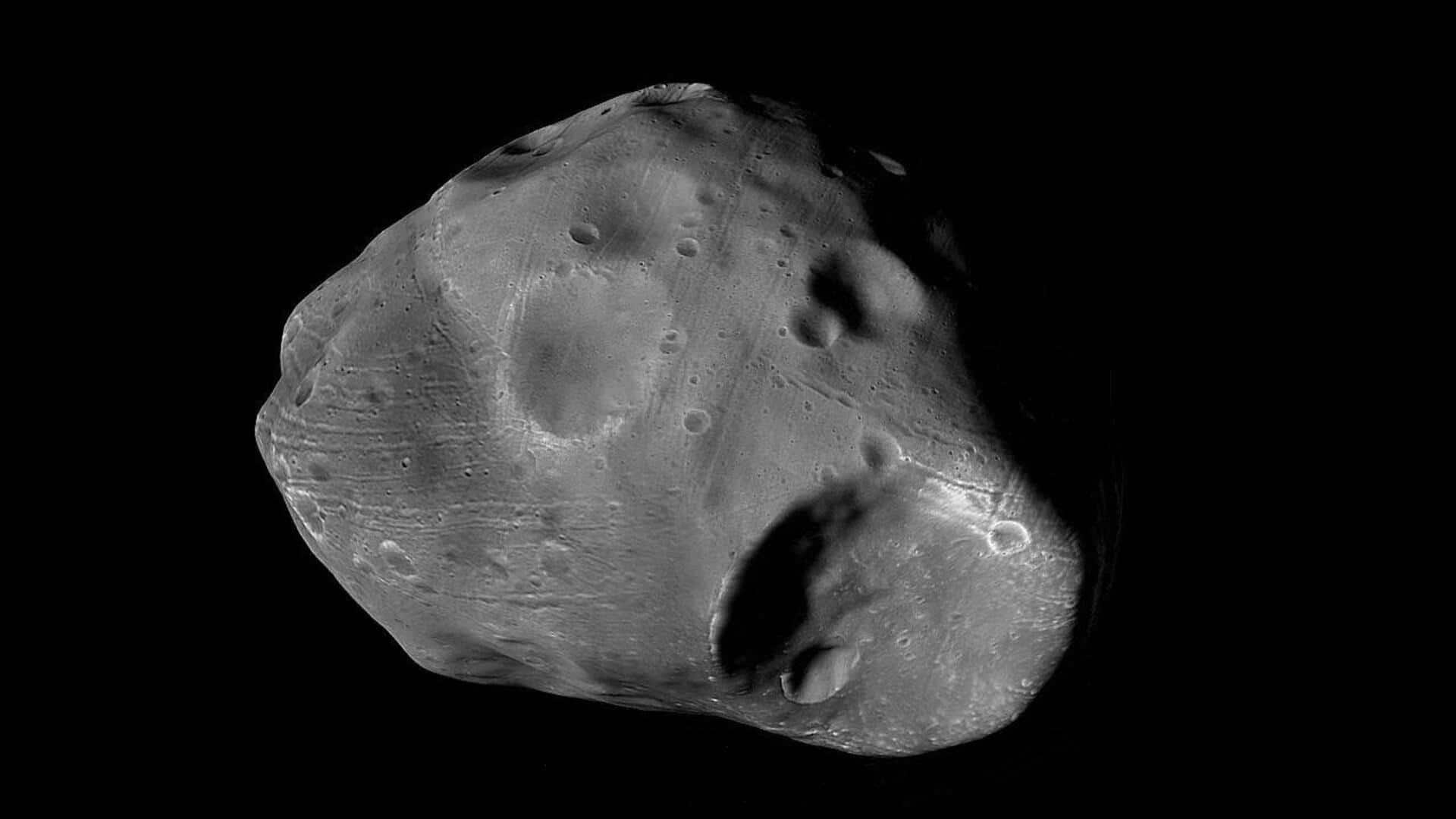
Japan is gearing up for an ambitious space mission, the Martian Moons eXploration (MMX), to explore the moons of Mars. The unmanned spacecraft will launch from Tanegashima Space Center in the coming months. It will spend about three years orbiting Mars before landing on Phobos, one of its two moons. The MMX mission aims to gather samples that could shed light on the origins of our solar system and life on Earth.
Mission goals
MMX spacecraft will collect at least 10g of material
The MMX spacecraft will collect at least 10g of material from Phobos's surface.
It will also observe Deimos, Mars's other moon, but without landing.
A return capsule is expected to land in Australia around 2031.
The Japan Aerospace Exploration Agency (JAXA) hopes this mission will provide insights into the formation of Mars and its moons, crucial information for understanding the birth of our solar system.
Origin theories
Understanding Martian moons' origins
There are two main theories about how the Martian moons came to be.
The "giant impact" hypothesis suggests they were created from a massive collision with another celestial body.
On the other hand, the "capture" hypothesis proposes that these moons are asteroids from the outer solar system that Mars captured with its gravity.
Determining which theory is correct could help us understand how habitable environments for life emerged on terrestrial planets like Earth and Mars.
Life's origins
Potential impact on understanding life
Patrick Michel, a French astrophysicist working on the IDEFIX rover for the MMX mission, said it will reveal how water, volatiles, and organic compounds were delivered from the outer solar system to rocky planets.
This process may have been crucial in making these worlds habitable.
If Phobos and Deimos are indeed remnants of these early delivery systems, they could provide clues about the origins of life itself.
Space station
Phobos as a natural space station
The MMX mission also plans to investigate the feasibility of using Phobos as a "natural space station."
This would involve developing technology for round trips to Mars, which is critical for future crewed Mars exploration.
The spacecraft's landing legs were particularly challenging to design due to Phobos's extremely low gravity.