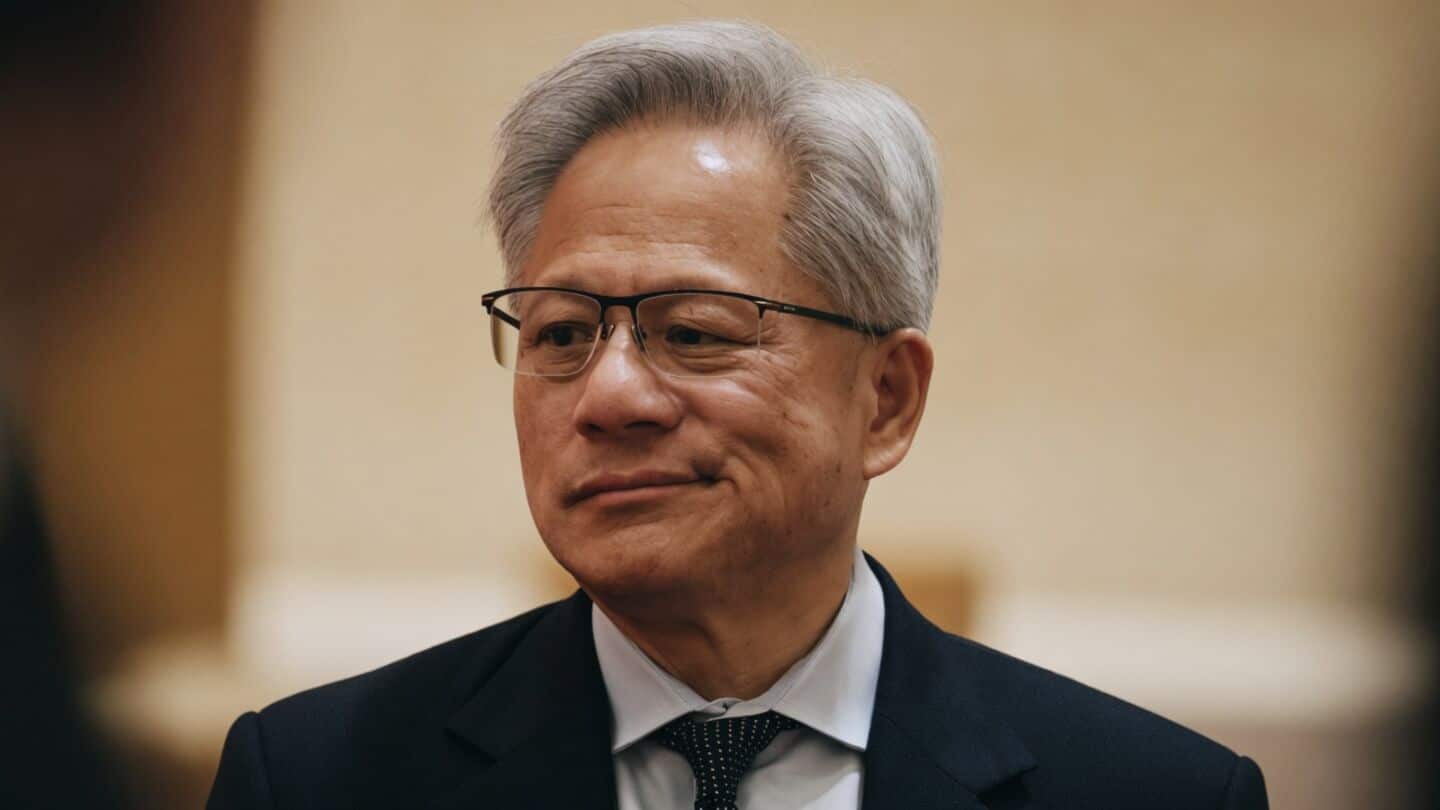
Jensen Huang says AI has zero chance of ending humanity
What's the story
NVIDIA's CEO Jensen Huang has dismissed fears of artificial intelligence (AI) ending the world by 2030. In an interview with CBS News, Huang said there is "zero percent chance" of such an event happening. He questioned the rationale behind these doomsday predictions and speculated if they were politically or commercially motivated. His comments come amid calls from other tech leaders for stronger safeguards around advanced AI systems.
Development stance
We should go as fast as we can: Huang
Huang has opposed the idea of slowing down AI development, advocating instead for its acceleration with proper safety measures.
"We should go as fast as we can irrespective of anybody else," he said in a separate CBS News clip.
He emphasized that companies shouldn't launch products before they're ready or deploy unsafe systems.
His position aligns with his earlier comments at Salesforce's Dreamforce conference, where he opposed new AI-specific laws and stressed safety as an engineering responsibility for individual companies.
Political alignment
Huang's surprise call with Trump over AI concerns
Huang's comments come after a surprise call from US President Donald Trump during his speech at the All-In Summit in Los Angeles on September 14.
Huang put the call on speakerphone as Trump assured the audience that "the robots will not be taking over" and called the broader controversy a "hoax."
Huang agreed with Trump's dismissal of an AI-led end-of-the-world scenario but disagreed with his broader characterization of fears surrounding AI as a hoax.
Industry divide
Anthropic CEO Dario Amodei called for a slowdown
The ongoing debate has been fueled by Anthropic CEO Dario Amodei's essay We Must Pace the Frontier, published on September 12.
In it, he argued for slowing down the improvement of AI models' capabilities but clarified that this doesn't mean halting model training or technical progress.
He called for independent evaluators to have continued access to frontier AI companies and coordination among developers in democratic countries, as well as international agreements on safety standards where possible.