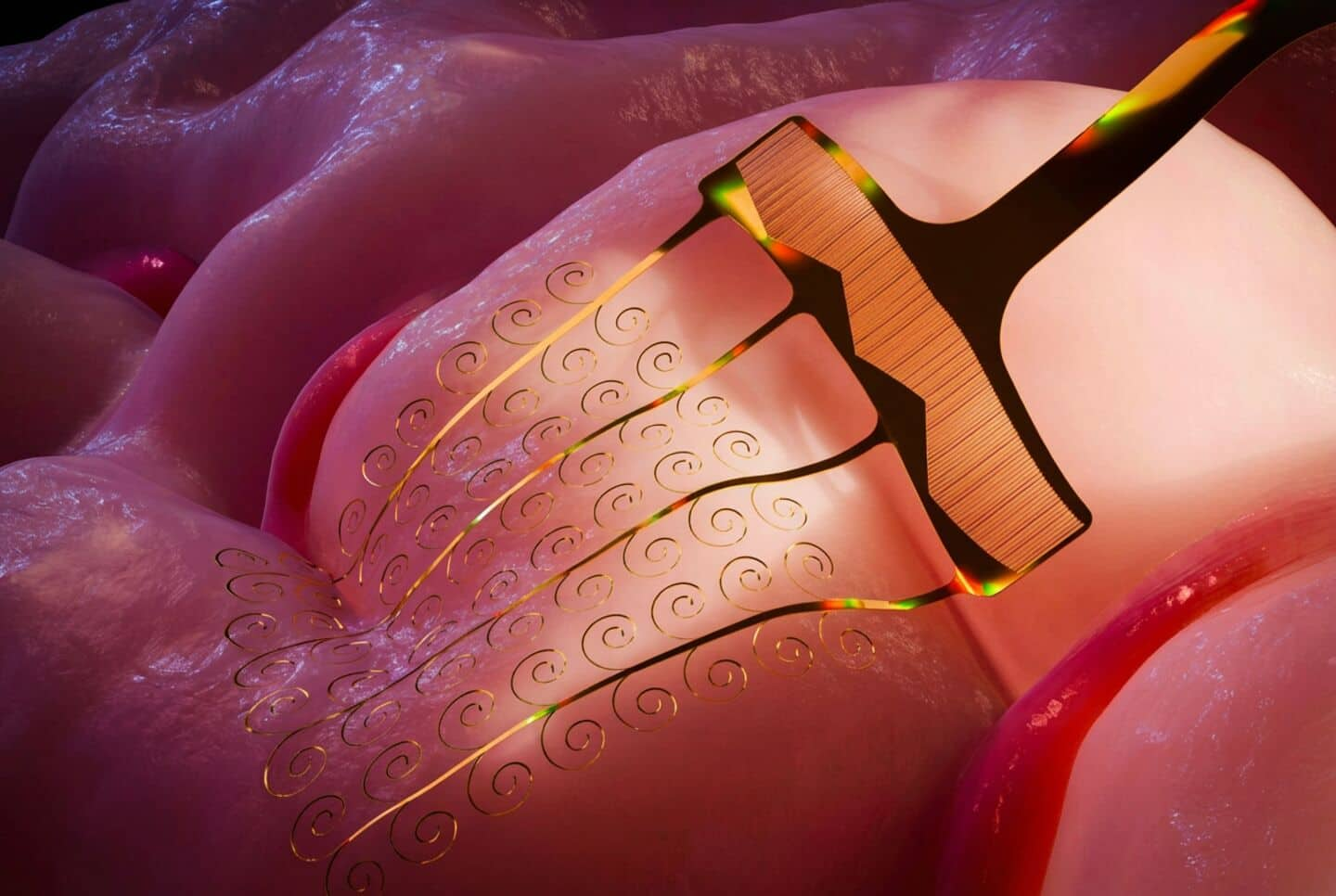
This flexible brain implant is inspired by Japanese paper-cutting art
What's the story
Chinese scientists have developed a new type of microelectrode that can flex and move with the brain. The innovation has the potential to advance brain-computer interfaces, according to a study published in Nature Electronics. The design of these neuronal activity recorders was inspired by kirigami, a traditional Japanese art form known for its intricate 3D designs made by cutting and folding paper.
Innovation
New design aims to solve electrode displacement problem
The new design aims to solve the problem of electrode displacement, a major hurdle in brain-computer interface research.
This problem has been particularly prominent in Elon Musk's Neuralink project.
The soft microelectrode arrays developed by the Chinese scientists were successfully implanted into macaque monkeys.
They could flex and move with brain tissue, allowing for simultaneous recording of hundreds of neurons.
Advancement
Need for effective brain-computer interfaces
The researchers emphasized the need for implantable microelectrode arrays that can connect with multiple neurons over large spatial and temporal scales.
This is a major requirement for developing effective brain-computer interfaces.
Such systems create a direct connection between brain activity and computers, using electrodes to record neural signals. These signals are then analyzed to perform tasks like controlling robotic arms.