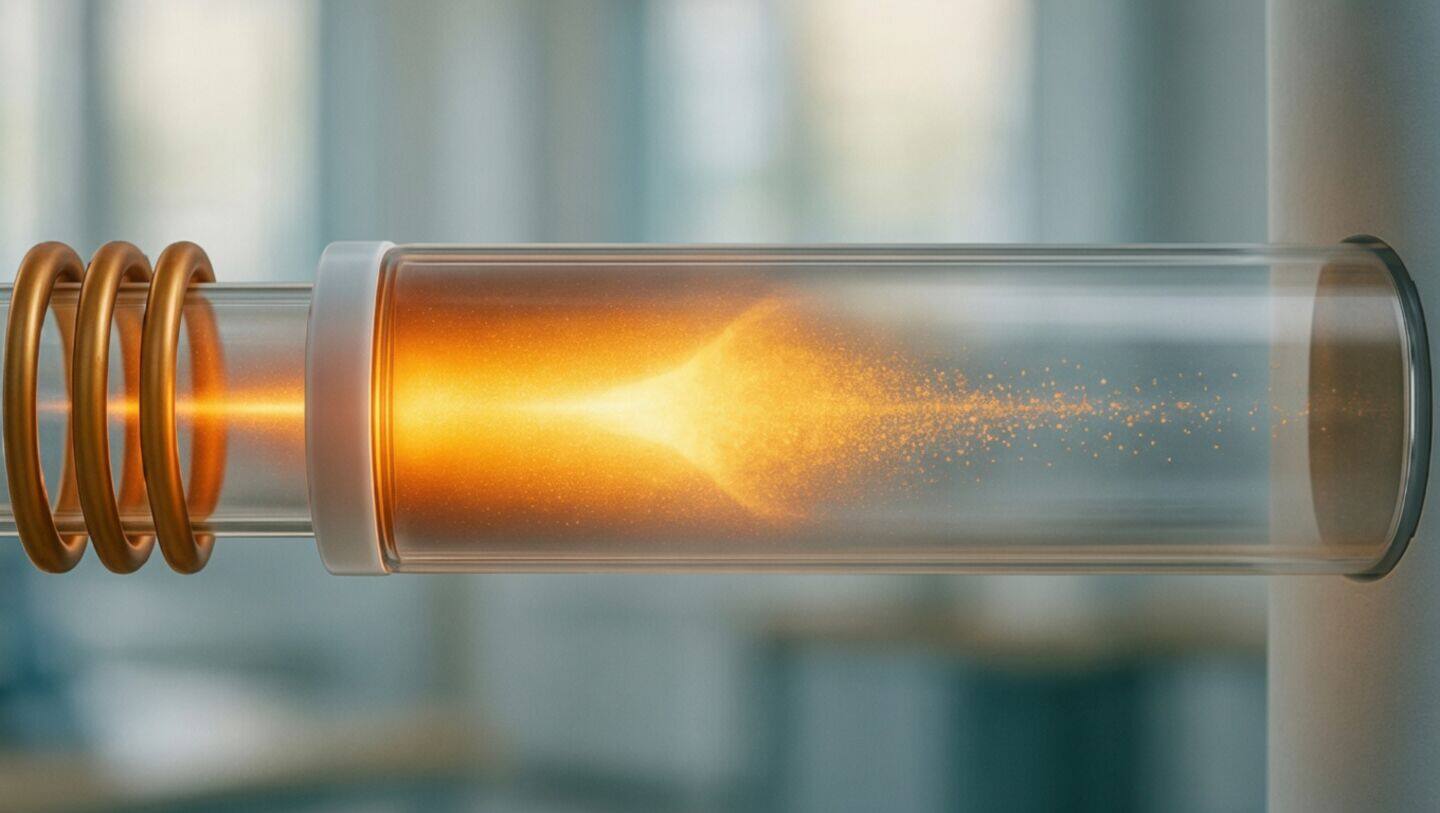
Lawrence Livermore scientists create tiny fireballs to study nuclear fallout
Technology
Scientists at Lawrence Livermore National Laboratory have made tiny fireballs in the lab to see how nuclear fallout really forms during accidents.
Their new research, published today, shows that current models might be missing some key details, and these experiments can give us a more accurate picture of what actually happens.
Uranium condenses 1st, cesium interacts later
By recreating the intense heat and cooling of a real nuclear event, the team watched how elements like uranium, cerium, and cesium behave.
They found that uranium condenses first, while cesium takes its time and interacts more at higher temperatures, something older models don't really capture.
This could help scientists predict fallout more accurately if an accident ever happens.