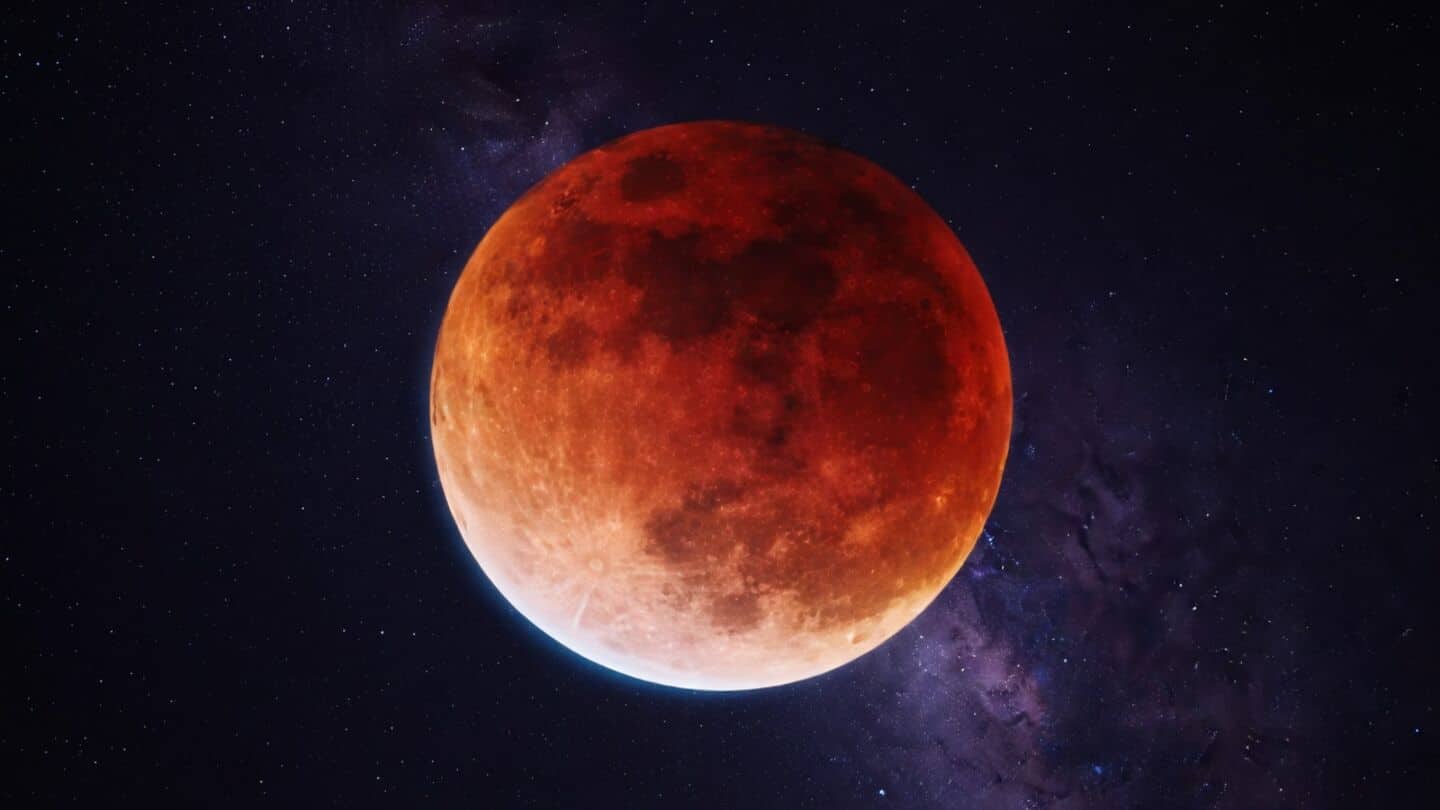
Lunar eclipse on August 28: When and where to watch
What's the story
The next lunar eclipse will occur on August 28, 2026. This will be the last Moon-related eclipse of the year. A lunar eclipse occurs when Earth is perfectly aligned between the Moon and Sun, casting Earth's shadow on the Moon's surface and dimming it. It usually happens during a full moon and can sometimes turn the lunar surface a striking red over several hours.
Eclipse types
What are different types of lunar eclipses?
There are two main types of lunar eclipses: partial and penumbral.
A partial lunar eclipse occurs when the Moon passes through only a part of Earth's umbra, resulting in a shadow that grows and recedes without fully covering the Moon.
On the other hand, during a penumbral eclipse, the Moon travels through Earth's penumbra or outer part of its shadow. This causes a slight dimming that's often hard to notice unless you're aware it's happening.
Viewing tips
Visibility, timing, and other details
The upcoming lunar eclipse will be a partial one, covering around 96.2% of the Moon.
It will be visible from parts of Europe, Asia, Africa, North America, South America, and Antarctica.
However, it won't be visible in India as it is just missing the western parts of the country.
Unlike solar eclipses that require eye protection from sunlight's intense rays, lunar eclipses can be safely viewed directly without any filters or special glasses.