Lunar eclipse on March 3: How to watch 'Blood Moon'
What's the story
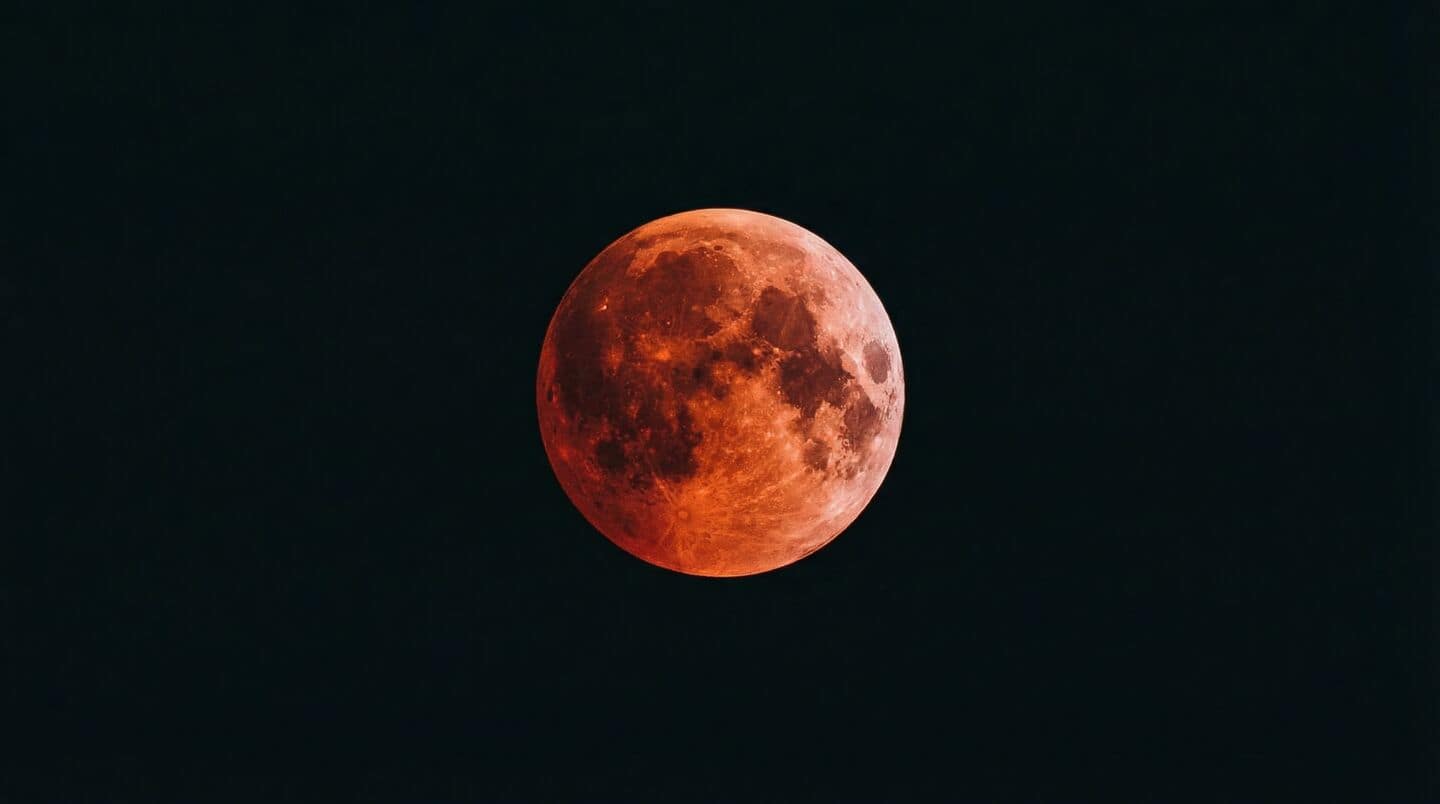
A total lunar eclipse, also known as a "Blood Moon," will occur on March 3, 2026. This celestial event happens when the Earth comes between the Sun and the Moon, blocking direct sunlight from reaching the latter's surface. During this time, only light filtered through Earth's atmosphere reaches the Moon. This is why it takes on a reddish hue during totality.
Viewing tips
Visibility and viewing tips
The March 3 total lunar eclipse will be visible from large parts of Asia, Australia, North America, and some regions of South America.
The Moon will enter Earth's shadow at different local times depending on the observer's location.
Unlike solar eclipses that require special eye protection, lunar eclipses can be safely viewed with the naked eye. However, binoculars or telescopes can enhance details on the lunar surface during this event.
Eclipse mechanics
What is a total lunar eclipse?
A total lunar eclipse occurs when the Sun, Earth, and Moon are perfectly aligned with Earth in between. This alignment casts Earth's shadow on the Moon.
The darkest part of this shadow, known as the umbra, is where the Moon appears deep red—a phenomenon called a Blood Moon.
The event can be viewed from anywhere on Earth where the Moon is above the horizon at that time.
Color explanation
Why does the Moon turn red?
The reddish color of the Moon during a total lunar eclipse is due to Earth's atmosphere bending and filtering sunlight.
As sunlight passes through our planet's atmosphere toward the Moon, shorter blue wavelengths are scattered more than longer red ones.
This is similar to why sunsets and sunrises appear red. The Sun's position on the horizon causes its light to travel through more atmosphere, scattering blue light and allowing red light to dominate.
Eclipse impact
Cultural significance and community engagement
Total lunar eclipses have fascinated people across cultures for centuries.
The March 3 eclipse in India coincides with the Holi festival, piquing local interest in celestial events.
These occurrences are perfect opportunities for public skywatching events and community astronomy gatherings, as they can be viewed without optical aids.
They also serve as an accessible introduction to the mechanics of our solar system for all ages.