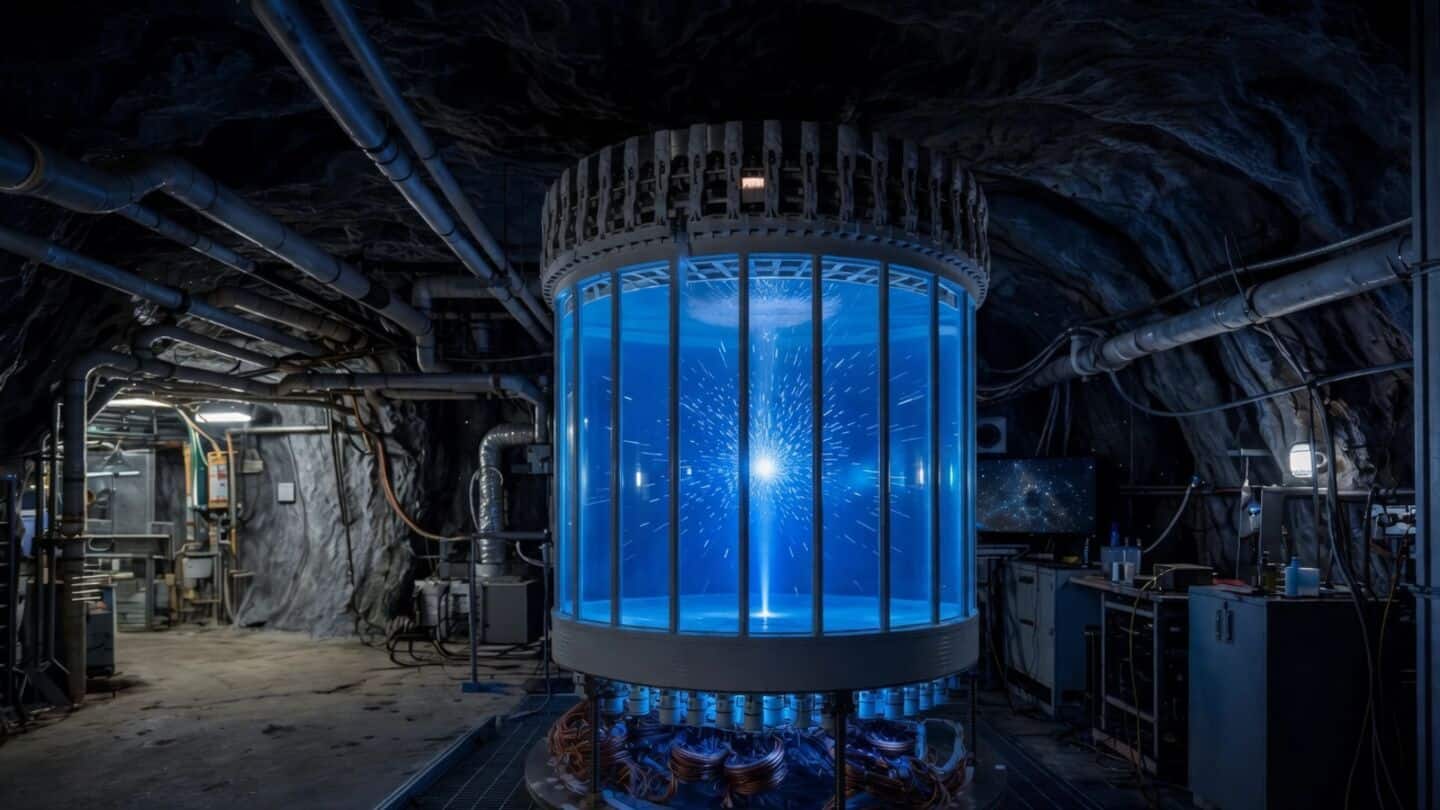
LUX-ZEPLIN in South Dakota detects enigmatic interaction hinting dark matter
Scientists working on the LUX-ZEPLIN (LZ) experiment in South Dakota just spotted a mysterious particle interaction that could be a big clue about dark matter.
Announced at a major physics conference in Japan, this result isn't quite enough to call it a discovery yet, but there's only about a 0.5% chance it's something we already know, so it's definitely got researchers excited.
LUX-ZEPLIN uses 10 tons liquid xenon
The LZ team uses 10 tons of ultrapure liquid xenon to hunt for dark matter particles called WIMPs, and this signal points to something much heavier than expected, more than 200 times the mass of a proton.
With around 250 scientists and engineers from 39 institutions worldwide involved, they're now digging deeper into the data.
As Rick Gaitskell from Brown University put it, finding something like this where there's barely any background noise makes it a pretty big deal for understanding what dark matter might actually be.