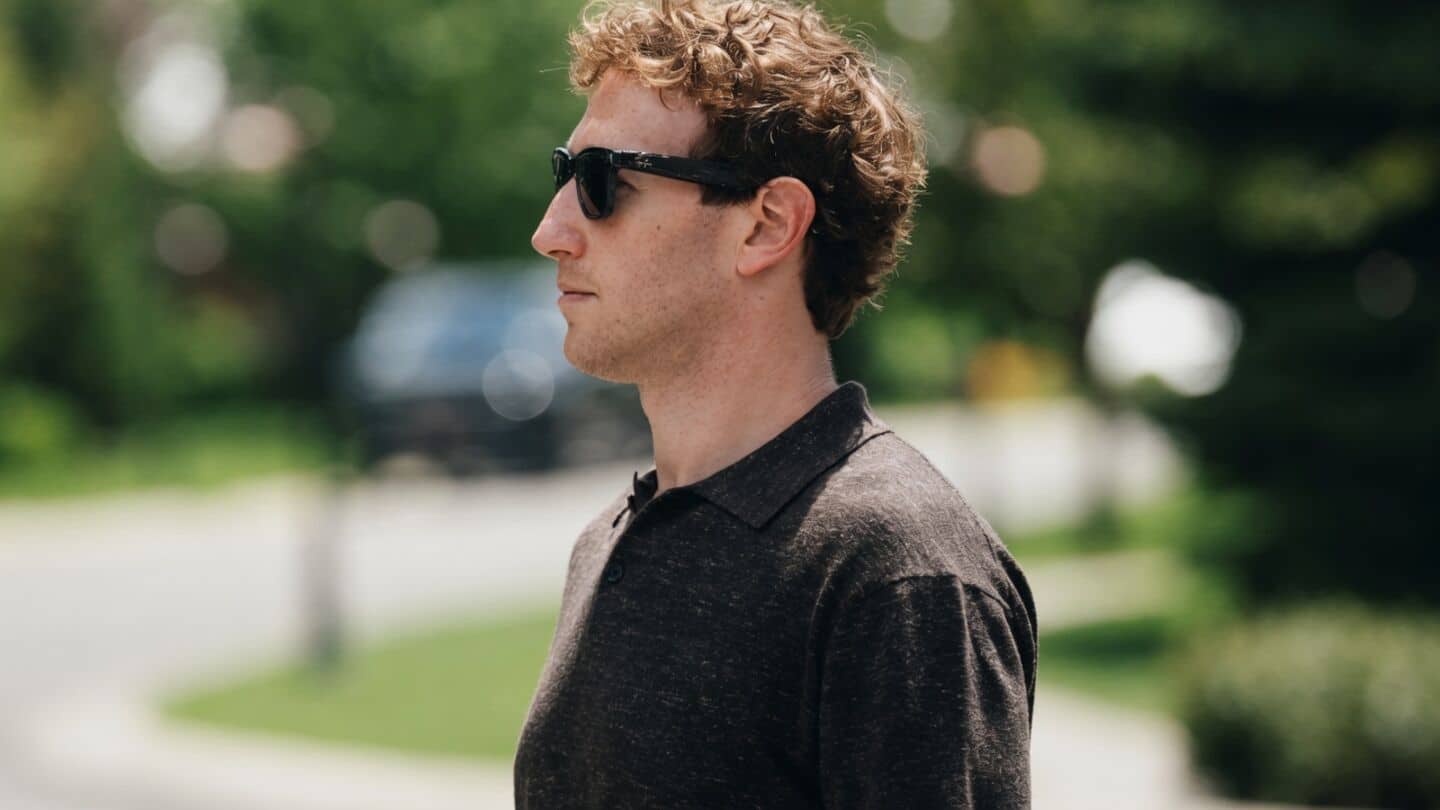
Zuckerberg rejects AI slowdown calls, says competition drives safety
What's the story
Meta CEO Mark Zuckerberg has rejected calls for a collective slowdown in the development of artificial intelligence (AI) technologies. He believes that individual AI labs can focus on safety without waiting for an industry-wide agreement. His remarks come as Anthropic CEO Dario Amodei, OpenAI CEO Sam Altman, and SpacexAI chief Elon Musk have called for stronger safeguards in the rapidly evolving field of AI.
Competitive edge
Zuckerberg's post on X
In a post on X, Zuckerberg argued that competition itself could push companies toward better safeguards.
He said users will increasingly prefer AI systems they can trust to follow instructions reliably, making "alignment" an important commercial advantage.
"Any lab that doesn't focus on alignment will fall behind," he added, emphasizing the need for individual labs to prioritize safety measures.
Diverging views
Amodei's call for deliberate AI development
Zuckerberg's comments come as Amodei has called for a more deliberate pace in AI development, warning that the technology could outpace existing safety measures.
He suggested greater use of independent evaluators and closer collaboration among frontier AI companies.
However, Zuckerberg believes that coordinated action isn't necessary for responsible development, citing Meta's own decision to delay its Muse model while working on safety measures.
Oversight emphasis
Meta's Chief AI Officer speaks out
Meta's Chief AI Officer Alexandr Wang echoed Zuckerberg's stance while stressing the need for stronger oversight.
He said AI labs should have governance mechanisms, outside evaluators, and independent scrutiny around major model releases.
Wang highlighted recursive self-improvement as a potential risk area and said Meta is focusing most of its computing resources on products/services instead of competing in this area.
Rising concerns
Disagreement over AI development reaches Washington
The disagreement over AI development has moved beyond technical circles and into Washington.
Amodei's proposal has met resistance from US President Donald Trump, who dismissed calls for additional AI guardrails.
During an event on Monday, NVIDIA CEO Jensen Huang also disagreed with the idea of slowing down AI development.
This leaves the industry divided between formal coordination and external checks versus independent action and market competition as a potential driver for safer systems.