Mars's polar ice is not as dusty as we thought
What's the story
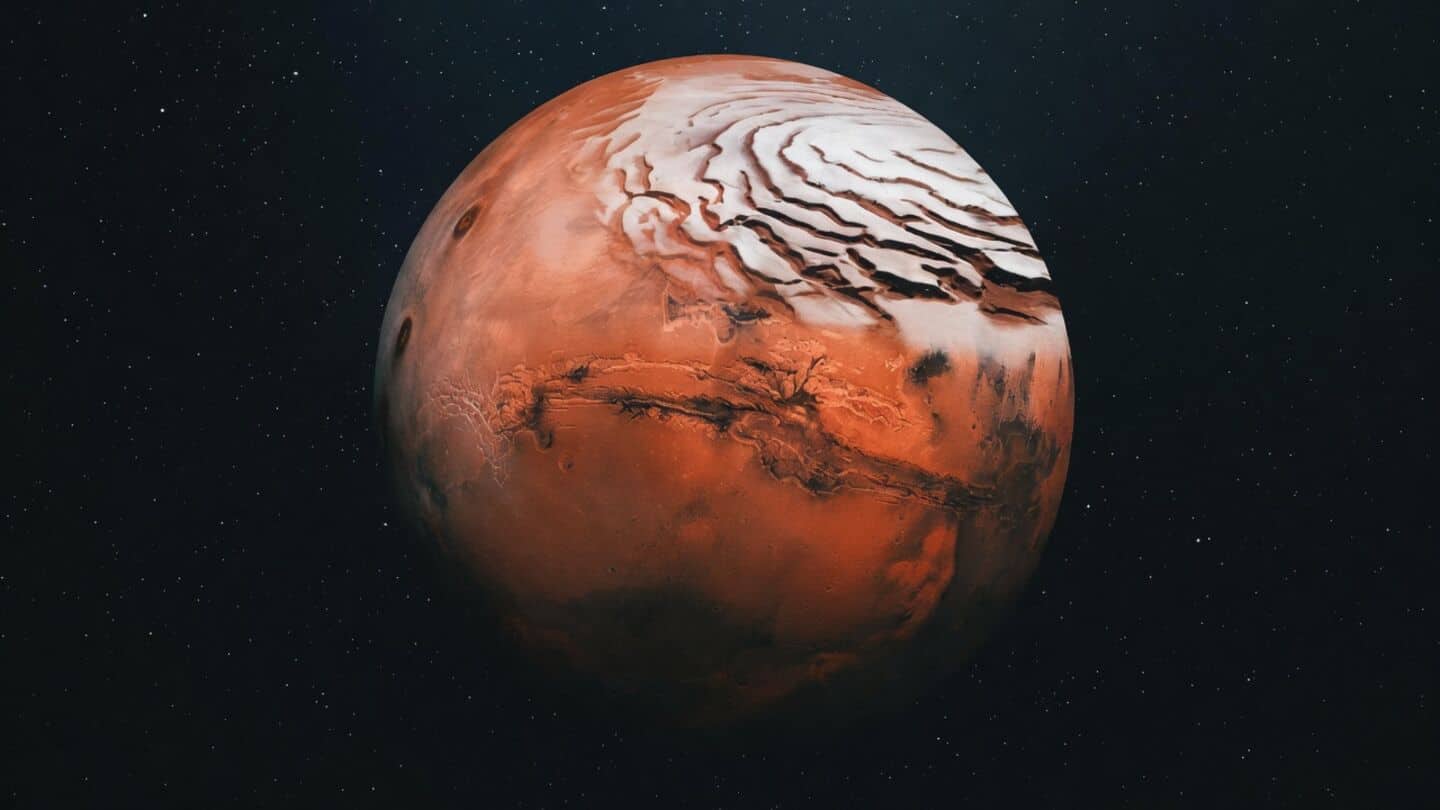
A recent study has revealed that the water ice at Mars's north pole is much cleaner than previously thought. The findings, by Aditya Khuller from the University of Washington and graduate student Pari Mohan, could change our understanding of the Red Planet's climate history and its potential habitability. The new analysis found that this ice contains only 3% dust by mass, significantly less than earlier estimates which suggested up to 25%.
Insulating effect
Dust impacts ice's ability to absorb sunlight
Dust in ice acts as an insulator, absorbing sunlight and causing the ice to melt or sublimate depending on air pressure. Khuller explained that if the ice is dustier, it would be darker and absorb more sunlight, leading to faster vaporization.
Methodology shift
New method for analyzing Martian ice
The previous method used to determine the properties of Mars's water ice was based on lunar regolith (dirt) on Earth's Moon.
However, Khuller found this technique wasn't accurate when applied to Earth's ice.
He and Mohan then used a more reliable approach developed by Steve Warren, a professor emeritus at the University of Washington, which has been successfully applied in studying snow and ice on Earth for decades.
Climate implications
Seasonal changes in polar ice caps
Mars has ice caps at both poles, with a frosty layer of carbon dioxide ice covering them in winter.
The south pole's layer is tens of feet deep, while the north pole's is about a meter deep.
In summer, this carbon dioxide ice sublimates into the air faster at the north pole due to its relative thinness, exposing the more permanent water-ice cap beneath.
Life possibilities
Implications for past microbial life on Mars
The different layers of ice in Mars's polar caps contain varying amounts of dust, with dirtier layers sandwiched between cleaner ones.
These variations could have affected Mars's climate differently over time.
The current residual cap is low in dust and is contributing to Mars's cold environment.
However, when the dustier layers were exposed, they may have absorbed enough sunlight to melt their particular layer of ice, creating nutrient-rich liquid water pockets that could have supported microbial life.