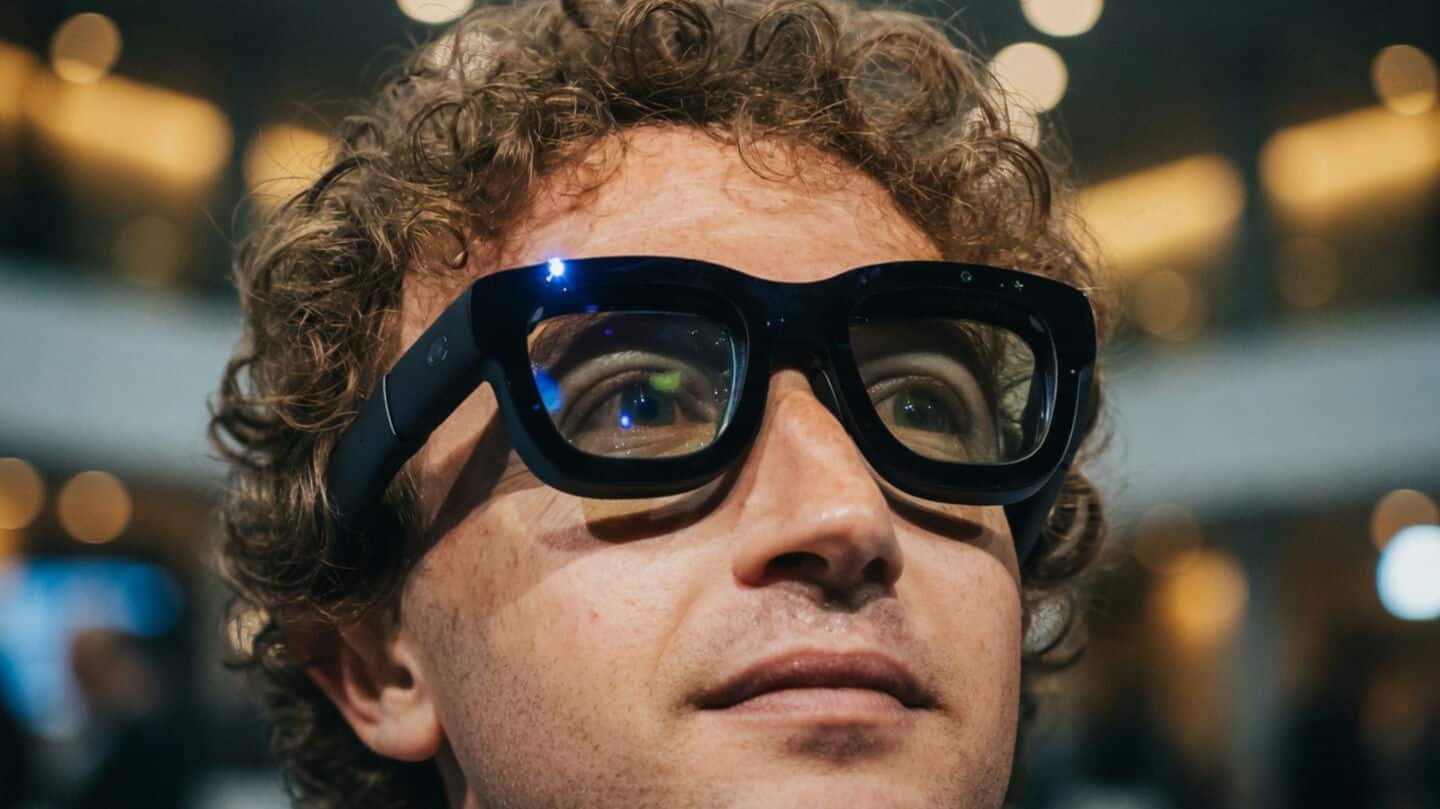
Meta working on camera-free smart glasses as privacy concerns grow
What's the story
Meta is working on a new camera-free model of its smart glasses, called Luna, according to The Information. The move comes as a response to consumer concerns over privacy and surveillance. Unlike its predecessors, the Luna model will not have any integrated cameras or "spy equipment." Instead, it will offer an advanced communication system with Meta's AI chatbot and Muse, an AI consumer agent.
Specifications
The new model will have 6 built-in microphones
The Luna smart glasses will come with six built-in microphones for direct communication with the AI chatbot.
A button on the side of the glasses will trigger this feature when pressed.
The new model is expected to be unveiled at Meta Connect, an annual hardware/developer event in Menlo Park next week.
Market standing
Addressing challenges in the smart glasses market
The smart glasses market has expanded over the past few years, with Meta positioned near the front of the pack of providers.
However, concerns over usability, cost, and privacy have plagued this sector. Many consumers are still unsure about how and why they should use these devices.
Despite these challenges, Meta's Reality Labs continues to develop its line of smart glasses.
Release details
Luna to come in 2 design variations
The new camera-free smart glasses from Meta, dubbed Luna, could be launched as early as next month.
The model will reportedly come in two design variations: Clubmaster and Burbank.
While the absence of a camera is expected to make the new model look and feel more like a regular pair of glasses, it will still pack a lot of hardware for accessing Meta AI.
AR development
Meta is also working on augmented reality glasses
Along with Luna, Meta is also working on its own augmented reality (AR) glasses, reportedly called Phoenix.
A major demo of these AR specs is expected to show a new way of video calling. The glasses will be able to create virtual workspaces and large virtual movie screens.
However, they are still in development and are not expected to launch until 2027.