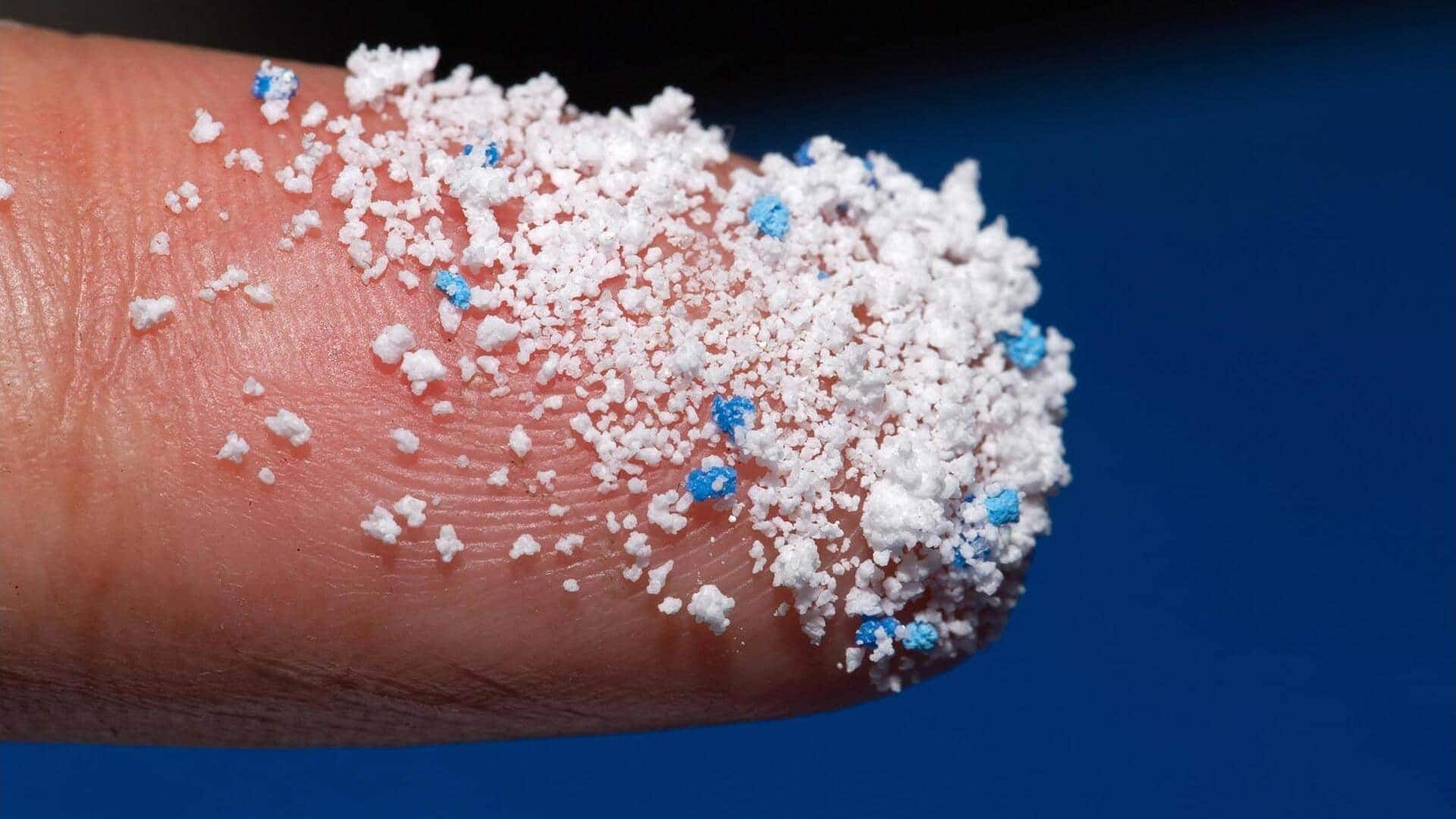
This is how microplastics harm our body
What's the story
A new study published in the journal Nature has identified a potential mechanism through which microplastics could harm human health. The research shows that these tiny plastic particles can produce highly reactive molecules when they come into contact with water. These molecules have been linked to serious health issues such as cardiovascular disease, dementia, and fertility problems.
Health impact
Chemical activity heightened when microplastics are broken down
The study also highlights that the chemical activity of microplastics is heightened when they are broken down into smaller particles.
This significantly increases their surface area, leading to chronic inflammation when ingested.
Wei Min, a chemist at Columbia University and one of the senior authors of the study, explained this phenomenon in detail to Scientific American.
Plastic types
Study looked at commonly used bulk plastics
The study looked at particles of commonly used bulk plastics such as polyethylene, polypropylene, polystyrene, polyvinyl chloride (PVC), and polyethylene terephthalate (PET).
The researchers found that when these materials come into contact with water, they cause the "spontaneous generation of reactive oxygen species."
This further supports the idea that microplastics could contribute to health problems.
Biological damage
Plastic's breakdown into smaller particles increases health risks
As plastic breaks down into smaller particles, its surface area increases dramatically.
This process changes the water around microplastics, creating high-energy, reactive radicals.
These radicals could be responsible for biological damage observed in animals and possibly humans due to microplastic exposure.
Min explained this potential health risk in a press release from Columbia Climate School.
Brain contamination
Microplastics found in cadaver brains
A 2025 study published in Nature found an increase of microplastics in cadaver brains, with up to a spoonful per sample.
The findings were shocking as they indicated that our brains today could be made up of 99.5% brain matter and the rest plastic.
This further emphasizes the potential health risks posed by microplastics and their widespread presence in various environments.