NASA chief says agency has images of unexplained UFOs
What's the story
NASA Administrator Jared Isaacman has revealed that the agency has captured images of unidentified objects, which remain unexplained by scientists. Speaking on The Jack Gordon Podcast, he said some imagery collected by NASA cannot currently be attributed to comets or other known natural phenomena. "We have captured imagery... based on the data that we have within that imagery, we don't know what it is," Isaacman said.
Life possibilities
Isaacman hints at potential for widespread life in the universe
While Isaacman didn't directly say that the unexplained images could be proof of aliens, he did suggest that humanity might one day find out that life is common across the universe.
"I think there's a very real possibility we're going to arrive at a conclusion in our lifetime that perhaps there's life everywhere out there and that it isn't as infrequent as we might think it to possibly be," he said.
Martian mystery
Mars samples may hold clues to ancient alien life
Isaacman also hinted that NASA's Mars samples could provide evidence of ancient alien life.
He said, "We got samples on Mars right now. If we bring them back, there is a very high probability that they will point to, at some point, microbial life at least on Mars."
Conspiracy rejection
NASA chief debunks UFO conspiracy theories
Despite the unexplained images, Isaacman rejected one of the most persistent UFO conspiracy theories.
When asked if the US government had recovered crashed alien spacecraft or extraterrestrial bodies, he said he had never seen evidence to support those claims.
This clarification separates NASA's findings from popular conspiracy theories about government cover-ups of alien encounters.
Space exploration
Isaacman's vision for humanity's future in space
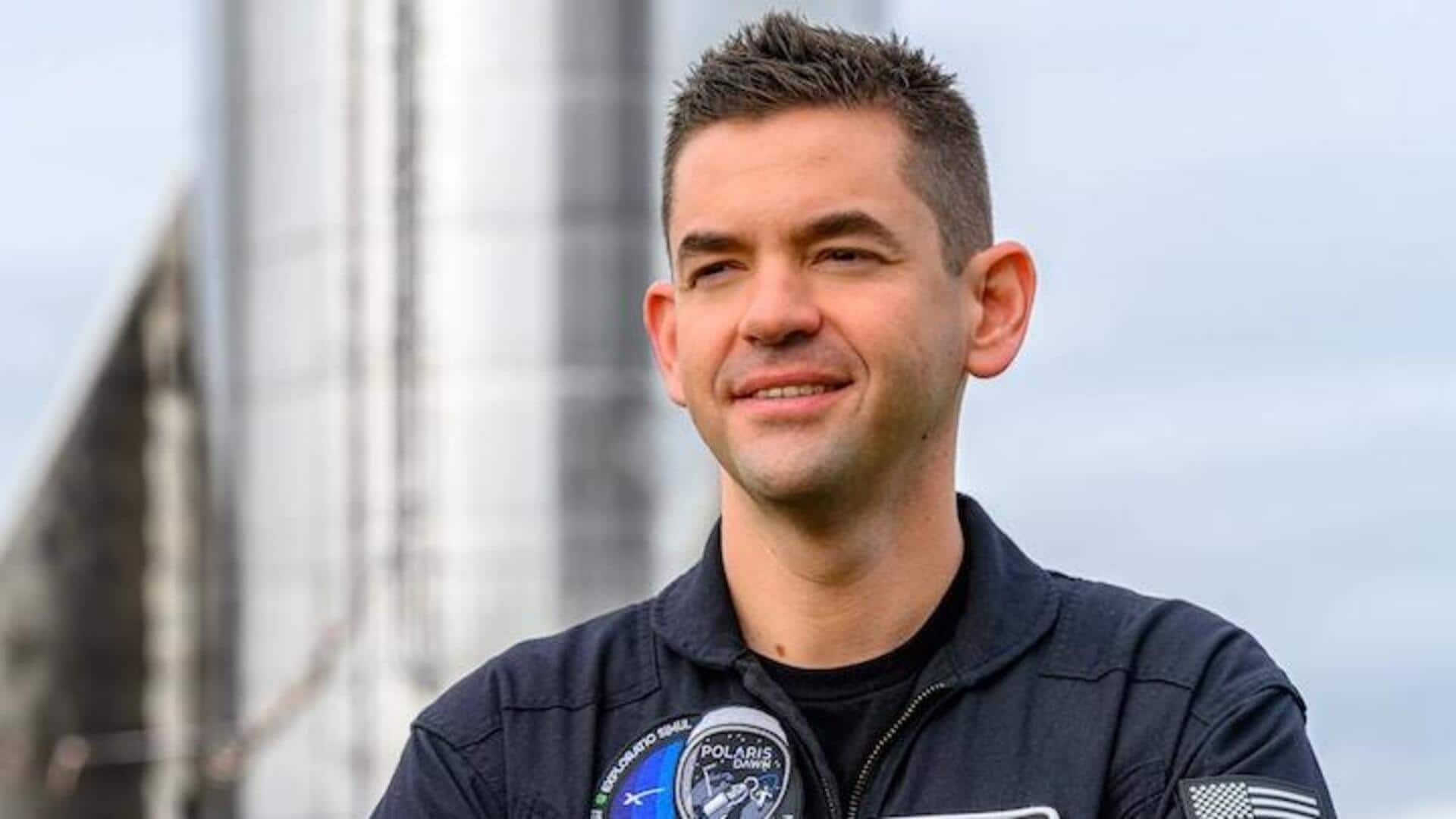
Isaacman, a billionaire entrepreneur and civilian astronaut appointed to lead NASA, said the search for life elsewhere remains one of the agency's biggest scientific goals.
He defended future human exploration of space, arguing that humanity's long-term future should not be confined to Earth.
"I do not believe it is our destiny to remain on one planet," Isaacman said, emphasizing his commitment to expanding human presence beyond our home planet.