Scientists turn plastic waste into food for astronauts
What's the story
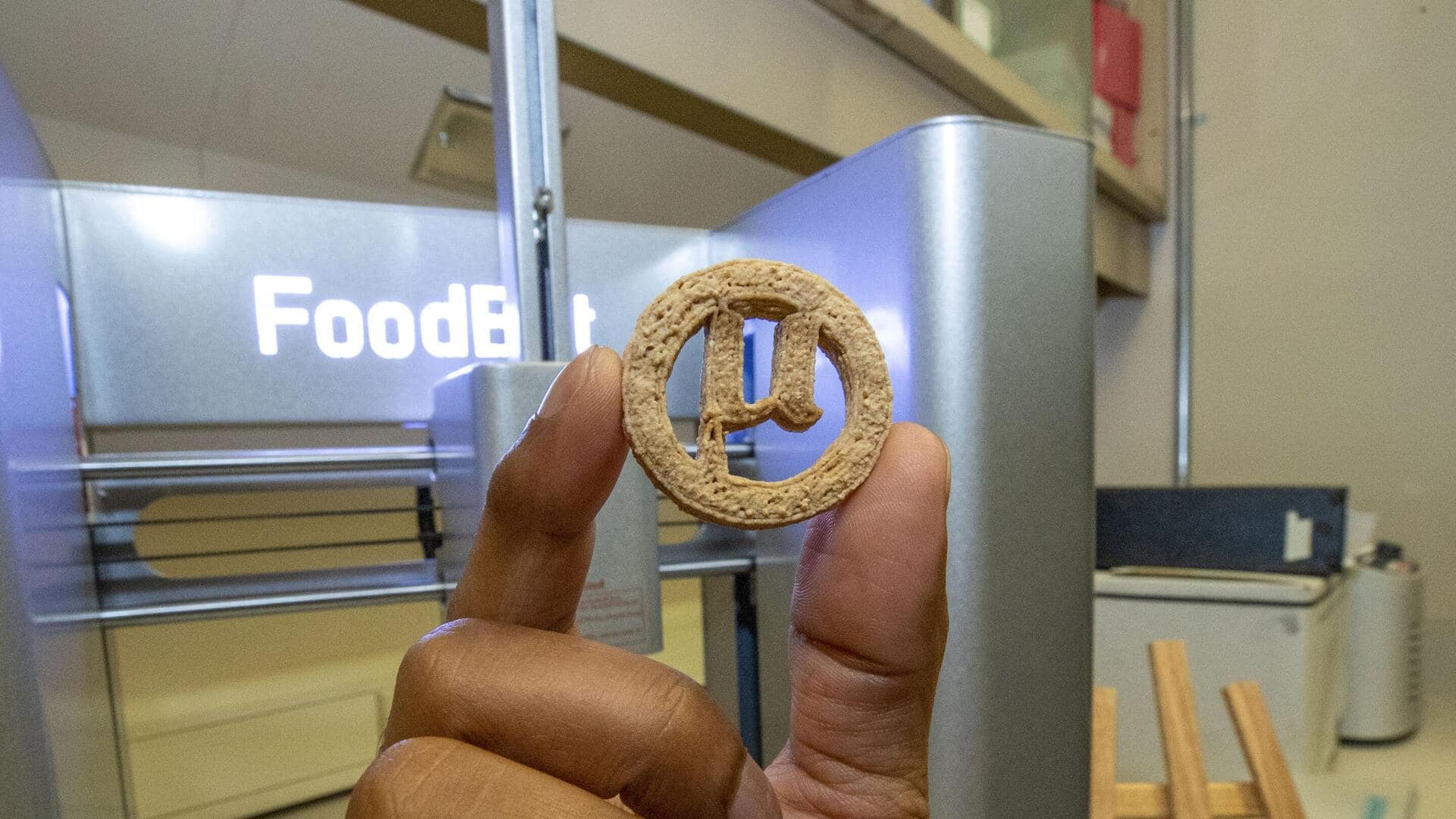
In a groundbreaking development, researchers have created cookies from upcycled plastic as part of a NASA-funded project. The effort is aimed at feeding astronauts on future space missions. The innovative technology uses specially designed yeasts to convert plastics and agricultural waste into edible proteins, fats, and flavorings. This slurry is then fed into a 3D printer to create disc-shaped "cookie."
Innovative approach
'Plastic is carbon and food is carbon'
Dr. Lahiru Jayakody, a microbiologist from Southern Illinois University Carbondale and the project lead, said his lab focuses on technologies for plastic upcycling.
He explained their thought process behind this project by saying, "We thought, why not look into food? Plastic is carbon and food is carbon."
The team hasn't yet tasted these plastic-derived cookies as they are waiting for institutional approval to conduct human testing.
Funding source
Funding and type of plastic used
The process of turning waste plastic into nutrition was funded by NASA's Deep Space Food Challenge.
The challenge invited scientists to come up with new food technologies to tackle the problem of feeding astronauts on long journeys.
The researchers used polyethylene terephthalate (PET), a common type of plastic found in single-use water bottles, for this project.
Conversion process
How do you turn plastic into food?
The team first "digested" PET with water and oxygen at high temperature and pressure to break down the tough material into smaller carbon-rich molecules.
These were then fed to genetically reprogrammed yeast, which used the plastic-derived molecules as food.
The yeast converted carbon from plastic into new biological molecules such as proteins, fats, and other nutrients that could be mixed with starch and shaped into edible products.
Cost reduction
Potential applications of this technology
Currently, the production cost of these cookies stands at $60 per kilogram. However, the team expects that improving yeast efficiency and scaling up production will bring down this cost in the future.
They also suggest that beyond long-distance space travel, this concept could be applied in extreme environments on Earth such as submarines or disaster zones.