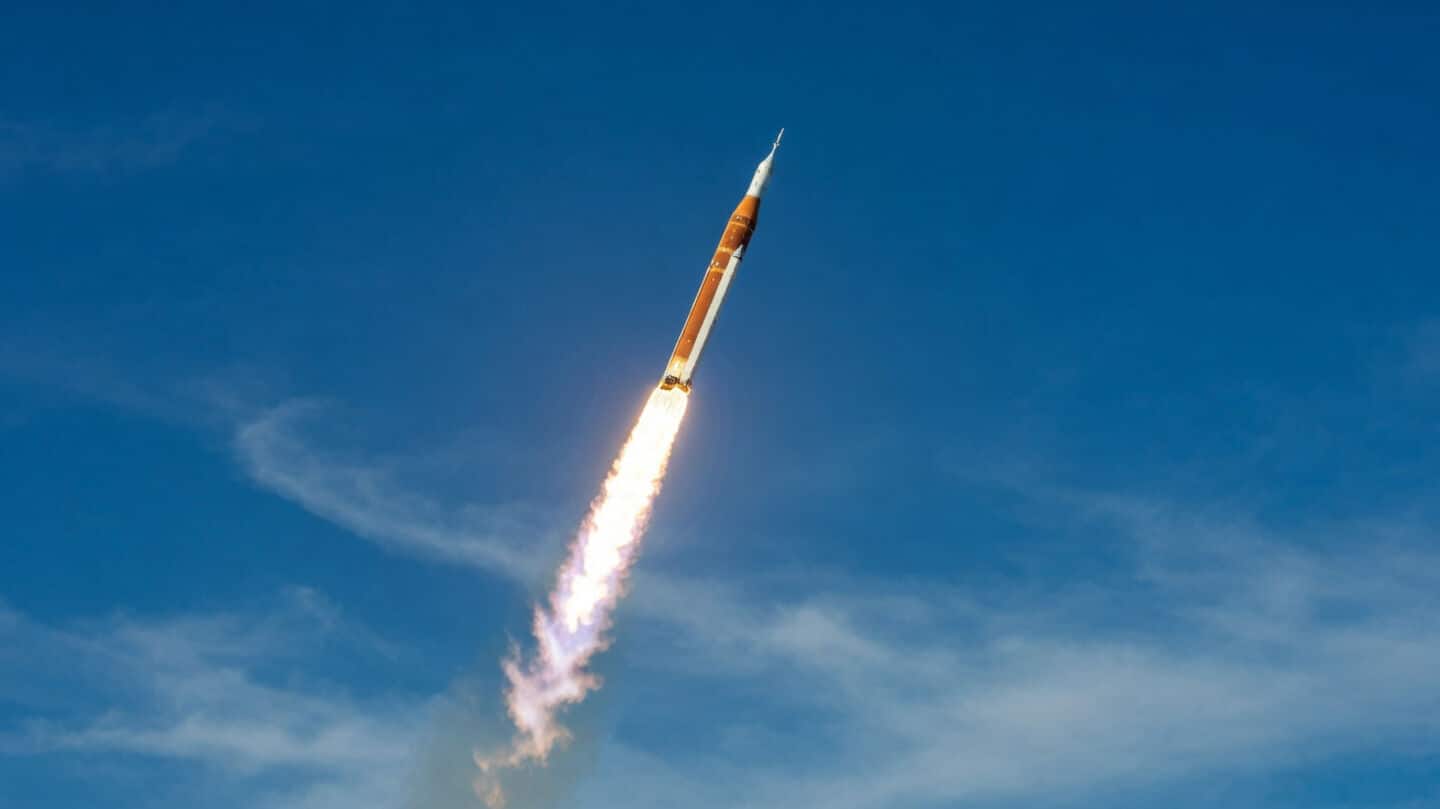
NASA launches Artemis II, first crewed Moon mission since 1972
What's the story
NASA has successfully launched its Artemis II mission, marking the first crewed journey to the Moon in over half a century. The historic flight took off from Florida's Kennedy Space Center on Wednesday evening in the US. The four-member crew includes NASA commander Reid Wiseman, pilot Victor Glover, mission specialist Christina Koch, and Canadian Space Agency mission specialist Jeremy Hansen.
Mission details
Artemis II is a 10-day journey around the Moon
Artemis II is a 10-day journey that will take the crew around the Moon and back. It is not a landing attempt, but rather a test of NASA's capabilities for future deep space missions.
The mission follows the success of the uncrewed Artemis I flight in 2022, making it NASA's first crewed mission with its Space Launch System (SLS) rocket and Orion spacecraft.
Astronaut profiles
Meet the first crewed mission to Moon in over half-century
The Artemis II crew has some unique firsts to its credit.
Glover is the first person of color to travel beyond low-Earth orbit, Koch is the first woman to do so, and Hansen is the first non-American.
Koch, an electrical engineer, holds the record for longest single spaceflight by a woman at 328 days.
This will be Hansen's first flight into space but he may experience space adaptation syndrome due to motion sickness that affects many first-time astronauts.
Mission trajectory
The crew will spend about 25 hours in Earth's orbit
After liftoff, the crew will spend about 25 hours in Earth's orbit, testing systems before heading into deep space.
The Orion spacecraft will then execute an engine burn to head toward the Moon, some 400,000km away.
NASA says it takes about three days from Earth orbit to get there.
Nearing the Moon, Orion will take a free-return trajectory around it and back toward Earth without entering orbit or descending.
Technical constraints
Orion spacecraft isn't designed for landing
The Orion spacecraft isn't designed for landing, which is why Artemis II won't touch down on the Moon.
It will take astronauts to lunar orbit in future missions, but specialized spacecraft from private partners like SpaceX and Blue Origin will be used for actual landings.