NASA unveils next-gen telescope to hunt alien worlds, dark matter
What's the story
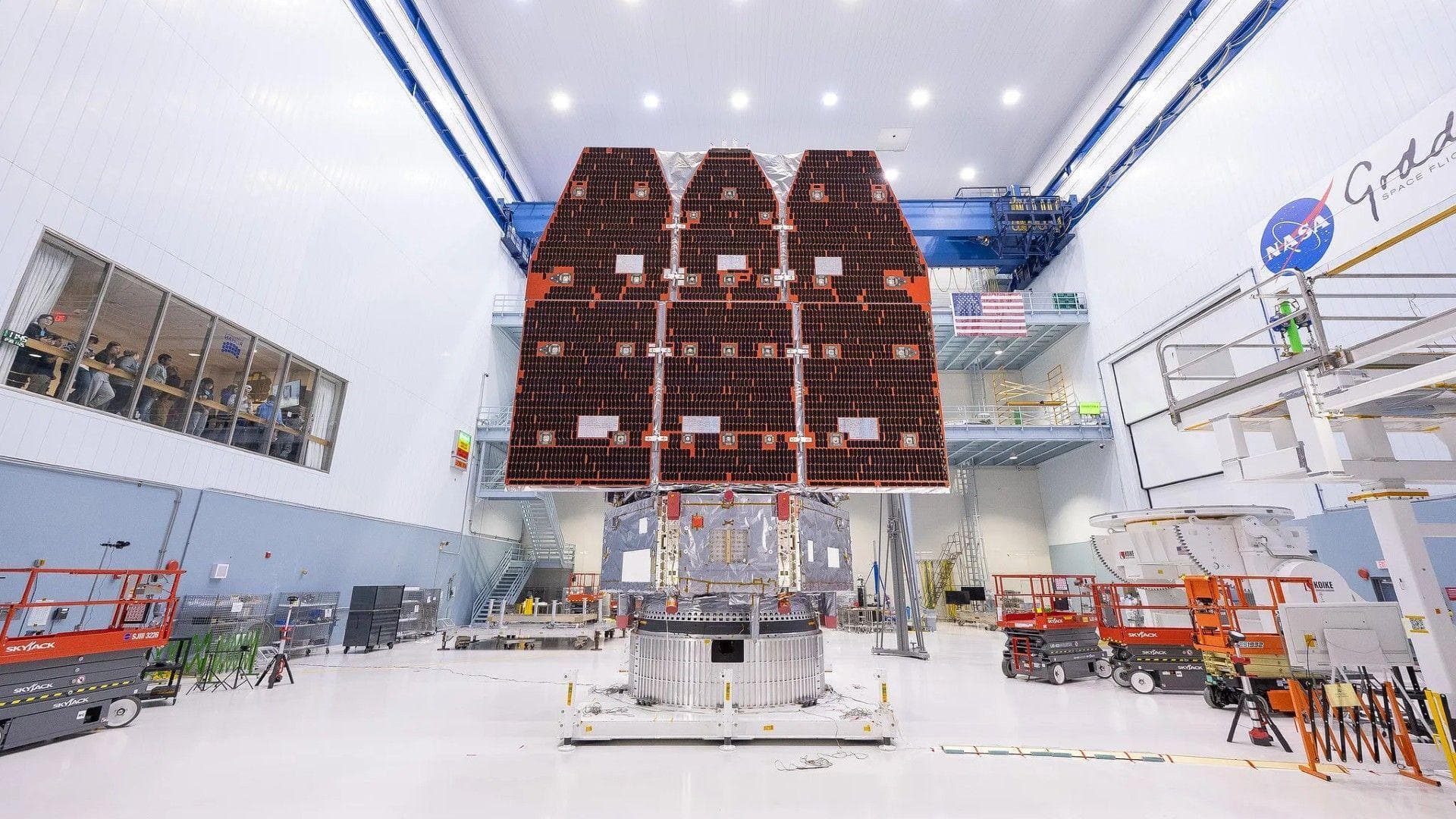
NASA has unveiled its latest space telescope, the Nancy Grace Roman Space Telescope. The revolutionary instrument will be launched into space in September aboard a SpaceX Falcon Heavy rocket. After launch, it will travel nearly one million miles from Earth to a stable location known as Lagrange Point 2. This position offers a stable environment with minimal interference from Earth or the Sun.
Mission objectives
Roman will give Earth a new atlas of the universe
The Roman Space Telescope will scan large portions of the sky in visible and near-infrared light, generating unprecedented amounts of data.
It is expected to discover tens of thousands of new planets outside our solar system, billions of galaxies, thousands of supernovae, and tens of billions stars.
"Roman will give the Earth a new atlas of the universe," said NASA administrator Jared Isaacman at a news conference where he unveiled this groundbreaking instrument.
Advanced features
Roman's field-of-view at least 100 times larger than Hubble's
The Roman Space Telescope, which took more than $4 billion investment and over a decade to build, is named after astronomer Nancy Grace Roman.
It will have a field of view at least 100 times larger than Hubble's, allowing it to cover large swathes of space.
The telescope will send down data at an unprecedented rate of 11TB per day, outpacing Hubble's entire lifetime data transmission in just one year.
Cosmic mysteries
Exploring dark matter and dark energy
The Roman Space Telescope will also explore the nature of dark matter and dark energy, which are thought to make up 95% of our universe.
Dark matter is believed to be the glue that holds galaxies together, while dark energy pulls them apart by making the universe expand faster over time.
With its infrared vision, Roman will be able to see light emitted by celestial bodies billions of years ago, effectively looking back in time.