NASA's Artemis II astronauts complete historic Moon flyby
What's the story
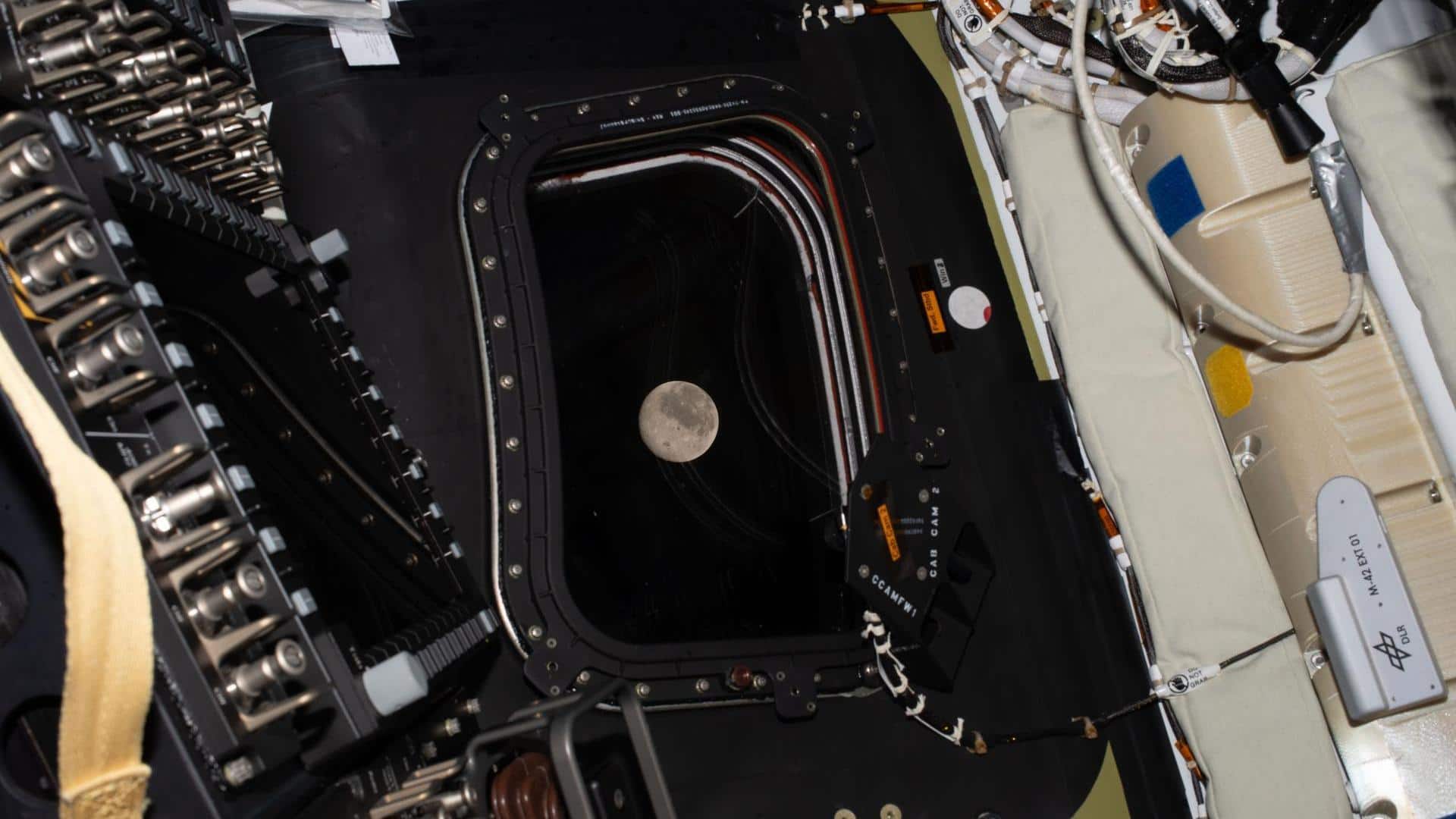
NASA's Artemis II mission has made history by traveling farther from Earth than anyone else in history. The crew, which includes Reid Wiseman, Victor Glover, Christina Koch from NASA and Jeremy Hansen from the Canadian Space Agency, traveled farther from Earth than anyone else in history. They also witnessed a total solar eclipse from beyond the Moon during their nearly seven-hour encounter with Earth's natural satellite on April 6.
Mission details
First crewed mission beyond low Earth orbit since Apollo 17
The Artemis II mission is the first crewed flight to venture beyond low Earth orbit (LEO) since Apollo 17 in 1972.
The spacecraft, named "Integrity," entered lunar space early on April 6.
It crossed into the Moon's "sphere of influence," where its gravity is stronger than Earth's, at around 12:37am EDT (04:37 GMT).
Distance achievement
Artemis II crew breaks historic record
About 13.5 hours into their journey, the Artemis II crew crossed a major milestone by traveling more than 400,170km from Earth.
This broke the previous record set by NASA's Apollo 13 mission in April 1970.
The spacecraft continued its journey for another five hours before reaching a maximum distance of about 406,770km from Earth just after 7:00pm EDT (23:00 GMT).
Naming honor
'Integrity' and 'Carroll': A heartfelt tribute from the stars
As the flyby began, the crew requested to name an unnamed Moon crater after their ship Integrity.
They also suggested naming another crater "Carroll" in honor of Carroll Taylor Wiseman, wife of Artemis II commander Reid Wiseman. She passed away from cancer in 2020.
Mission Control replied, "Integrity and Carroll Crater, loud and clear," marking a touching tribute from the spacefarers.
Scientific observations
The lunar flyby and its scientific significance
The main event of the mission was the flyby, which officially began at 2:45pm EDT (18:45 GMT) when Integrity was about 17,220km from the lunar surface.
The crew studied the Moon's surface for hours, following a detailed checklist provided by their mission science team.
This unique "free return" trajectory gave them unprecedented views of the gray, cratered surface and allowed them to detect details that could help scientists better understand lunar geology and evolution.
Photographic evidence
Capturing the Moon's moments with cameras and eyes
The Artemis II crew captured photographic evidence of their observations with an array of 32 cameras. Fifteen are mounted to Integrity; the other 17 are handheld instruments operated by the astronauts.
They also reported seeing at least five impact flashes on the Moon's darkened surface, which are signs of meteoroid impacts on its surface.