NASA's telescope rescue mission faces crisis in orbit
What's the story
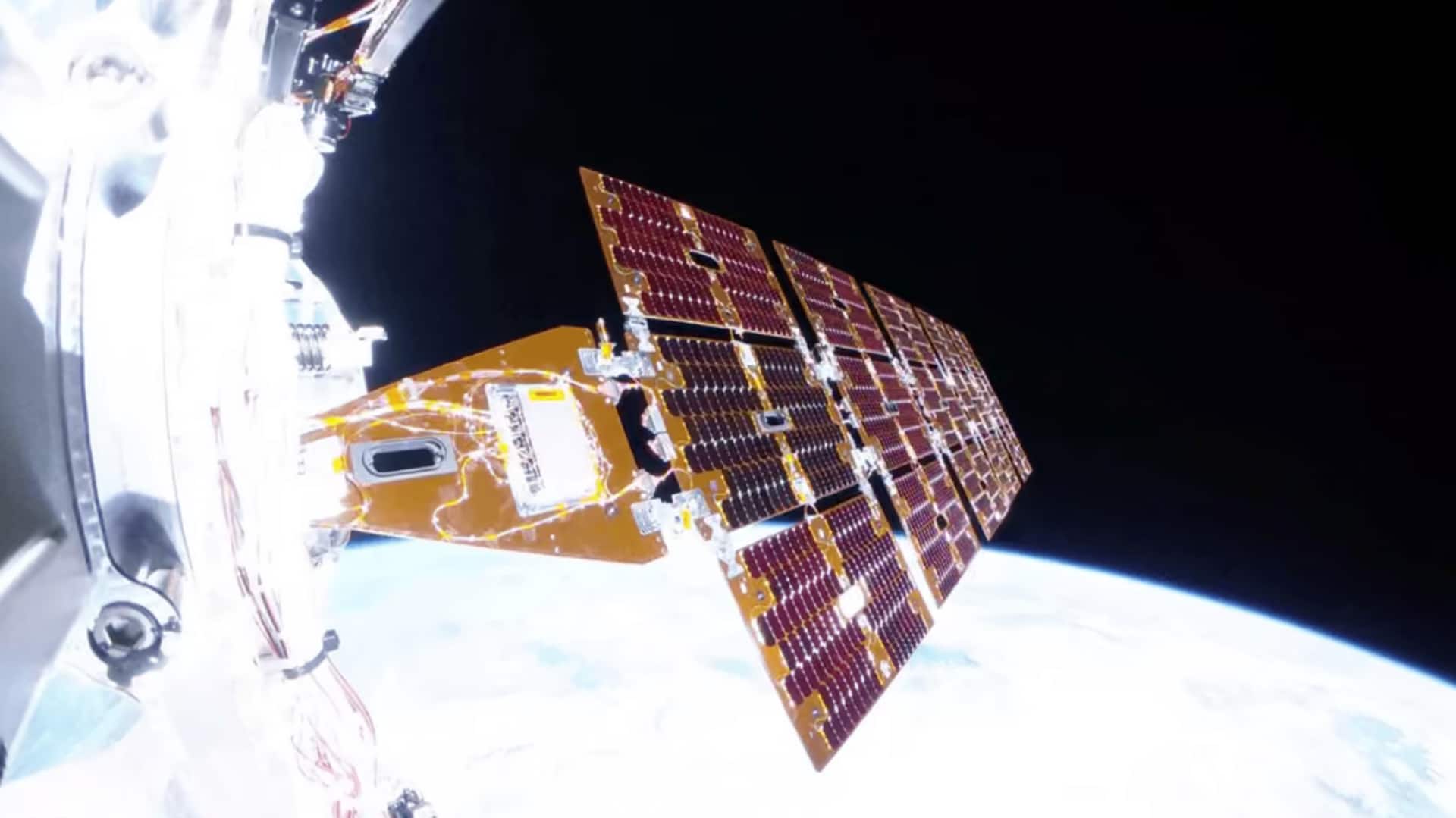
A Katalyst Space robot, hired by NASA to raise an orbital telescope, has gone out of control. The mission was the first time the space agency hired a private company for such a task. The Neil Gehrels Swift Observatory, launched in 2004, needs to be pushed back up to a higher orbit after being pulled back toward Earth. This is critical for it to continue its operations beyond its expected lifespan.
Mission details
LINK spacecraft was launched on Northrop Grumman Pegasus rocket
The LINK spacecraft was launched on July 3 aboard a Northrop Grumman Pegasus rocket.
In the weeks since its launch, flight controllers have been working to activate its systems in preparation for a rendezvous with Swift.
However, over the weekend, the spacecraft encountered self-control issues and started spinning uncontrollably. This made communication difficult as its antenna turned away from Earth.
Technical glitches
NASA reports 2 of 3 reaction wheels have failed
NASA has reported that two of the three reaction wheels, which are used to control the spacecraft's alignment, have failed.
There are also issues with one of the spacecraft's thruster systems.
Flight controllers are working to stabilize the spinning spacecraft using another set of thrusters onboard.
They have already started this process and are seeing positive results, according to a statement from them.
Company background
Katalyst raised $12 million for the mission in June
Kieran Wilson, Katalyst's chief engineer for the mission, had previously said that the spacecraft was built in a hurry due to the urgent need to raise Swift in the coming months.
In June, Katalyst raised $12 million for this mission from Fortitude Ventures and Geodesic Capital.
The company has also received funding from the US military for its dynamic vehicle capable of servicing satellites or surveilling rival spacecraft.