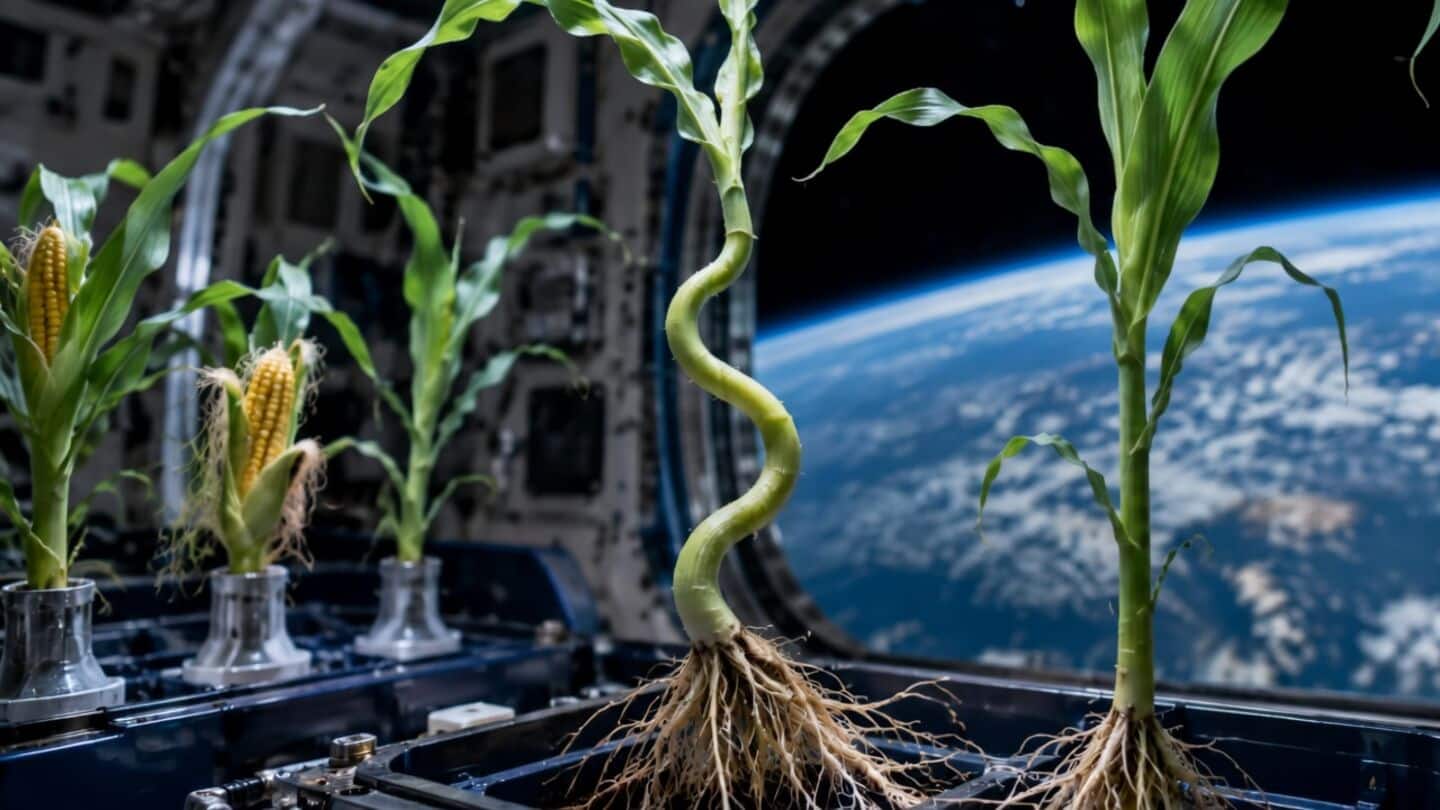
NASA's 1990s space shuttle corn seeds sprouted but grew tangled
Technology
Back in the 1990s, NASA sent corn seeds on space shuttles to see how plants handle microgravity.
The seeds sprouted and survived, but their roots and shoots grew in tangled and unpredictable directions, totally unlike the neat growth we see on Earth.
Turns out, without gravity guiding them, plants get a little lost.
ISS research uses special lighting systems
On Earth, plants use gravity to figure out which way to grow. In space, they rely more on light and other signals since gravity isn't really there.
NASA's ongoing research on the International Space Station (ISS) uses special lighting and systems to help them out.
This work is super important for future space missions: If astronauts want fresh food on trips to the moon or Mars, we need to know how plants cope with microgravity.