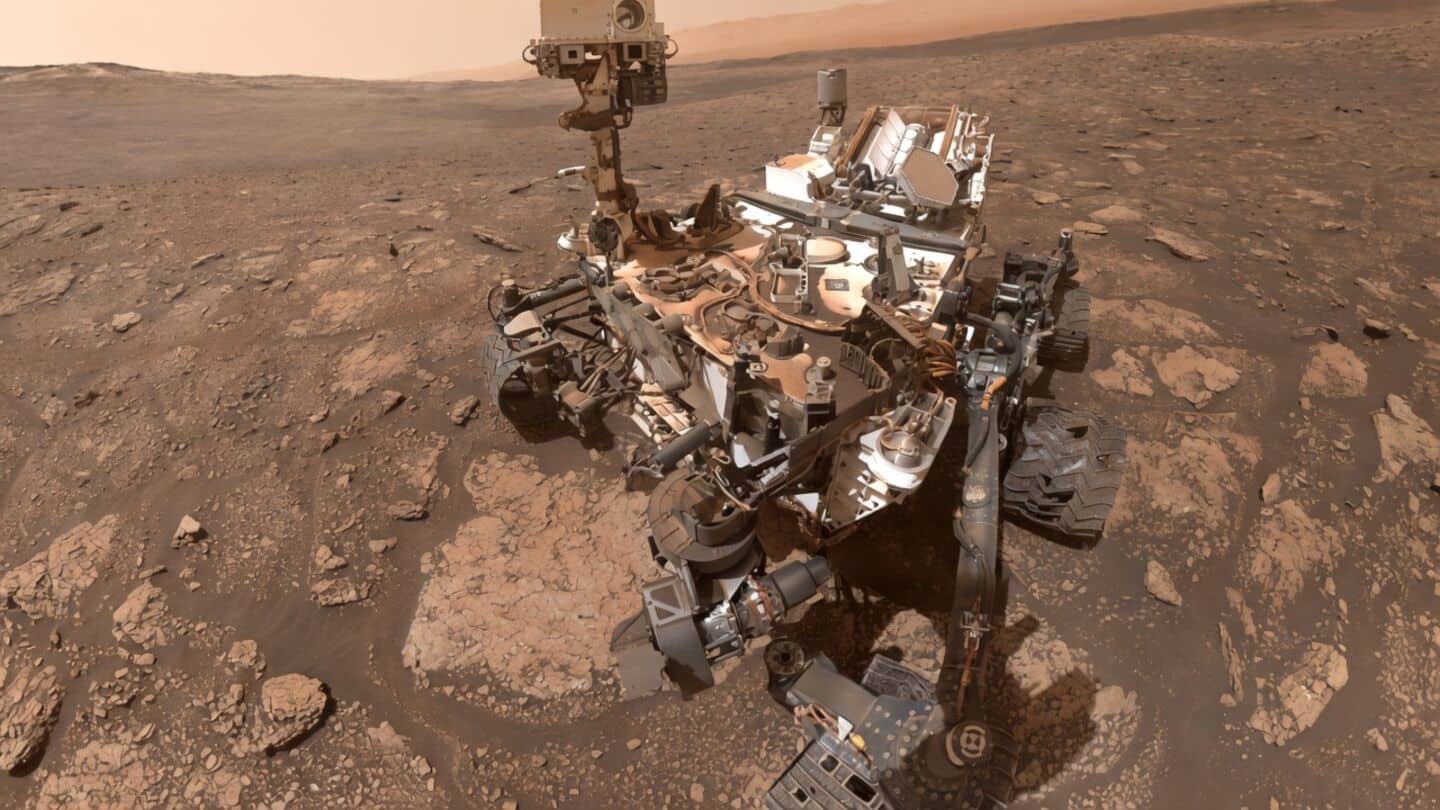
NASA's Curiosity finds 7 organics in 3.5-billion-year-old Gale Crater lakebed
NASA's Curiosity rover has uncovered seven different organic molecules, like benzothiophene, in an over 3.5-billion-year-old lake bed inside Gale Crater.
This find, made by scientists from NASA and the University of Florida, hints that Mars and Earth might be more chemically alike than we thought.
Even cooler: these molecules suggest ancient Mars may have had the right stuff for carbon-based life to exist.
Organics survived despite Mars's weak magnetosphere
The research team, led by Amy Williams, points out that these organic compounds survived beneath Mars's surface despite its lack of a decent magnetosphere needed to protect Mars from solar radiation and other cosmic rays.
The rover's onboard lab picked up signs that some of these molecules could have come from bigger structures, possibly delivered by meteorites, just like what happened on early Earth.
With Curiosity still rolling, this discovery adds fuel to the search for past life on Mars and helps us better understand the potential for life beyond Earth.