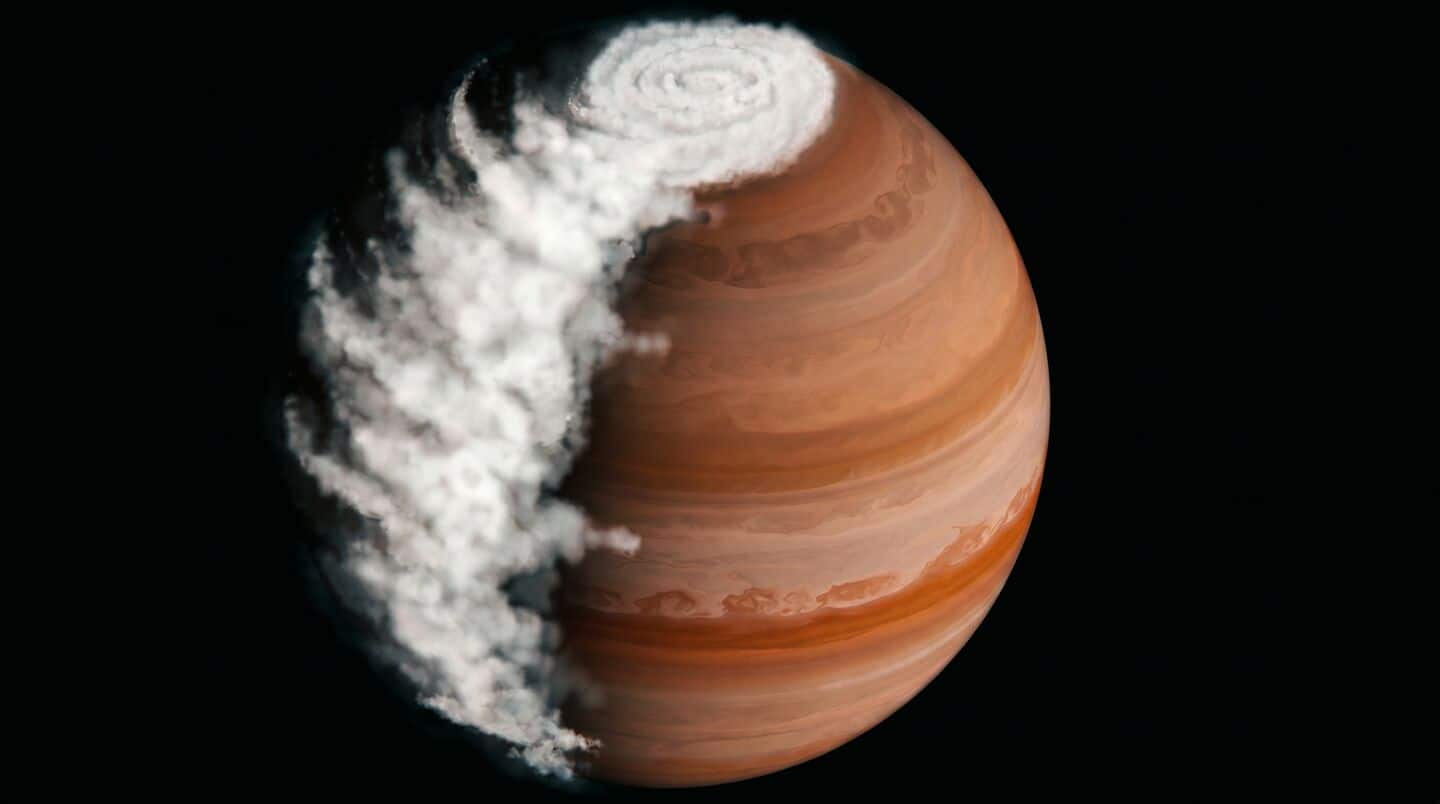
NASA's James Webb Space Telescope detects extreme weather on WASP-94b
Technology
NASA's James Webb Space Telescope just spotted wild weather on WASP-94Ab, a gas giant about 700 light-years away.
This planet is nearly twice as big as Jupiter but only half its mass, and it orbits super close to its star, so one side always faces the heat, making for some pretty extreme conditions.
Nightside mineral clouds vanish on WASP-94b
On the cooler nightside, clouds made of magnesium silicate, iron and magnesium sulfide form; then strong winds push them toward the hotter dayside where they quickly disappear.
Using special techniques to track these changes, researchers noticed clear differences between morning and evening skies.
The study gives us a fresh look at how exoplanet weather works and helps us understand how planets evolve in different environments.