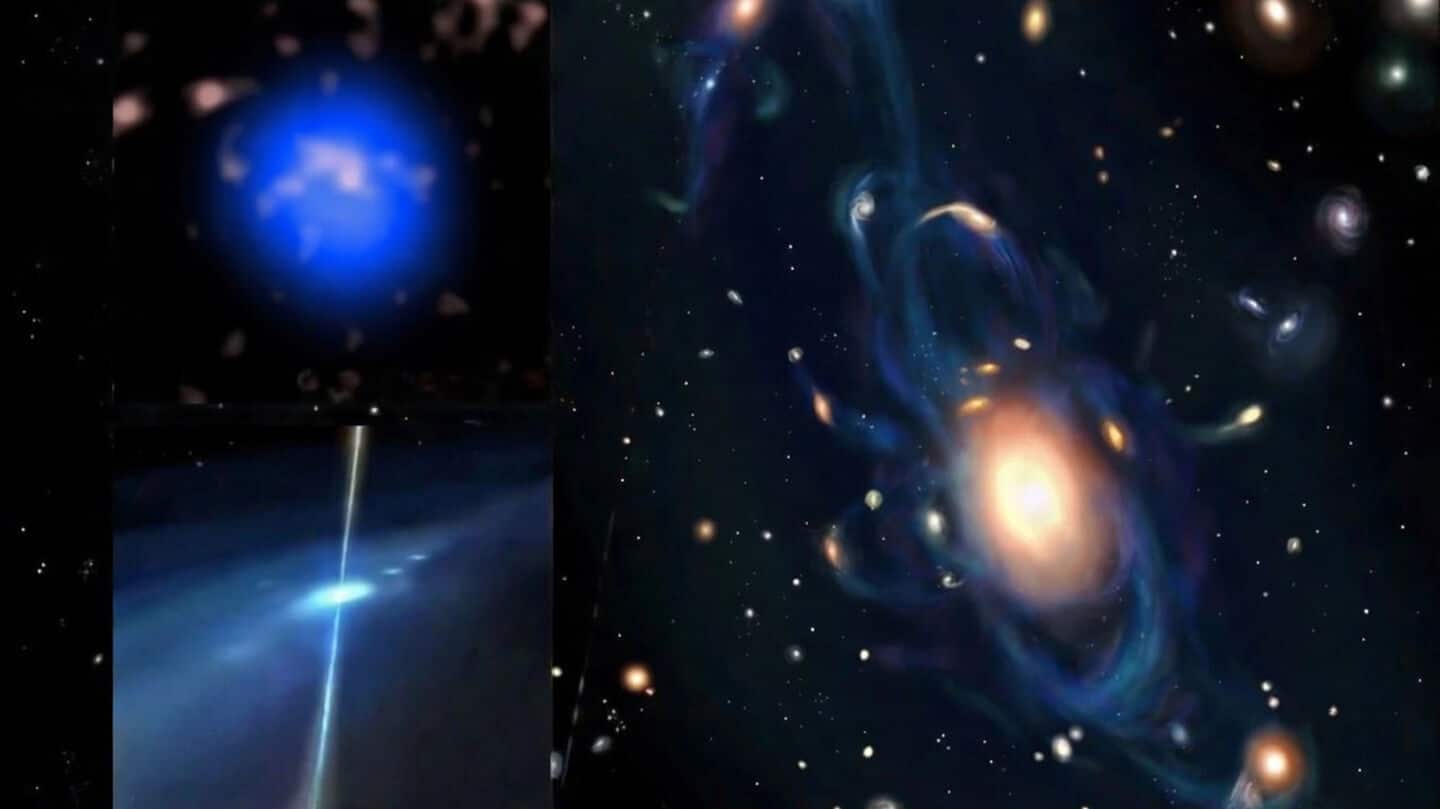
Neutron star collision gamma-ray burst tracked to distant dwarf galaxy
Astronomers have tracked a powerful gamma-ray burst, caused by two colliding neutron stars, to a super-faint dwarf galaxy floating billions of light-years from Earth.
The blast, reported by NASA, was detected as a powerful short-duration gamma-ray burst by NASA's Fermi Gamma-ray Space Telescope.
Host galaxy hiding in clouds of leftover debris
The host galaxy was hiding in clouds of leftover debris where new stars are born, explaining why some explosions seem to have "no home": their galaxies are just too dim to spot from Earth.
The neutron stars behind the blast were themselves born after a galactic smash-up millions of years ago.
How cosmic explosions help us understand universe's bling
When those neutron stars merged, they created and scattered gold, platinum, and other heavy elements into space.
That's how these precious materials end up even in the far reaches of galaxies — not just their bright centers.
This discovery helps scientists piece together where cosmic explosions happen and how the universe gets its bling.