New Zealand to face catastrophic glacier melts in near future
What's the story
New Zealand is facing the threat of more frequent and intense heatwaves, as well as catastrophic glacier melts, due to record-high greenhouse gas levels. The warning comes from a recent report titled "Our Atmosphere and Climate 2026." It highlights that the country is under increasing climate stress, which could have far-reaching effects on its environment, native species, and communities.
Climate indicators
Annual average temperature has increased by 1.36°C
The report reveals that New Zealand's annual average temperature has increased by 1.36 degree Celsius since records began in 1909.
It also notes that seven of the last decade's 10 warmest years have been recorded during this period.
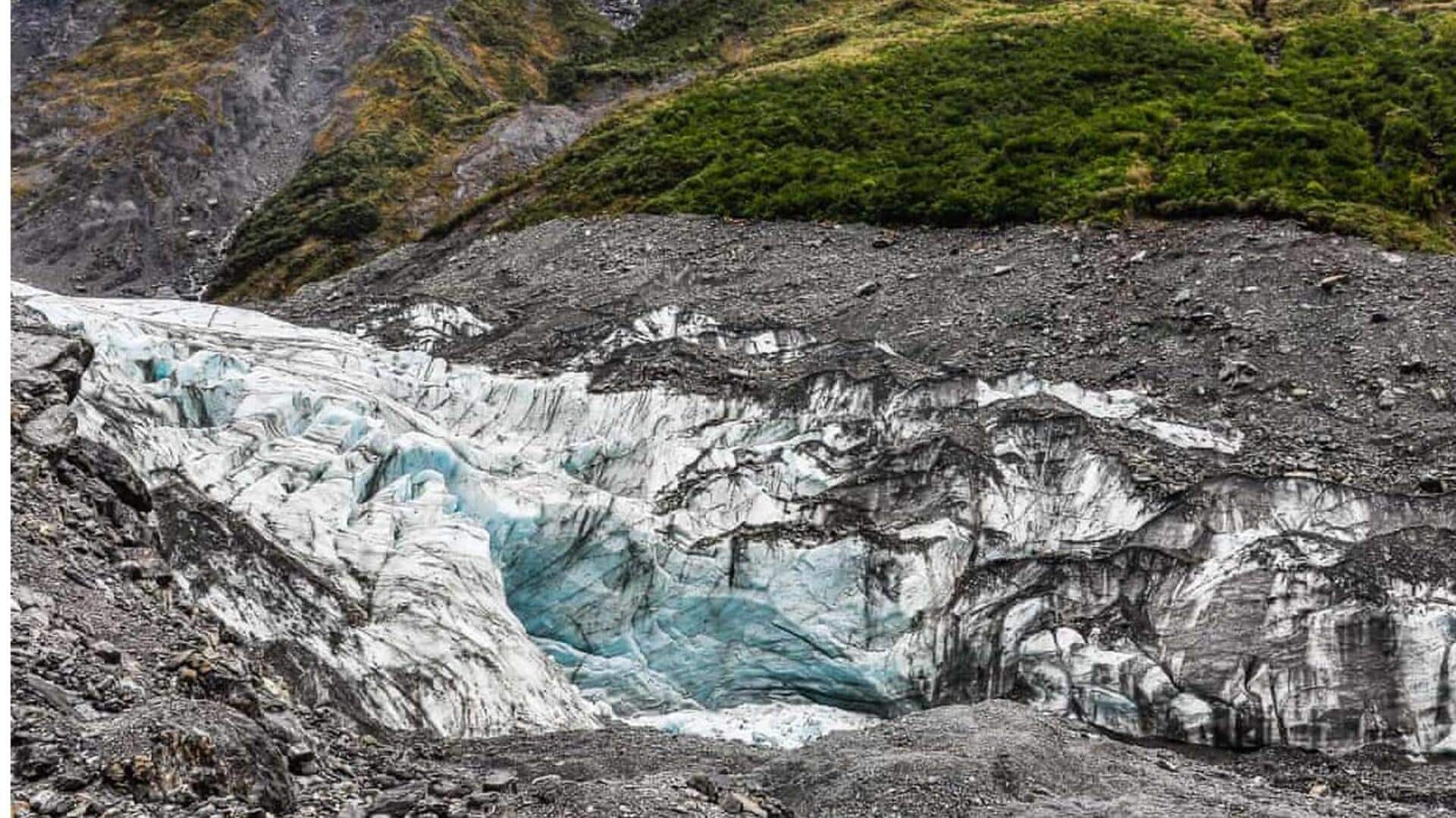
Further, it warns that glaciers are shrinking as the climate heats up.
The country is home to some 3,000 glaciers, which have lost volume from 56 cubic kilometers in 1997 to just 30 cubic kilometers in 2023.
Glacier retreat
Glaciers are shrinking as the climate heats up
Modeling of glacier retreat under a "low climate scenario" (low emissions) predicts that these ice masses could lose between 14% and 86% of their volume by 2100.
In a more severe "high climate scenario," this figure could increase to between 69% and even complete loss.
Dr. Alison Collins, Chief Science Advisor for the Ministry for Cities, Environment, Regions and Transport (Mcert), stressed the severity of the situation, saying we're talking about "substantial loss."
Emission surge
Greenhouse gases in atmosphere are increasing
The report also highlights a worrying trend of increasing greenhouse gases in New Zealand's atmosphere.
Carbon dioxide levels have risen by 30% since monitoring began in the country in 1972, while methane levels reached their highest concentration ever in 2025.
These rising emissions are contributing to a range of climate-related issues such as rising temperatures, warming oceans, and shifting rainfall patterns.
Extreme weather
Heatwaves will become more frequent, longer, and intense
The report predicts that heatwaves will become more frequent, longer, and intense across New Zealand.
It also warns of an increase in days exceeding 25 degree Celsius by 2050, exposing people to heat-related health risks.
Marine heatwaves are also becoming more pronounced and impacting native species.
In 2025, it was revealed that New Zealand's oceans were warming at a rate 34% faster than the global average.