El Niño headed for record-shattering intensity, weather agency says
What's the story
The National Oceanic and Atmospheric Administration (NOAA) has predicted that the ongoing Super El Niño could be the strongest on record. The forecast, released on Thursday, indicates a nearly 70% chance of this event breaking past records. Earlier, NOAA had projected that this event would likely rank "among the largest El Niño events in the historical record."
Intensification speed
Rapid intensification of super El Nino
The prediction stems from how quickly this El Nino is intensifying, with computer models indicating it will peak in late fall and early winter.
Computer models now predict it will peak in late fall and early winter at a stronger level than previously thought.
NOAA's intensity records for El Niño events date back to 1950, and they expect this event to surpass the record-breaking Super El Niño of 1982-1983.
Weather shift
Global weather disruptions caused by El Nino
El Niño is a climate cycle that causes warmer than average ocean temperatures in the central and eastern tropical Pacific.
This phenomenon sends huge amounts of heat into the atmosphere, altering global weather patterns.
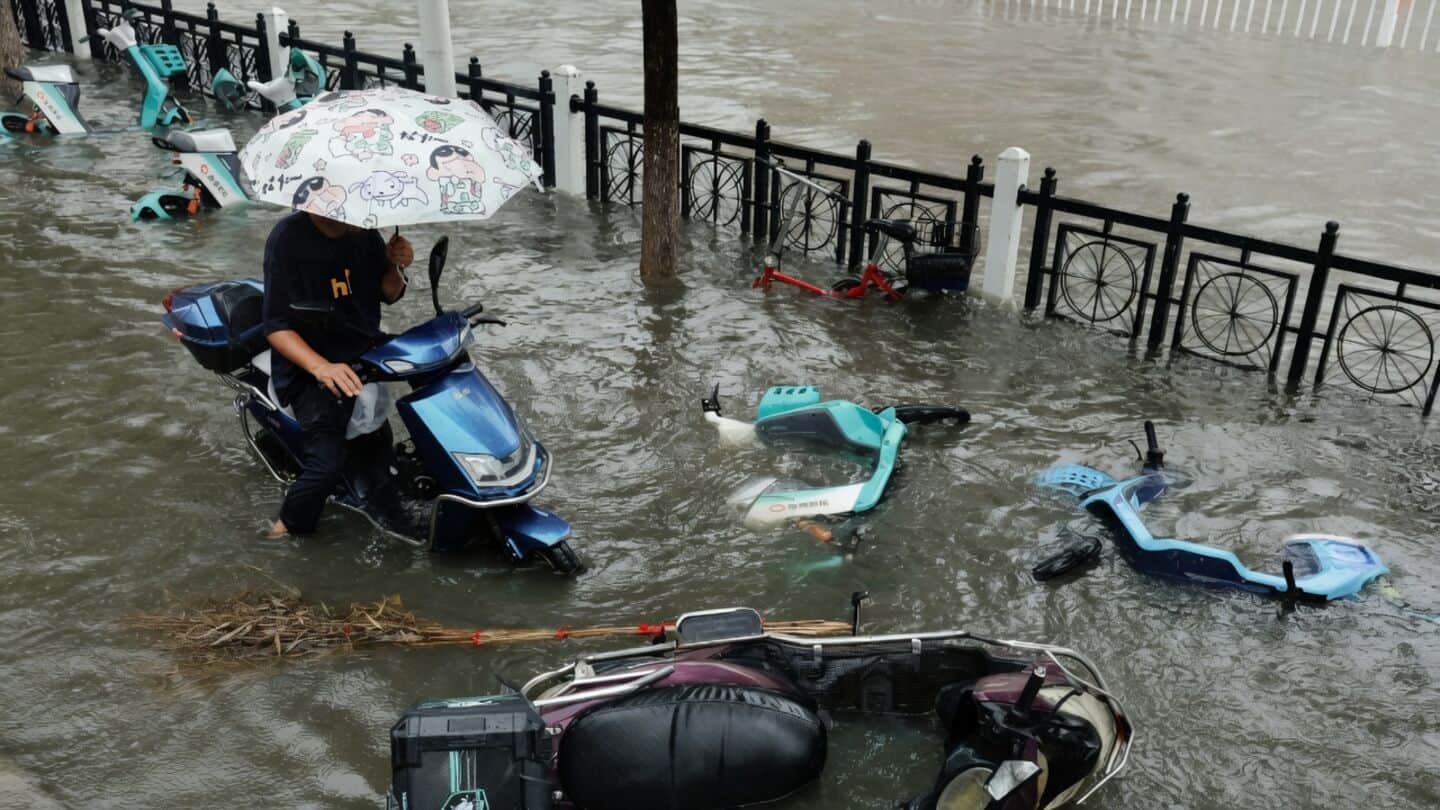
This, in turn, helps to change weather patterns around the globe, causing droughts in Indonesia and Australia and flooding in parts of South America.
Record heat
Record-breaking sea surface temperature anomalies
NOAA forecasters predict sea surface temperature anomalies in the Nino region will exceed 2.5 degrees Celsius above average over a three-month period.
This takes into account long-term climate change, which has raised background ocean temperatures in recent decades.
The new Relative Oceanic Nino Index (RONI) takes that broader warming trend into consideration, yet still predicts an unprecedented intensity for this Super El Niño event.
Climate uncertainty
Unpredictable impacts of El Nino
The effects of each El Nino are unique, making them unpredictable.
This is the first time such an intense El Nino has occurred against a background climate as hot as it is now. Experts say this could amplify the severity of heat waves and other disasters due to global warming.
However, NOAA forecasters said that while a record-strong Super El Niño increases odds for typical impacts, they may not be markedly worse or guaranteed in affected areas.
Domestic effects
Expected effects in the United States
In the United States, a strong Super El Niño could bring unusually wet conditions from California to Florida. It may also lead to milder and drier winters in parts of the Midwest.
According to NOAA, central and south Florida have historically experienced more severe weather, including more tornadoes and floods during El Niño years.
During the 1998 El Niño winter, tornadoes in the region caused 42 deaths and over $100 million in damage.