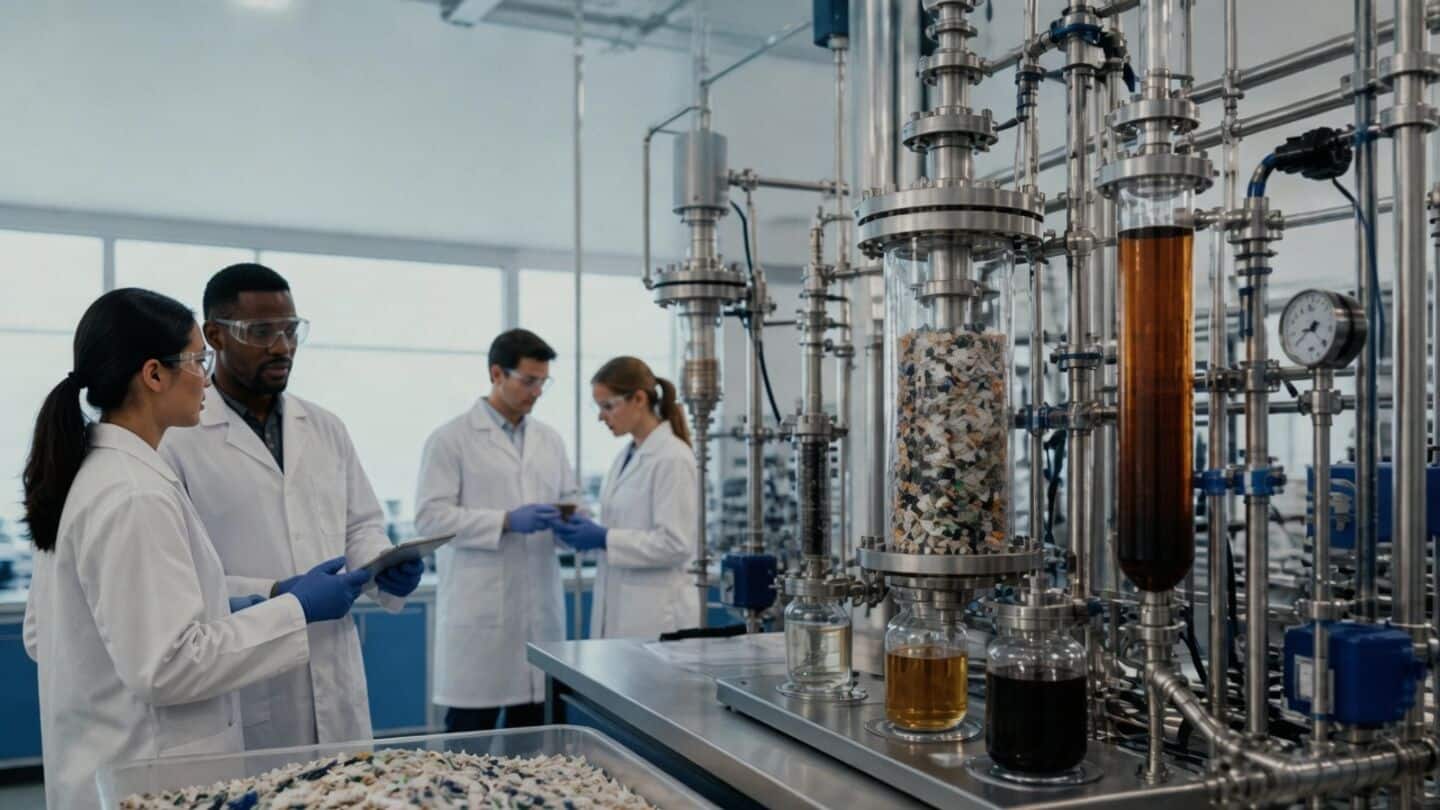
Oak Ridge National Laboratory turns everyday plastic into usable fuel
Scientists at Oak Ridge National Laboratory have figured out how to turn everyday plastic, like shopping bags, into usable fuel.
By using special aluminum-based molten salts, they can break down polyethylene and get a mix of gasoline and diesel-like fuels (about 60% comes out as gasoline).
The process works under mild conditions and could be a game-changer for dealing with plastic waste.
Aluminum salt process avoids noble catalysts
This method skips expensive metals or noble-metal catalysts, organic solvents or external hydrogen, working at temperatures below 200 degrees Celsius, much gentler than old-school techniques.
Researchers found that simpler plastics make gasoline-type fuel, while more complex ones become diesel-like.
Their findings were published in the Journal of the American Chemical Society, offering hope for cleaner ways to handle trash and even boost energy supplies from stuff we usually throw away.