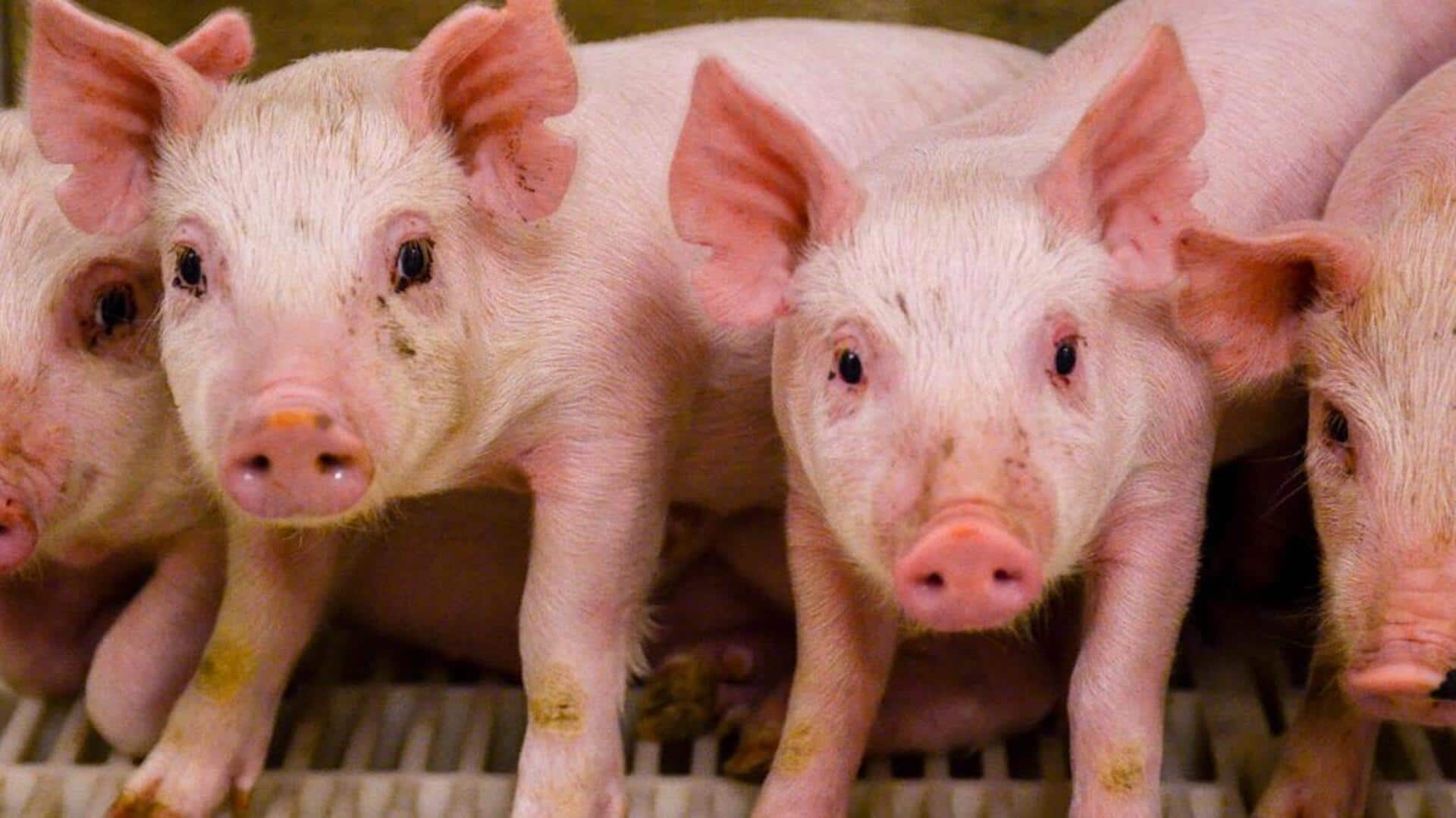
Could pig organ transplants become better than human ones?
What's the story
In a groundbreaking medical trial, pig kidneys have been successfully transplanted into living humans. Dr. Robert Montgomery, the director of NYU Langone's Transplant Institute and a leading surgeon in the field, believes these xenotransplants may one day surpass human organ transplants in quality. The initial phase of the trial involves six patients who are either ineligible for human kidney transplantation or on a waiting list.
Trial details
Trial's future plans
These pig organs have been gene-edited at 10 different sites to minimize rejection by the human body. If approved by the US Food and Drug Administration (FDA), this trial will be expanded to include 44 more transplants.
Personal journey
Montgomery's personal experience fuels his advocacy
Montgomery, a pioneering transplant surgeon and one of Time Magazine's most influential people of 2025, has a personal stake in this research.
He suffers from dilated cardiomyopathy, a heart condition that killed his father and brother.
After surviving seven cardiac arrests and spending a month in a coma, he received a heart transplant in 2018.
This experience drives his passion for finding solutions to organ shortages.
Supply solutions
Innovative strategies to increase human organ supply
Montgomery has pioneered several innovative strategies to increase the supply of human organs, such as domino-paired kidney transplants and using organs from hepatitis C-positive donors.
However, he realized that these methods weren't making a significant dent in the problem of organ scarcity.
"Having spent a career trying to increase incrementally the number of human organs available, I realized that we just weren't making that much progress," he said.
Technological advancements
Gene-edited pigs and xenotransplantation
Despite being a long-standing concept, xenotransplantation has gained traction recently with the advent of gene-edited pigs.
Montgomery performed the world's first gene-edited pig-to-human organ transplant in 2021 on a brain-dead individual.
This successful procedure showed that these organs aren't immediately rejected and provided crucial safety data for their use in living people.
Future prospects
Pig organs: A potential alternative to human ones
Montgomery believes that pig organs could eventually be better than human ones for transplants, as they can be modified continuously to improve their performance.
He also noted that transplanting the pig's thymus with the kidney could improve tolerance and potentially reduce or eliminate the need for anti-rejection drugs.
"We're not there yet, but that's why we're doing those studies," he said.