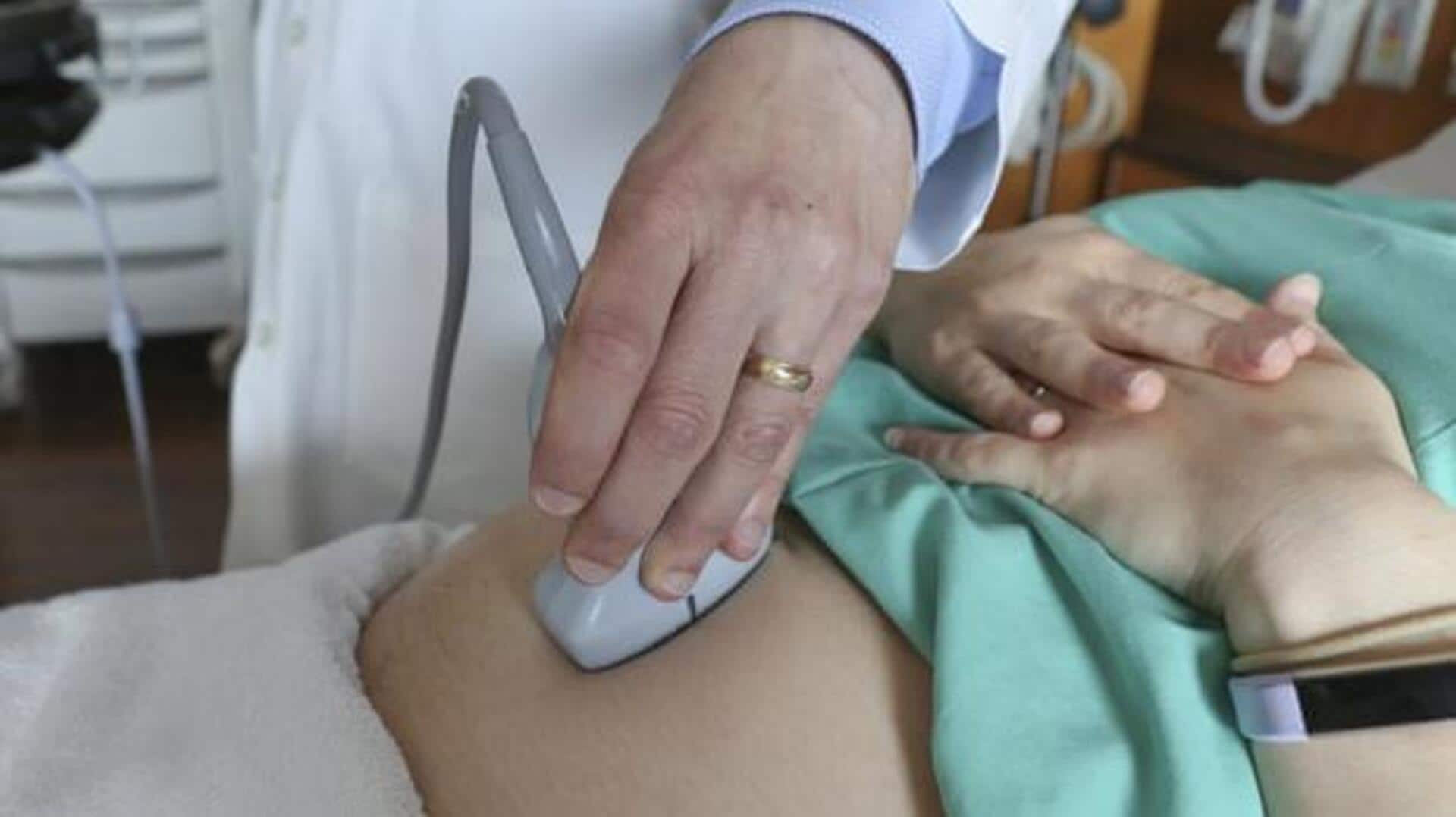
This blood test detects thousands of genetic conditions in fetuses
What's the story
Scientists have developed a new maternal blood test capable of detecting thousands of serious genetic conditions in a developing fetus. The breakthrough could significantly reduce the need for invasive screening methods during pregnancy. The innovative technique, dubbed non-invasive fetal sequencing (NIFS), detects tiny fragments of a fetus' DNA that circulate in the mother's bloodstream during pregnancy.
Technique details
NIFS could be safer and more accurate screening tool
NIFS could be a safer and equally accurate screening tool for all pregnancies, according to Dr. Christopher Whelan, a senior computational scientist at the Broad Institute of MIT and Harvard University.
He said, "This test is capable of detecting thousands of serious genetic conditions, including the majority of the conditions that appear on the major newborn sequencing and fetal anomaly panels."
Diagnostic revolution
Major upgrade from existing non-invasive blood tests
The new test could expand the list of detectable genetic conditions to almost all those included in newborn screenings.
This would be a major upgrade from existing non-invasive blood tests based on fetal DNA, which are currently limited to a small number of conditions like Down syndrome.
Dr. Whelan envisions this as a frontline test for cases where an anomaly has been detected in an ultrasound or another screening test.
Test validation
Researchers tested NIFS on 565 pregnancies
The researchers tested NIFS on 565 pregnancies at an average of 17 weeks of gestation.
By sequencing the small fragments of DNA and using advanced computing methods, they identified genetic variants across nearly 23,000 genes in each fetus.
Their test detected 95-99% of the genetic variants found by invasive methods and over 97% of clinically relevant ones.
This shows that NIFS is just as effective as traditional invasive techniques like amniocentesis or chorionic villus sampling (CVS).
Medical implications
Test could transform reproductive medicine
Professor Alexandre Reymond of the University of Lausanne, who was not part of the research, hailed NIFS as a "tour de force" that could transform reproductive medicine.
He said it opens up treatment and prevention opportunities for genetic conditions in fetuses.
Cardiff University clinical geneticist Prof. Angus Clarke also praised the test as a "very impressive technical feat," especially for cases where prenatal treatment could start early if a genetic condition is suspected.