Samsung to double HBM4 output as AI chip demand surges
What's the story
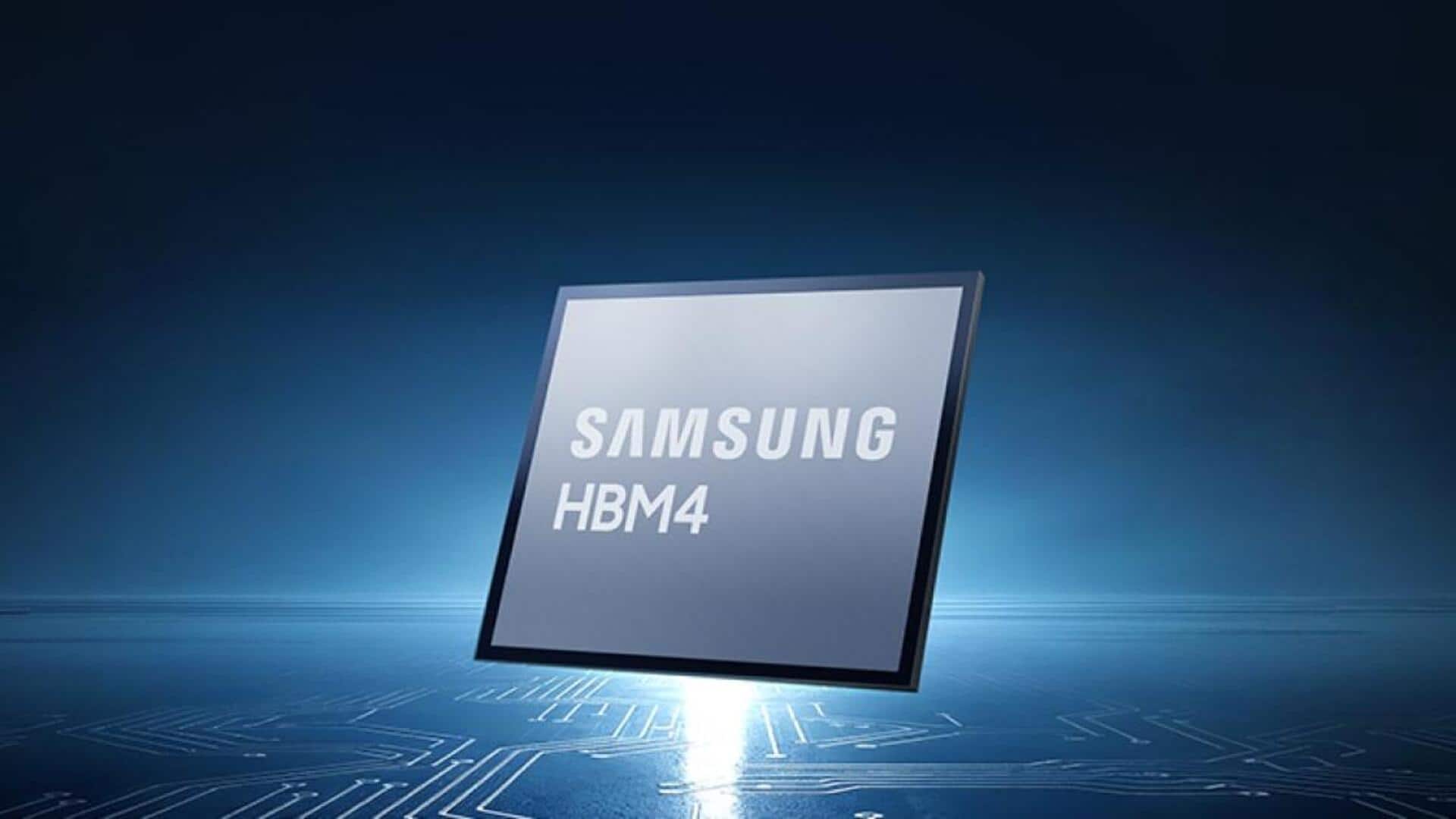
Samsung Electronics plans to more than double its output of HBM4 family of high-bandwidth memory (HBM) chips next year. The move comes as part of a strategy to meet the growing demand for sixth-generation HBM4 and seventh-generation HBM4E models. The company also plans to increase its demand for glass carriers by 2.5 times from this year, according to Korean publication Seoul Economic Daily.
Production increase
Outsourced cleaning volume for glass carriers
Samsung plans to ramp up its outsourced cleaning volume for glass carriers, a key material in HBM production.
The company intends to increase this from 20,000 sheets per month this year to 50,000 sheets per month next year.
This is a significant jump considering that glass carrier requirements were just 10,000 sheets per month last year and have doubled this year.
Glass carrier role
Importance of glass carriers in HBM production
Glass carriers are temporary supports attached to the back of an HBM DRAM wafer. They prevent bending or cracking while the wafer is ground thin and drilled.
As HBM requires stacking multiple DRAM dies within a limited thickness, the technology for thinning wafers and controlling warpage becomes more important as stack counts rise.
Product details
Increase in HBM production
The HBM4 and HBM4E products that Samsung plans to scale up are based on 12-layer and higher stacks.
Despite the fact that glass carriers are reused after cleaning, a 2.5-fold increase in related volume makes it highly likely that HBM4 and HBM4E output will grow at least twofold from this year.
In February, Samsung started mass-production shipments of HBM4 using 10-nanometer-class sixth-generation (1c) DRAM and a base die built on a 4-nanometer process.
Production growth
Industry expectations for Samsung's HBM production scale
The industry expects Samsung's HBM production to grow almost 40% to about 250,000 wafers next year from roughly 180,000 wafers this year.
By product shipment mix, the HBM4 family is projected to rise from around 40% this year to nearly 80% next year as HBM4E mass production ramps up.
An industry official told Seoul Economic Daily, "As Samsung expands HBM production, it appears to be placing HBM4, a high-value product, at the center."