Scientists discover new type of planet, name it 'super-Earth'
Scientists have found a totally new type of planet called L 98-59 d, orbiting a star in the Volans constellation.
It is about 1.6 times bigger than Earth but much less dense, and has been observed and characterized using the James Webb Space Telescope.
Planet has thick hydrogen-rich atmosphere
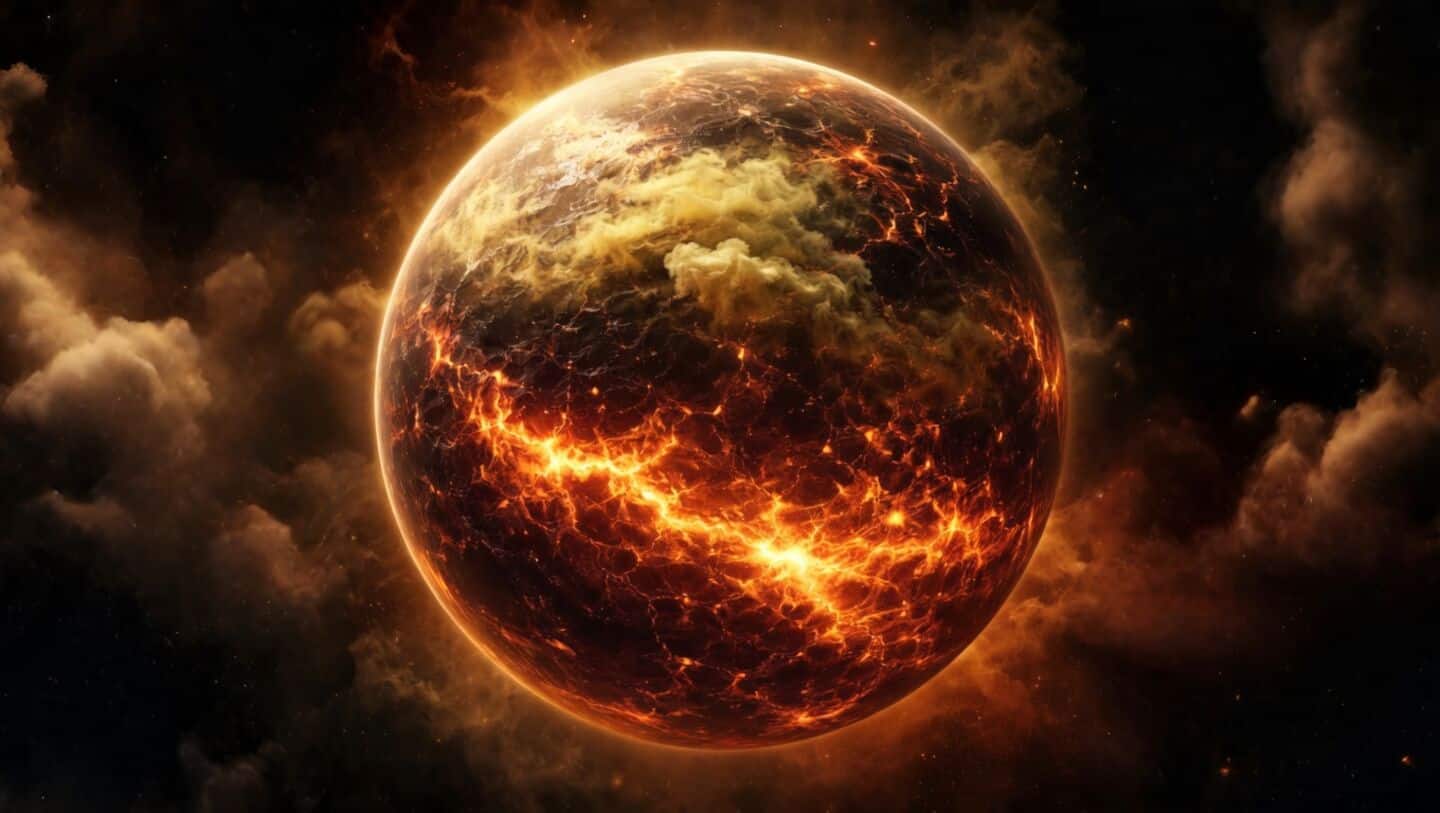
L 98-59 d has a thick hydrogen-rich atmosphere and even a global magma ocean beneath its surface. Pretty wild!
Its air contains hydrogen sulfide from volcanic activity, which gets turned into sulfur dioxide by starlight.
The magma ocean helps keep these gasses around over long periods of time, despite harsh space conditions.
Planet belongs to a new class of super-Earths
This planet likely began as a larger sub-Neptune, but lost some of its atmosphere over time.
Now, it is being called a "volatile-rich super-Earth," a whole new class that does not fit the usual rocky or watery categories.
It is changing how scientists think about what planets can be like out there.