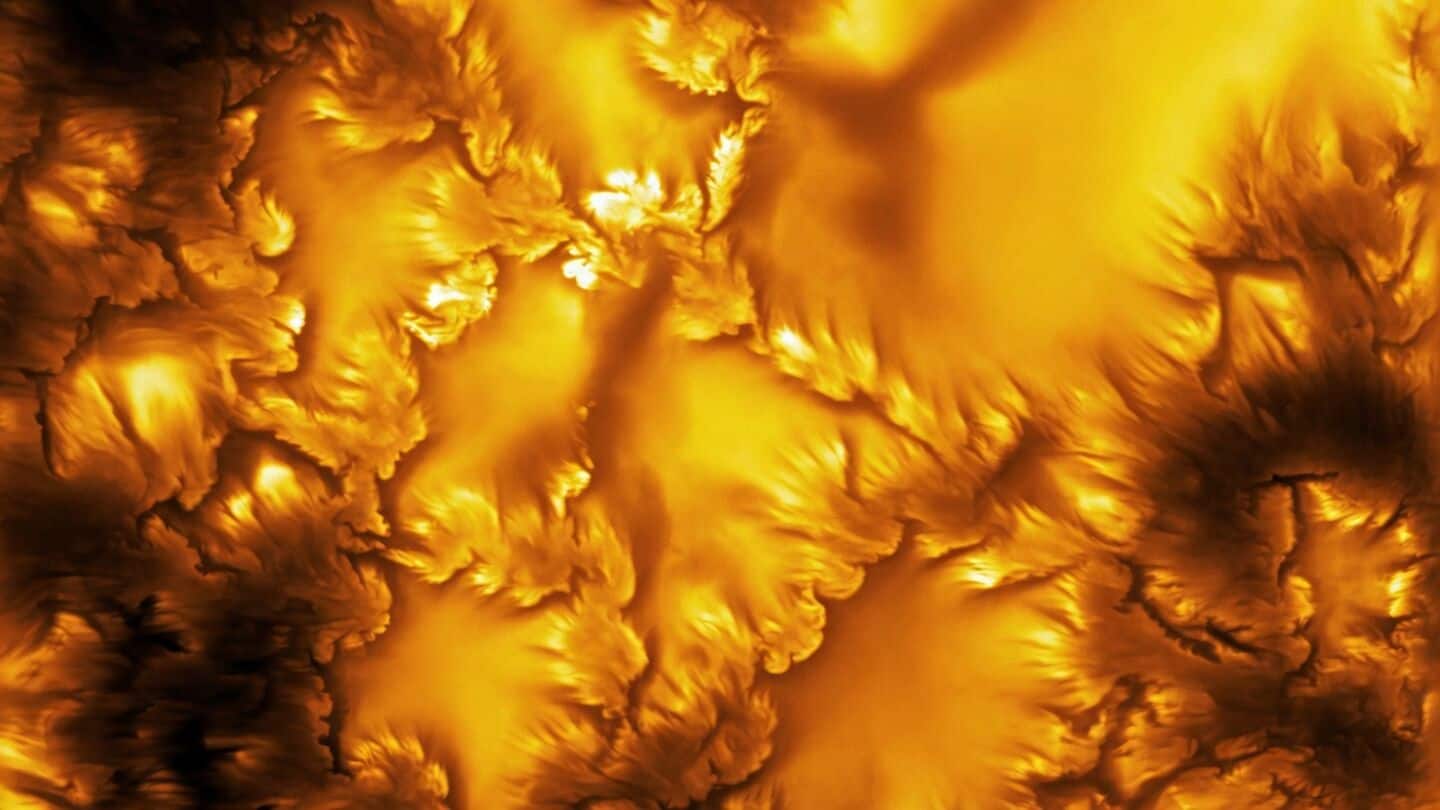
Scientists spot Kelvin-Helmholtz swirls on Sun for 1st time
Scientists just spotted tiny swirling vortex patterns, called Kelvin-Helmholtz instability (KHI), on the sun's surface for the first time.
Using Hawaii's Daniel K. Inouye Solar Telescope, a team of international researchers from the US National Science Foundation's National Solar Observatory, the NSF NCAR High Altitude Observatory (HAO), and the German Max Planck Institut fur Sonnensystemforschung (MPS) made this breakthrough, which could help explain how solar flares and eruptions happen.
Kelvin-Helmholtz instability helps explain solar heating
Kelvin-Helmholtz instability (KHI) occurs when two fluids move at different speeds, creating spirals: think ocean waves or breaking waves here on Earth.
Finding it on the sun is a big deal because it helps scientists understand why the sun's atmosphere is so hot and how its magnetic energy moves around.
Future research will dig deeper into how these solar swirls affect space weather that can impact Earth.