Losing all our satellites might become a reality one day
What's the story
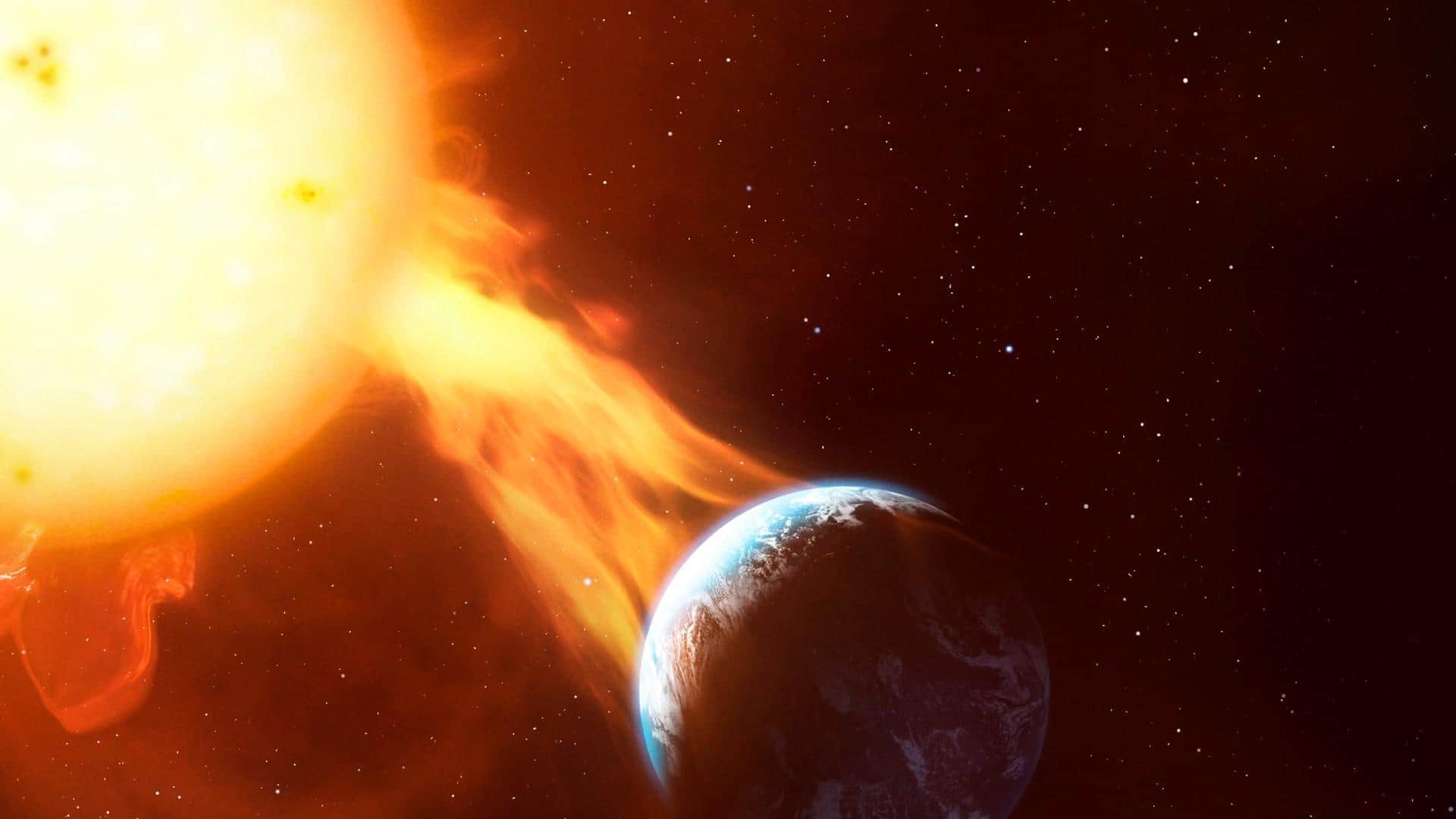
A recent study has warned of a potential disaster in low-Earth orbit, where a solar storm could trigger satellite collisions. The resulting chain reaction would leave humans without access to their satellites. The research was conducted by Sarah Thiele, a Princeton University PhD student, and her co-authors. They examined "edge cases" that could lead to system failures during solar storms.
Collision risks
Solar storms: A threat to satellite navigation and communication systems
Solar storms can increase drag on satellites, putting them on a collision course with one another. This forces operators to perform avoidance maneuvers from Earth.
However, these maneuvers rely heavily on navigational and communications systems that are often affected by solar storms themselves.
If these systems fail during a storm, it could lead to catastrophic collisions between satellites in as little as 2.8 days.
Collision consequences
Solar storms could trigger Kessler Syndrome
The study also highlights that if operators lose control of satellites for just 24 hours, there's a 30% chance of a collision.
This could trigger the Kessler Syndrome, where Earth's orbit becomes filled with a debris cloud. Such a scenario would render existing satellites unworkable and prevent the launch of new ones.
The researchers used a new metric called the Collision Realization and Significant Harm (CRASH) Clock to arrive at these conclusions.
Infrastructure impact
Carrington Event-level storm could devastate satellite infrastructure
The study warns that if a solar storm as intense as the Carrington Event of 1859 were to hit, humans wouldn't be able to control satellites for more than three days.
This would lead to the destruction of our entire satellite infrastructure.
The research highlights the need for real-time action during solar storms to keep satellites afloat and safe from potential collisions.